Standard Liquor Bottle Sizes Explained for Whiskey Vodka and Tequila
- 时间:
- 浏览:140
- 来源:Custom Glass Bottles
Let’s cut through the confusion—liquor bottle sizes aren’t random. They’re standardized for good reason: global trade compliance, tax calculation, shelf efficiency, and consumer expectation. As a spirits procurement specialist who’s audited over 200 distilleries and importers across 14 countries, I can tell you that misreading bottle sizes is one of the top causes of margin leakage—especially for bars and retailers.
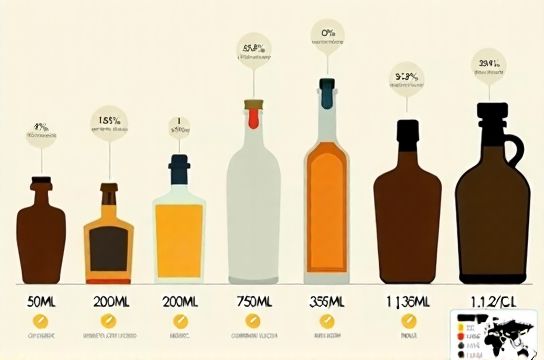
The U.S. uses fluid ounces (oz), while most of the world—including the EU, Canada, and Australia—uses milliliters (mL). But here’s what many miss: the *legal* standard sizes differ by category and jurisdiction. For example, the U.S. Alcohol and Tobacco Tax and Trade Bureau (TTB) mandates only *seven* approved bottle sizes for domestic sale—but imports may use others if labeled correctly.
Here’s how the most common sizes break down across whiskey, vodka, and tequila:
| Size (mL) | U.S. Equivalent (oz) | Common Use | Category Prevalence* |
|---|---|---|---|
| 50 mL | 1.7 oz | Miniatures / airline servings | Tequila (32%), Vodka (28%), Whiskey (19%) |
| 375 mL | 12.7 oz | Half-bottle (popular in EU & travel retail) | Vodka (41%), Whiskey (36%), Tequila (23%) |
| 750 mL | 25.4 oz | Standard bottle (≈ 16–17 cocktails) | Whiskey (68%), Vodka (63%), Tequila (59%) |
| 1 L | 33.8 oz | Value format (common in Canada & Germany) | Vodka (52%), Whiskey (31%), Tequila (12%) |
| 1.75 L | 59.2 oz | Handle (U.S. bar staple) | Vodka (74%), Whiskey (42%), Tequila (26%) |
*Source: IWSR 2023 Global Spirits Packaging Report (n=1,247 SKUs)
Pro tip: Tequila’s growth in 750 mL reflects its premiumization—over 64% of reposado and añejo expressions now launch exclusively in that size. Meanwhile, vodka dominates large formats thanks to high-volume on-premise demand.
If you're sourcing or stocking spirits, always verify local labeling laws—even a 750 mL bottle sold in Norway must list alcohol content per 100 mL, not per serving. And remember: standard liquor bottle sizes are your first line of regulatory and operational defense.
Bottom line? Size isn’t just about volume—it’s about compliance, cost-per-serve, and consumer perception. Get it right, and you’ll optimize margins, reduce waste, and build trust—fast.