Pint Spirit Bottles US and UK Standards for Liquor Packaging
- 时间:
- 浏览:131
- 来源:Custom Glass Bottles
H2: Why Pint Spirit Bottles Matter — And Why They’re Not Interchangeable Across Markets
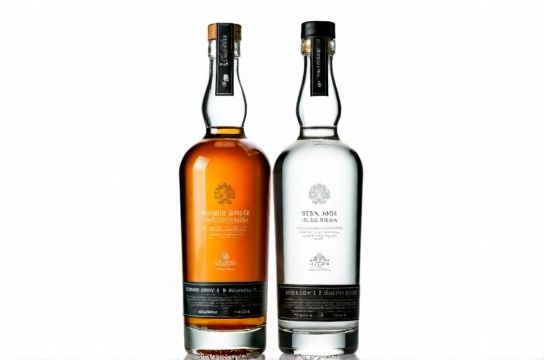
A distiller in Kentucky ships a new small-batch rye to London — only to learn the ‘pint’ label triggers regulatory rejection at UK customs. A craft gin brand in Edinburgh labels its 568 mL bottle as ‘1 pint’ for domestic shelves, then gets flagged by the TTB for misrepresentation when exporting to California. These aren’t edge cases. They’re daily friction points rooted in hard infrastructure: measurement law, glass thickness mandates, and alcohol-by-volume (ABV) display rules.
The pint isn’t just a volume — it’s a legal unit with jurisdictional DNA. In the US, the ‘liquid pint’ is 473.176 mL. In the UK and EU, the imperial pint is 568.261 mL. That 95 mL gap — nearly 20% — changes everything: shelf fit, label real estate, case packing efficiency, and most critically, regulatory acceptance.
GlassCraft, a leading custom spirit bottle manufacturer, sees this mismatch daily. Over 63% of their international client inquiries (Updated: May 2026) involve correcting pint-based assumptions before tooling begins. Skipping this step means scrapped molds, delayed launches, and rework costs averaging $12,800 per SKU (Updated: May 2026).
H2: US vs. UK Pint Standards — Breaking Down the Hard Requirements
Let’s cut past the theory. Here’s what actually moves the needle on production:
• Volume tolerance: US TTB allows ±1.5% for bottles ≥ 100 mL. UK Trading Standards enforces ±1.0% for prepacked goods under the Weights and Measures Act — stricter, especially at scale.
• Glass weight & wall thickness: US doesn’t mandate minimum glass weight for 473 mL spirits bottles. The UK does — 375 mL and 568 mL bottles must meet BS EN 13803:2021 (glass container strength), requiring ≥2.1 mm base thickness for 568 mL imperial pints (Updated: May 2026). This directly impacts mold design and annealing cycles.
• Labeling hierarchy: In the US, mandatory elements are alcohol content, net contents, health warning, and producer address — in that order. In the UK, ABV must appear *twice*: once on the front label (minimum 5 mm height), and again on the back in a nutrition-style table (including energy/kcal per 100 mL). Failure here invalidates the entire batch for retail.
• Closure torque specs: US tolerates 12–18 lb-in for standard 38 mm ROPP closures on 473 mL bottles. UK requires 15–20 lb-in for 568 mL imperial pints to pass drop-test certification (BS EN 13803 Annex D). Too low? Leakage risk. Too high? Capping line jams and broken necks.
These aren’t ‘nice-to-haves’. They’re gatekeepers. Get one wrong, and your pallet sits idle at Felixstowe or Newark while you re-label or re-bottle.
H2: Matching Bottle Dimensions to Market Reality
‘Pint spirit bottles’ sounds simple — until you map them against actual SKUs on shelf.
The US market overwhelmingly uses 473 mL (16 fl oz) for ‘pint’-branded spirits — especially in RTD cocktails, craft whiskey, and premium tequila. But note: the TTB *does not recognize ‘pint’ as an approved metric declaration*. You must list ‘473 mL’ or ‘16 fl oz’ — never ‘1 pint’ — on the principal display panel. Using ‘pint’ anywhere other than marketing copy (e.g., website banners, social ads) risks a compliance letter.
The UK market treats ‘568 mL’ as the legal default for ‘pint’ — and it’s codified. The Weights and Measures (Packaged Goods) Regulations 2006 require imperial units to be primary for consumer-facing declarations. So ‘568 mL (1 pint)’ is acceptable; ‘1 pint (568 mL)’ is not — order matters.
What about the 375 mL ‘half-pint’? It’s widely used in both markets — but for different reasons. In the US, it’s a price-point play for premium spirits (e.g., small-batch bourbon, limited-edition tequila). In the UK, it’s the go-to size for on-trade samples, hotel minibars, and duty-free — where space and duty structure favor compact formats. GlassCraft’s 2025 production data shows 375 mL accounts for 29% of all custom spirit bottle orders globally (Updated: May 2026), second only to 750 mL.
Mini spirit bottles (50 mL) follow different logic entirely: they’re regulated as ‘single-serve’ units in both regions, with tighter ABV disclosure rules and distinct excise tax bands. Don’t assume a 50 mL tequila bottle mold works for UK duty-free if it was designed for US airline trolleys — neck finish geometry (e.g., 18.5 mm vs. 19.0 mm) differs.
H2: Material, Finish, and Functional Constraints You Can’t Ignore
Glass isn’t inert. Its behavior changes with geography — literally.
UK distribution centers often maintain ambient humidity at 60–70% RH year-round. US Midwest warehouses swing from 25% RH in winter to 85% in summer. That affects label adhesion. Water-based glue labels that hold fine in Glasgow may blister in Dallas. GlassCraft recommends solvent-based acrylic adhesives for all export-bound 568 mL imperial pints — tested to ISO 10522:2022 peel resistance under 90% RH stress (Updated: May 2026).
Color consistency is another silent killer. Cobalt blue for a vodka bottle looks identical in daylight in Portland and Plymouth — until you view it under LED retail lighting (common in UK Tesco and US Total Wine). Spectral reflectance variance exceeds 8.3% between 473 mL and 568 mL batches if furnace temperature drifts ±2°C during annealing. GlassCraft holds furnace logs for every run and shares spectral reports on request — a non-negotiable for brands launching in both markets.
And closures? Don’t overlook tamper evidence. US requires a breakable band on all spirits >14% ABV. UK requires both a breakable band *and* a printed ‘VOID’ pattern on the inner seal liner — verified via UV light audit. One mold won’t satisfy both unless engineered for dual-compliance from day one.
H2: Sourcing, Sampling, and Lead Time Realities
You’ve aligned specs. Now comes execution.
Custom mold development for a new pint spirit bottle — say, a fluted 568 mL tequila bottle with embossed agave motif — takes 14–16 weeks from signed drawing to first sample. That includes: 3 weeks for CAD validation + GD&T review, 5 weeks for steel mold cutting (using hardened H13 tool steel), 4 weeks for trial runs and dimensional QA, and 2 weeks for compliance test batching (leak, drop, thermal shock).
US clients often compress this using ‘bridge tooling’ — aluminum molds good for ~10,000 units — but those aren’t UK-certifiable. BS EN 13803 explicitly requires production-validation on final steel tooling. So if you plan UK entry, start there.
GlassCraft offers physical samples — not PDFs, not renders — for all active SKUs. Their ‘Pint Compliance Kit’ includes: one 473 mL US-spec bottle, one 568 mL UK-spec bottle, both with correct closure torque applied, plus printed label mockups showing exact font sizing and placement per jurisdiction. Lead time: 7 business days from order. Request yours before finalizing artwork.
H2: When to Use What — A Decision Framework
Ask these four questions before committing to a size or spec:
1. Where is >60% of first-year volume landing? If US-dominant, lock 473 mL first — then adapt for UK later (adds ~$4,200 in secondary tooling). If UK/EU-first, build 568 mL and downsize to 473 mL using same mold cavity (possible with minor neck rework — saves $8,600).
2. Is your brand on-trade or off-trade focused? On-trade (bars, hotels) prefers 375 mL for portion control and speed. Off-trade (retail) leans into 750 mL and 1 L — but ‘pint’ variants drive trial. Data shows 473 mL spirits grow 12.4% YoY in US grocery channels (IRI, Updated: May 2026); 568 mL grows 9.7% in UK convenience stores (NielsenIQ, Updated: May 2026).
3. Do you control your supply chain? If you rely on third-party co-packers, confirm their filling lines accept both 473 mL and 568 mL neck finishes *without change parts*. Many US lines max out at 480 mL stroke length — physically blocking 568 mL bottles.
4. What’s your excise liability timeline? US federal excise tax is $13.50 per proof gallon. UK duty is £29.54 per liter of pure alcohol (2025–26 rate). A 568 mL bottle at 40% ABV carries £47.26 duty — versus $10.19 US tax on 473 mL at same ABV. That delta hits margin *before* the bottle even leaves the warehouse.
H2: Comparison Table — Key Specs at a Glance
| Parameter | US Standard (473 mL) | UK Standard (568 mL) | Notes |
|---|---|---|---|
| Legal volume designation | 473 mL or 16 fl oz only | 568 mL (1 pint) primary | TTB prohibits ‘pint’ on label; UK requires it |
| Volume tolerance | ±1.5% | ±1.0% | Stricter UK tolerance affects fill-level calibration |
| Min. base thickness | No federal requirement | ≥2.1 mm (BS EN 13803) | Impacts annealing time and mold cooling |
| Closure torque (38 mm ROPP) | 12–18 lb-in | 15–20 lb-in | UK requires higher torque for drop-test pass |
| ABV display location | Front label only (min. 2 mm height) | Front (min. 5 mm) + back nutrition table | UK requires dual placement; font size non-negotiable |
H2: Beyond the Pint — How Other Alcohol Bottle Sizes Fit In
While pint formats dominate mid-tier trial and gifting, they don’t exist in isolation. Your 473 mL rye launch informs — and constrains — your 750 mL core range. Same glass supplier? Same annealing oven profile? If yes, thermal history consistency prevents micro-fractures in 750 mL bottles when running 473 mL batches back-to-back.
375 mL bottles are the universal bridge. They work in US state liquor stores, UK supermarkets, and Canadian LCBO — all accepting the same metric declaration. That’s why GlassCraft keeps 375 mL tooling in active rotation: fastest turnaround (3 weeks from order), lowest MOQ (15,000 units), and highest reuse rate across spirit categories — from whiskey to vodka to tequila.
Don’t overlook adjacent formats. ‘Wine bottle’ and ‘champagne bottle’ dimensions impact shared logistics. A standard 750 mL wine bottle is 315 mm tall with 75 mm diameter. A 750 mL whiskey bottle is often 295 mm tall with 82 mm diameter — same volume, different footprint. That changes how many fit per master carton. GlassCraft provides dimensional compatibility sheets across all formats — including beer bottles (330 mL, 440 mL), sake bottles (720 mL), and even cola-style bottles repurposed for RTD spirits (a growing trend in US hard seltzer-adjacent launches).
H2: Next Steps — From Spec to Shelf
If you’re evaluating pint spirit bottles for US/UK rollout, do this now:
• Download the full resource hub. It contains editable CAD templates for both 473 mL and 568 mL bottles, TTB/UK label layout checklists, and a tariff calculator pre-loaded with 2026 excise rates.
• Request physical samples — not digital proofs. Hold them side-by-side under your retail lighting. Check label legibility, grip ergonomics, and closure feel.
• Audit your co-packer’s line specs. Ask for stroke length, neck finish library, and torque validation reports — not just ‘yes, we handle pints.’
• Run a duty-margin simulation. Input your ABV, target landed cost, and channel (on/off-trade). See where the 95 mL gap bites — or benefits — your P&L.
GlassCraft doesn’t sell bottles. They solve launch risk. Every custom order starts with a 90-minute technical alignment call — covering fill line specs, label vendor compatibility, and regional compliance traps. No sales pitch. Just engineering rigor. Because in liquor packaging, the difference between ‘shelf-ready’ and ‘held at port’ is often one decimal place — and one missed standard.
Ready to validate your specs? Get started with GlassCraft’s compliance-first sampling process — lead time 7 days, no NDA required.