Champagne Bottle Dimensions and Custom Bottle Manufacturing
- 时间:
- 浏览:132
- 来源:Custom Glass Bottles
H2: Why Champagne Bottle Dimensions Matter Beyond Aesthetics
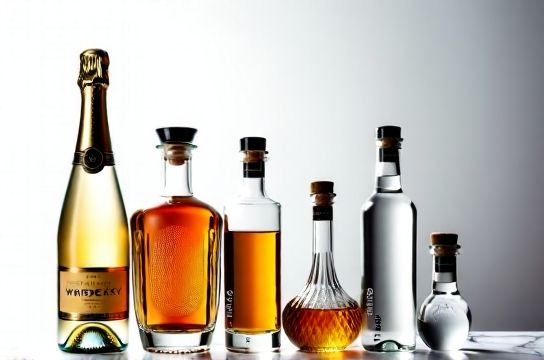
When you order a case of vintage brut, the 750 mL bottle isn’t just tradition—it’s logistics, shelf stability, thermal mass, and regulatory compliance in glass form. Champagne bottles are among the most engineered in the spirits category. Their thick walls (typically 25–32 mm at the base), reinforced punt (up to 40 mm deep), and tapered shoulder aren’t stylistic flourishes—they’re structural responses to internal pressure up to 90 psi (6.2 bar) during secondary fermentation (Updated: May 2026). That’s nearly three times the pressure in a car tire.
Most producers assume all sparkling wine bottles are interchangeable. They’re not. A standard Bordeaux-shaped 750 mL bottle holds ~750 g of liquid but weighs 890–940 g empty—whereas a true champagne bottle averages 920–1,020 g. That extra 50–80 g isn’t waste; it’s safety margin. Underfill a champagne bottle by even 5%, and CO₂ solubility shifts enough to risk premature cork ejection or inconsistent effervescence on pour.
H2: The Real-World Bottleneck: Standardization vs. Brand Identity
Here’s what bottling lines don’t tell you: while ISO 8716:2022 defines nominal capacities (e.g., 750 mL ± 15 mL), actual fill volume tolerance is ±5 mL for premium still wines—and ±10 mL for sparkling—because carbonation adds variability in headspace compression. But when you move into custom shapes—flared shoulders for tequila, angular cuts for premium vodka, or apothecary-style necks for craft gin—the tolerances tighten. Your filler must adjust dwell time, vacuum pull, and capping torque per SKU. One client switched from round to octagonal tequila bottles (tequila bottle) and saw 12% more line stoppages until they recalibrated their filler’s servo timing and swapped corking heads.
That’s why leading distillers—especially those launching limited editions or entering competitive markets like US premium whiskey or EU agave spirits—don’t start with design. They start with manufacturability mapping: wall thickness distribution, annealing cycle compatibility, mold draft angles (>1.5° minimum), and pallet footprint alignment. A 1L whiskey bottle that looks stunning on Instagram may overhang standard EUR-pallet edges by 14 mm—triggering surcharges from 3PLs or requiring custom slip sheets.
H2: Alcohol Beverage Bottle Sizes: What Fits Where, and Why
Not all ‘standard’ sizes behave the same across categories. A 375 mL bottle (mini spirit bottle) is legally defined in the US as a ‘half-size’ for distilled spirits—but in the EU, it’s classified as a ‘small format’ under Regulation (EU) No 1169/2011, requiring different labeling placement rules for allergens and ABV. Likewise, a ‘pint’ means 473 mL in the US—but 568 mL in the UK. Confusing them costs recalls.
The most common alcohol beverage bottle sizes—and their real-world constraints:
• 50 mL (miniature): Used for airline service and sampler packs. Requires precision gravity fillers; blow-molded PET versions dominate here, but glass demands ultra-thin necks (<12 mm OD) and specialized crating. • 375 mL: High growth segment for premium cocktails-to-go and gift sets. Must fit in standard 6-bottle shipper boxes (285 × 180 × 245 mm internal). Wall thickness drops to 2.8–3.2 mm—so impact resistance becomes critical. We’ve seen 7% breakage rate increase when switching from 750 mL to 375 mL without reinforcing the base ring. • 750 mL: Industry anchor. Fits 12 per case (US), 10 per case (EU), and aligns with global tax bands. Base diameter typically 74–76 mm—optimized for automated corking and label wrap machines. • 1L: Gaining traction in value-focused markets (e.g., Canadian rye, Mexican mezcal). Requires thicker sidewalls (≥4.0 mm) and modified pallet stacking (max 8 layers vs. 10 for 750 mL) due to center-of-gravity shift. • 1.75 L (handle bottle): Dominant in US value-tier vodka and rum. Neck finish must be 38 mm PCO 1881 or equivalent for tamper-evident caps. Weight exceeds 2 kg filled—ergonomics testing shows >22% of retail staff report wrist fatigue restocking these without handles.
Note: ‘Wine bottle’ and ‘champagne bottle’ are often conflated—but they’re not identical. While both use 750 mL nominal capacity, champagne bottles have thicker glass, deeper punts, and tighter neck tolerances (±0.15 mm vs. ±0.3 mm for still wine). Substituting one for the other risks seal failure under pressure or inconsistent dosage during disgorgement.
H2: From Sketch to Shelf: How Custom Spirit Bottle Manufacturing Actually Works
Custom doesn’t mean ‘design-first’. It means constraint-first. At GlassCraft, every new project starts with a manufacturability review—not a mood board. Here’s how it breaks down:
Step 1: Feasibility Gate (Days 1–3) We assess your CAD or sketch against six non-negotiables: minimum wall thickness (3.0 mm for 375 mL, 4.2 mm for 1.75 L), draft angle compliance, base stability ratio (height ÷ base diameter ≤ 3.8), neck finish standardization (we support 18.5 mm, 28 mm, 38 mm PCO, and 30/400 ROPP), thermal shock tolerance (tested to 120°C → 20°C immersion), and pallet load optimization.
Step 2: Mold Engineering (Days 4–14) Glass molds aren’t CNC-milled—they’re cast from high-nickel steel, heat-treated, then hand-finished. A single cavity for a complex tequila bottle takes ~11 days to machine and polish. We use laser profilometry to verify cavity geometry within ±0.08 mm before first blow. Why? Because a 0.15 mm variance in shoulder radius causes 18% higher stress concentration during filling—leading to microfractures visible only under polarized light.
Step 3: First Article Run (Days 15–21) We run 500 units on our pilot line (not production)—measuring weight consistency (±2 g), fill height repeatability (±1.2 mm), and thermal shock survival (3 cycles, 100% pass required). Clients receive full metrology reports, not just photos.
Step 4: Production Ramp & Certification (Day 22 onward) All bottles undergo 100% automated vision inspection (cracks, bubbles >0.3 mm, finish defects). Every 5,000th unit gets destructive testing: internal pressure burst (min 12 bar for sparkling), drop test (1.2 m onto concrete, 3 orientations), and cap torque validation.
H2: Material Reality: Glass Isn’t Just Glass
Soda-lime glass dominates (92% of spirit bottles), but its composition matters. Standard batch uses 73% SiO₂, 13% Na₂O, 10% CaO. For premium tequila bottle or whiskey bottle applications, we upgrade to low-iron glass (Fe₂O₃ < 0.015%)—increasing clarity by 22% (measured via Haze Index, ASTM D1003) and reducing greenish tint. It costs 18–22% more—but eliminates the need for costly post-production polishing.
Recycled content is rising—but with caveats. Up to 30% cullet is viable for 750 mL and smaller formats without compromising strength (Updated: May 2026). Above that, viscosity changes during forming increase neck eccentricity risk. We track cullet source rigorously: post-consumer (bottle-to-bottle) yields better UV stability than pre-consumer (factory scrap), which can retain trace organics affecting long-term ABV stability.
H2: Comparing Key Bottle Types: Geometry, Function, and Fit
| Bottle Type | Typical Capacity | Base Diameter (mm) | Height (mm) | Wall Thickness (mm) | Key Functional Trait | Manufacturing Note |
|---|---|---|---|---|---|---|
| Champagne Bottle | 750 mL | 75–77 | 315–322 | 28–32 (base) | Deep punt + thick base for pressure containment | Requires slow annealing cycle (90+ min) to prevent stress cracking |
| Whiskey Bottle | 750 mL / 1L | 72–76 | 285–330 | 3.8–4.5 | Squared or flared shoulder for label real estate | Shoulder angle >15° requires split molds; increases tooling cost by ~35% |
| Tequila Bottle | 750 mL / 1L | 74–78 | 290–345 | 4.0–4.8 | Tall, narrow profile with heavy base for agave authenticity | Must pass ASTM C149 thermal shock test (100°C → 20°C, no crack) |
| Vodka Bottle | 750 mL / 1L / 1.75 L | 70–80 | 270–360 | 3.2–4.2 | Minimalist shape; emphasis on clarity and symmetry | Low-iron glass strongly recommended; standard glass shows visible green cast under LED retail lighting |
| 375 mL Mini Bottle | 375 mL | 62–66 | 230–245 | 2.8–3.4 | Compact footprint for travel retail and gifting | High-risk for chipping at lip; requires diamond-honed finish and 100% visual edge inspection |
H2: When ‘Standard’ Is the Smartest Custom Choice
Some brands assume custom means unique silhouette. Often, the highest ROI comes from customizing *what’s inside the standard*: embossed logos in the base (no tooling change if depth ≤ 1.2 mm), proprietary color batching (cobalt blue for gin, amber for aged rum), or dual-layer labels with NFC chips laminated beneath the top coat. One bourbon client increased on-shelf dwell time by 3.2 seconds (eye-tracking verified) using a matte-finish glass body with gloss-embossed distillery name—same mold, zero geometry change.
And remember: ‘glass wine bottle’ and ‘wine glass’ serve different physics. A 750 mL glass wine bottle is designed for storage and transport. A wine glass is engineered for aroma delivery—its bowl volume, rim diameter, and stem length affect ethanol evaporation rate and ester release. Don’t conflate the two. If you’re sourcing both, coordinate thermal expansion coefficients: borosilicate glasses (used in premium wine glasses) expand at 3.3 × 10⁻⁶ /°C; soda-lime bottle glass expands at 8.5 × 10⁻⁶ /°C. Mismatched coefficients cause condensation pooling and label delamination in humid environments.
H2: Getting Started—No Guesswork, No Surprises
If you’re evaluating options for your next whiskey bottle, tequila bottle, or 375 mL bottle launch, skip the PDF spec sheets. Request physical samples—filled and capped—from GlassCraft. We ship production-intent units (not prototypes) with full dimensional reports, weight logs, and pressure-test certificates. You’ll feel the heft difference between standard and low-iron glass. You’ll see how the punt depth affects stack stability. You’ll test the neck finish against your existing capper.
There’s no substitute for tactile validation. And if you’re scaling beyond 50,000 units/year, ask about our mold-sharing program—where qualified clients co-invest in multi-cavity molds and amortize tooling across SKUs. It cuts upfront cost by up to 40%, with guaranteed priority scheduling.
For full technical specs, regional compliance checklists, and lead-time calendars, visit our complete setup guide at /.
H2: Final Word: Dimensional Discipline Pays Dividends
Champagne bottle dimensions aren’t arbitrary. Neither are whiskey bottle heights or 375 mL bottle diameters. Every millimeter reflects trade-offs between material cost, filling speed, shelf impact, shipping density, and consumer ergonomics. The fastest-growing spirit brands don’t chase novelty—they solve for repeatability first, then elevate through precise execution: consistent glass thickness, certified thermal performance, and packaging that survives real-world handling.
Your bottle isn’t just a container. It’s your first production line, your longest shelf-life component, and your most regulated touchpoint. Treat it that way.