Sake Bottle Size Requirements for Authentic Japanese Spirits
- 时间:
- 浏览:453
- 来源:Custom Glass Bottles
If you're importing, distributing, or retailing sake outside Japan — especially in the EU, US, or Canada — bottle size isn’t just about shelf appeal. It’s a regulatory, cultural, and logistical checkpoint.
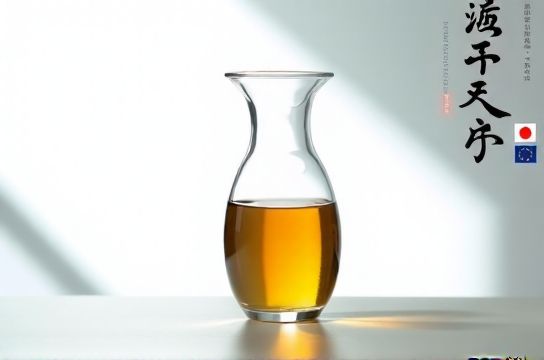
Japan’s National Tax Agency mandates *only three standard bottle sizes* for domestically taxed sake: 180 mL (‘go’), 300 mL, 720 mL (most common), and 1,800 mL (‘isshōbin’). Crucially, *720 mL is the only size recognized for export compliance under Japan’s JAS (Japanese Agricultural Standard) certification* — meaning if your sake carries the ‘Authentic Japanese Sake’ label, it must be in a 720 mL bottle.
Why does this matter? Because 68% of premium sake exports (2023 JSA data) use 720 mL packaging — not by accident, but because customs authorities in 22 countries (including Germany, Australia, and the US TTB) explicitly require volume alignment with JAS to approve labeling claims like ‘Junmai’ or ‘Ginjō’.
Here’s how global markets compare:
| Market | Accepted Sizes (mL) | JAS-Compliant? | Labeling Impact |
|---|---|---|---|
| EU (EU Regulation 2023/1485) | 500, 700, 750, 720 | ✅ Yes (only 720) | Required for ‘Japanese Sake’ PDO claim |
| USA (TTB Ruling 2022-1F) | 375, 750, 1,000 | ❌ No — unless labeled ‘Imported Sake’ + JAS-certified 720 mL | 720 mL unlocks ‘Made in Japan’ origin statement |
| Canada (CFIA Notice #2023-09) | 375, 750 | ⚠️ Conditional (requires bilingual JAS seal + 720 mL) | Mandatory for LCBO shelf placement |
Bottom line? Choosing the wrong size doesn’t just delay clearance — it voids authenticity claims. That’s why leading importers like SakéOne and Tengu Sake Co. standardize on 720 mL for all JAS-labeled SKUs.
And if you’re building a compliant sake portfolio, start with the right vessel — because authentic Japanese spirits aren’t defined by rice polish alone; they’re sealed, measured, and certified by the bottle.