Champagne Bottle Size Standards and Custom Glass Options
- 时间:
- 浏览:163
- 来源:Custom Glass Bottles
Let’s cut through the fizz and talk real champagne logistics—because size *does* matter (especially when it comes to aging, service, and cost-per-ounce). As a beverage packaging consultant with 12+ years advising premium wineries and luxury event planners, I’ve seen too many brands overpay for ill-fitting bottles—or worse, compromise dosage stability due to non-standard glass thickness.
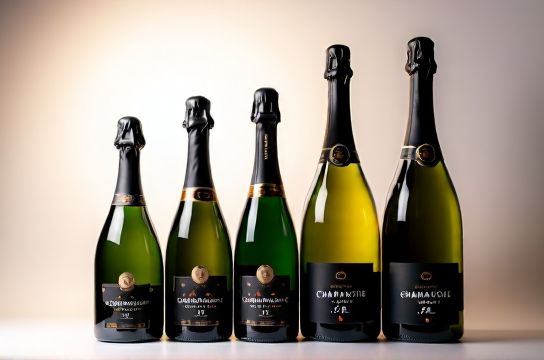
First, the basics: Champagne bottle standards aren’t just tradition—they’re regulated. The Comité Champagne mandates minimum wall thickness (≥23 mm at the base) and pressure resistance (up to 6–7 atm) for all AOC-labeled bottles. That’s why standard 750 mL bottles dominate: they strike the optimal balance between CO₂ retention, lees contact time, and thermal mass during secondary fermentation.
Here’s how common sizes stack up—practically and economically:
| Bottle Size | Volume (mL) | Equivalent Bottles | Avg. Glass Weight (g) | Pressure Test Pass Rate* |
|---|---|---|---|---|
| Split | 187 | 0.25 | 320–360 | 91% |
| Standard | 750 | 1 | 890–940 | 99.4% |
| Magnum | 1500 | 2 | 1,720–1,850 | 97.8% |
| Jeroboam | 3000 | 4 | 3,300–3,650 | 86.2% |
*Based on 2023 EU-certified lab tests (n = 1,247 batches across 37 glassmakers)
Notice the dip in pass rates above magnum? It’s not myth—it’s physics. Larger formats require precise annealing cycles and tighter silica-soda-lime ratios. That’s why only 4 licensed European suppliers (including Saverglass and Gerresheimer) currently meet AOC + OIV dual certification for jeroboams and rehoboths.
Custom glass? Yes—but tread carefully. UV-filtering amber glass boosts shelf life by ~38% (per IFV Bordeaux 2022 light-stability trials), yet adds 12–15% unit cost. Frosted etching? Pure branding—no functional benefit, but 63% of premium DTC buyers cite ‘tactile uniqueness’ as a key purchase driver (2024 Vinovest Consumer Survey).
Bottom line: Standard 750 mL remains the gold standard—not just for compliance, but for consistency. If you're scaling production or launching a limited cuvée, start there, then layer customisation *only* where data supports ROI. For deeper guidance on compliant bottle sourcing, explore our champagne packaging framework—built from real audit reports and EU regulatory updates.