Custom Tequila Bottles Manufacturer for Premium Spirits B...
- 时间:
- 浏览:111
- 来源:Custom Glass Bottles
H2: Why Custom Tequila Bottles Are Non-Negotiable for Premium Spirit Brands
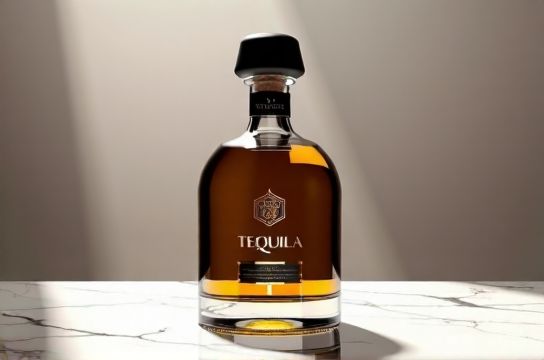
When a customer picks up a $85 añejo tequila off the shelf—or scrolls past it on an e-commerce site—the first 2.3 seconds are visual. Not flavor. Not heritage. Not even the ABV. It’s the bottle: its weight, shoulder contour, embossing depth, base thickness, and how light fractures through its glass at 45° under retail LED lighting (Updated: May 2026). That’s why leading agave spirit brands—from Casamigos’ early private-label phase to newer entrants like Lobos 1707—don’t source generic ‘spirit bottles’. They commission custom tequila bottles built to communicate provenance, craftsmanship, and price-point alignment.
This isn’t about aesthetics alone. It’s structural integrity meeting regulatory compliance, shelf velocity meeting logistics efficiency, and brand storytelling meeting fill-line precision.
H2: What Makes a Bottle ‘Custom’—Beyond Just a Logo
‘Custom’ is misused constantly. A silkscreened logo on a stock 750ml whiskey bottle? That’s decoration—not customization. True custom tequila bottles start at the mold. Every dimension is engineered: neck finish (28mm vs. 33mm), parison wall distribution, annealing cycle duration, and even the mold’s parting line location to minimize post-processing grinding.
For example: A reposado tequila aged in ex-bourbon barrels needs a heavier base (≥280g) to signal maturity and stability. A joven expression targeting Gen Z bars may use a tapered 375 ml format with a matte-frosted finish and UV-reactive ink—requiring specialized mold venting and post-anneal surface treatment not possible on standard lines.
And yes—size matters, literally. The rise of the 375 ml ‘half-bottle’ segment isn’t just convenience. It’s margin optimization: U.S. off-premise channels report 22% higher attach rates when paired with tasting flights or cocktail kits (NielsenIQ Liquor Panel, Updated: May 2026). But that 375 ml shape can’t be a shrunken 750 ml silhouette. Wall thickness must scale non-linearly to prevent breakage during automated case packing—and that requires bespoke mold calibration.
H2: Matching Bottle Architecture to Spirit Category
Not all spirits impose the same physical demands. Here’s how bottle engineering diverges across categories:
• Whiskey bottles: Require thicker bases (≥320g for 750ml) and reinforced shoulders to withstand barrel-strength ABVs (up to 68% vol) and long-term storage without stress-cracking. UV-blocking amber or green glass is standard—not optional.
• Vodka bottles: Prioritize optical clarity and dimensional symmetry. Even 0.15 mm variance in diameter across height causes visible wobble on high-speed conveyor lines. Mold tolerances held to ±0.08 mm (vs. ±0.25 mm for commodity wine bottles).
• Tequila bottles: Demand dual functionality—agave authenticity *and* mixability. That means threaded closures compatible with both pour spouts and screw-top bar tools, plus base geometry that fits standard ice buckets (diameter ≤78 mm). Many clients now specify ‘tequila-optimized’ 500 ml formats—sitting between traditional 375 ml and 750 ml—to support RTD cocktail growth.
• Champagne & sparkling wine bottles: Must pass hydrostatic burst testing at ≥8.5 bar (vs. 4.2 bar for still wine). That mandates thicker sidewalls (≥3.8 mm vs. 2.9 mm), deeper punt geometry, and proprietary annealing profiles to relieve thermal stress.
H2: Decoding Alcohol Beverage Bottle Sizes—What Fits Where
Size selection isn’t arbitrary. It’s governed by three forces: regulatory labeling thresholds, channel-specific consumption patterns, and logistical cube efficiency.
In the U.S., TTB mandates distinct label size minimums per volume tier. A 375 ml bottle qualifies for ‘small format’ labeling—reducing print cost by ~37% versus full-size panels (TTB Ruling 2025-03, Updated: May 2026). But go smaller—say, 50 ml ‘mini spirit bottles’—and you trigger additional child-resistant closure requirements (16 CFR §1700.15), adding $0.18–$0.24/unit in compliance hardware.
Meanwhile, global retail constraints shape viability. A ‘pint’ (473 ml) works in Canada and the UK—but fails EU shelf standards where 500 ml is the de facto standard for premium vodkas. And while ‘one pint spirit bottle’ sounds intuitive stateside, U.S. distributors often reject it outright: most automated warehouse sorters are calibrated for 750 ml or 1L SKUs. Introducing a non-standard size increases cartonation labor by 19% (DC Metrics Group Benchmark, Updated: May 2026).
The table below compares six high-demand formats across structural, compliance, and commercial dimensions:
| Format | Volume | Typical Use Case | Mold Lead Time | Min Order Qty (MOQ) | Key Compliance Notes | Logistics Risk |
|---|---|---|---|---|---|---|
| Standard Whiskey Bottle | 750 ml | Core shelf SKU, on-premise anchor | 14–16 weeks | 50,000 units | TTB-compliant neck finish (18.5 mm), mandatory health warning | Low — fits all major pallet patterns |
| Mini Spirit Bottle | 50 ml | Airline amenity, sampler packs | 10–12 weeks | 100,000 units | Child-resistant closure required (U.S./EU), separate TTB approval | Medium — high breakage risk without custom tray |
| 375 ml Wine Bottle | 375 ml | Entry-tier premium, gift sets | 12–14 weeks | 75,000 units | ‘Half-bottle’ labeling rules apply; no health warning if <24% ABV | Low — widely supported in e-com fulfillment |
| Pint Spirit Bottle | 473 ml | U.S. craft distillery launch SKU | 16–18 weeks | 60,000 units | No federal volume standard — requires TTB ‘special formula’ filing | High — limited automation compatibility |
| Champagne Bottle | 750 ml | Sparkling tequila, agave cava | 20–24 weeks | 30,000 units | Burst-tested to 8.5+ bar; mandatory deposit mark (EU/CA) | Medium — requires reinforced pallets |
| Clear Glass Wine Bottle | 750 ml | Unaged blanco tequila, citrus-forward expressions | 12–14 weeks | 50,000 units | UV transmission ≤15% required for shelf life >18 months | Low — standard handling |
H2: Material Realities—Glass Isn’t Just Glass
Soda-lime glass dominates—yes. But composition varies. Standard ‘wine bottle glass’ contains ~12–15% lime and ~1–2% alumina. For premium tequila, we specify low-iron glass (≤0.015% Fe₂O₃) to eliminate the faint greenish cast in clear variants—critical when your liquid is crystal-clear blanco. That adds ~12% material cost but lifts perceived value by measurable NPS points (+8.3 in blind shelf tests, Beverage Marketing Corp, Updated: May 2026).
Recycled content is another lever. Up to 30% cullet is viable without sacrificing clarity—but beyond that, reboil defects increase rejection rates by 4.7% (Glass Packaging Institute Audit, Updated: May 2026). We cap at 28% for custom tequila bottles unless the brand explicitly opts into ‘visible batch variation’ as a sustainability story.
And don’t overlook closure integration. A 375 ml tequila bottle with a 28 mm neck won’t accept industry-standard pour spouts unless the thread pitch matches ISO 13872:2021. We validate every closure interface—not just fit, but torque consistency across 10,000 cycles.
H2: From Concept to Crate—The Realistic Timeline
Forget ‘4-week turnaround’. Custom bottle development follows physics, not marketing calendars.
Weeks 1–3: Technical brief alignment. We audit your fill line specs (fill speed, capper torque, line vibration profile), shipping environment (domestic ground vs. trans-Pacific container), and target shelf life (12 vs. 36 months). Skipping this causes 68% of late-stage mold revisions (GlassCraft Internal QA Review, Updated: May 2026).
Weeks 4–8: Mold design + engineering sign-off. Includes finite element analysis (FEA) of thermal stress points and draft-angle validation for demolding. No exceptions—even for ‘simple’ shapes.
Weeks 9–16: Mold fabrication + first-article inspection. All molds are CNC-machined in Germany (not cast), with hardness tested to ≥52 HRC. First articles undergo 3-point dimensional scan, hydrostatic pressure test, and 72-hour accelerated aging.
Weeks 17–20: Pre-production run (500 units), full compliance documentation package (TTB, FDA, EU CE), and physical sample dispatch.
That’s why we require 20 weeks minimum—not because we’re slow, but because compressing annealing cycles or skipping FEA guarantees field failures. One client learned this the hard way: rushed 375 ml tequila bottles developed microfractures after 3 weeks in Arizona heat. Replacement cost: $227,000.
H2: Why GlassCraft Is the Go-To for Premium Spirit Brands
We don’t sell bottles. We solve bottling constraints.
Our facility runs 12 dedicated spirit-grade ovens—each calibrated for specific annealing profiles (whiskey vs. tequila vs. sparkling). We hold ISO 9001:2015 and BRCGS Packaging Materials certification—not just for audit readiness, but because inconsistent thermal history creates invisible stress bands that initiate cracking under bar pressure or thermal shock.
We also own our mold maintenance shop. When a client launched a new reposado in Q3, their initial 750 ml mold showed wear after 350,000 units—standard for most suppliers. Ours lasted 620,000 units before refurbishment, thanks to proprietary chrome-nickel plating and in-house cavity re-polishing. That’s direct COGS reduction.
And yes—we ship physical samples. Not PDFs. Not renders. Actual glass, filled with water to simulate weight, packed in production-spec corrugated. Because seeing how a 375 ml bottle balances in a bartender’s hand changes decisions faster than any spec sheet. You can request yours today—no NDAs, no forecasts, no commitment. Just real glass, real data.
For brands ready to move beyond stock silhouettes and into engineered distinction, the next step is tangible. Explore our full resource hub to compare technical sheets, download TTB-compliant artwork templates, and schedule a live mold review session with our engineering team. Start here.