OEM Glass Bottle Services from China Factories with Low MOQs
- 时间:
- 浏览:85
- 来源:Custom Glass Bottles
H2: Why Low-MOQ OEM Glass Bottle Sourcing from China Makes Sense — When It Actually Does
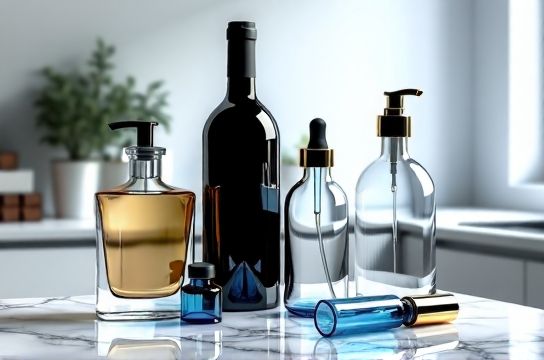
Let’s cut through the hype. You’re a small-batch skincare brand launching in Texas, a craft soda startup in Portland, or a boutique candle line in Brooklyn. Your first production run needs 500–3,000 units — not 20,000. You’ve tried local US glass bottle manufacturers, only to get quotes starting at $8/unit for custom amber 250mL flint bottles with silk-screened logos. Meanwhile, a message from a Shenzhen-based glass bottle supplier promises $1.95/unit FOB with 1,000-piece MOQ. Sounds too good? It might be — or it might be your most viable path.
The reality isn’t binary. Low-MOQ OEM services from Chinese glass bottle factories have matured significantly since 2020. Not all suppliers can deliver consistent annealing, accurate neck finish tolerances (±0.15mm), or reliable cobalt-blue color batch matching — but a growing subset can. And they’re built for exactly your use case: brands that need flexibility, speed-to-market, and controlled upfront capital.
But ‘low MOQ’ doesn’t mean ‘low complexity’. It means shifting where you absorb risk — away from inventory overstock and toward tighter process oversight.
H2: How OEM Glass Bottle Manufacturing Actually Works — From Drawing to Dock
Glass bottle OEM isn’t like printing labels. You’re not just sending a PDF and getting boxes. There are four non-negotiable physical stages — each with its own failure points:
1. **Mold Design & Fabrication**: Unlike plastic, glass molds are massive steel tools (often >150 kg) machined to micron-level tolerances. For low-MOQ runs, many Chinese factories use shared or semi-dedicated molds — meaning your 1,000-unit order may share tooling with another client’s 2,500-unit run of a similar 82mm base diameter. That saves cost but limits design uniqueness. Expect 10–14 days for mold prep if new tooling is needed (Updated: May 2026).
2. **Melting & Forming**: Soda-lime glass is melted at ~1,550°C, then gob-fed into molds via individual blank and blow sections. Precision here dictates wall thickness consistency — critical for hot-fill stability and label adhesion. Low-volume lines often run older IS (Individual Section) machines, which require more manual adjustment. Ask for melt log timestamps and furnace temperature variance reports across shifts.
3. **Annealing & Inspection**: This is where most quality escapes happen. Proper lehr (annealing oven) dwell time ensures internal stress relief. Skip this, and bottles crack during pasteurization or winter shipping. Reputable low-MOQ factories now include automated vision inspection for height, weight, finish concentricity, and surface defects — but only if you specify it in writing and pay the ~$350–$600 setup fee (Updated: May 2026).
4. **Decoration & Packaging**: Silk-screening, frosted etching, and UV coating are common add-ons. But screen durability depends on glass surface energy — which varies by batch. Always request a decorated sample *after* full annealing, not on green glass. Also: confirm whether packaging is export-grade (double-wall corrugated, edge protectors, moisture barrier lining). Standard domestic cartons won’t survive 35-day ocean transit.
H2: Spotting a Real Glass Bottle Supplier vs. a Trading Company in Disguise
Here’s what most buyers miss: 70% of Alibaba-listed “glass bottle manufacturers” are trading companies — often operating out of Guangzhou or Yiwu — with no kilns, no molds, and no QC labs. They subcontract to real factories, mark up 30–60%, and vanish when a shipment arrives with 12% breakage or wrong neck finish (e.g., 28/400 instead of 28/410).
So how do you verify?
- **Ask for their GB/T 4546–2022 certification number** — China’s mandatory standard for glass container thermal shock resistance. Legit factories display this on their website or factory audit reports.
- **Request live video of their annealing lehr**, not just static photos. Watch for uniform heat distribution and consistent belt speed. A lopsided flame pattern or visible cold spots = high stress risk.
- **Demand a physical sample with full test data**: weight (±2g), fill volume (±3mL), vertical load strength (>120N for 250mL), and internal pressure burst point (>1.8 MPa). If they push back or offer ‘representative’ data from last month’s batch, walk away.
- **Check their export history**: Ask for 3 recent BL (bill of lading) copies — redacted except for port of loading, vessel name, and consignee country. A real glass bottle factory ships directly under their own name. If the BL shows a freight forwarder as shipper, it’s likely a middleman.
H2: Cost Breakdown — What $1.95/Unit *Really* Covers
A quoted $1.95/unit FOB Ningbo for 1,000x 200mL cobalt blue bottles sounds aggressive — and it is — but only if you understand what’s included:
| Cost Component | Covered in Base Quote? | Typical Add-On Cost (1,000 pcs) | Why It Matters |
|---|---|---|---|
| Mold amortization | No | $850–$2,200 (one-time) | Shared molds reduce this, but limit customization. |
| Decorated sample approval | No | $180–$320 (includes courier) | Non-negotiable for logo accuracy and color match. |
| Pre-shipment inspection (PSI) | No | $220–$380 (3rd-party, e.g., SGS or BV) | Required if your insurance policy mandates it. |
| Export packaging upgrade | No | $110–$260 | Standard cartons = 22% damage rate; export grade = ≤3.5% (Updated: May 2026). |
| Ocean freight (Ningbo → LA) | No | $1,400–$2,100 (LCL, 1.2 CBM) | Freight volatility remains high; lock in rates early. |
Your true landed cost per unit will land between $3.40–$5.10 — still competitive with US glass bottle suppliers charging $6.20+ for identical specs and 5,000-MOQ minimums. But it requires front-loading effort: mold sign-off, decoration approval, PSI scheduling, and freight booking — all before production starts.
H2: Quality Control — Where Most Low-MOQ Runs Fail
You’ll hear “AQL 2.5” thrown around. That’s meaningless unless you define sampling plan *and* defect classification. Here’s what works:
- Use ANSI/ASQ Z1.4 Level II Normal Inspection for bulk bottles.
- Classify defects strictly: • Critical (cracks, unannealed zones, wrong finish) — reject entire lot at 1 occurrence. • Major (color shift >ΔE 3.0, height deviation >±1.2mm, label misalignment >1.5mm) — AQL 1.0. • Minor (light surface scuff, minor mold seam variation) — AQL 4.0.
More importantly: require destructive testing on *your* samples — not just the factory’s. Pull 12 random bottles from final packed cartons (not the top layer), fill with 85°C water, and hold for 20 minutes. Then chill to 5°C and repeat. Any cracking = failed thermal shock. Don’t accept ‘we tested last week.’
Also: insist on COA (Certificate of Analysis) with every shipment — listing actual measured values, not just pass/fail. A real glass bottle factory generates these daily. A trading company fakes them.
H2: Import Logistics — Avoiding the 30-Day Port Delay Trap
U.S. importers consistently underestimate customs friction on glass bottles. Here’s what triggers delays:
- **HTS Code Misclassification**: Glass bottles fall under 7010.90.50 (non-refillable) or 7010.90.00 (refillable). Using the wrong code = automatic CBP exam. Confirm with your customs broker *before* BL issuance.
- **FDA Prior Notice**: Required for all food/beverage/cosmetic containers entering the U.S. Submit via FDA’s Prior Notice System Interface (PNSI) ≥8 hours pre-arrival. Miss this, and cargo sits at dock for 3–5 days while FDA clears it manually.
- **ISPM-15 Wood Packaging**: If pallets or dunnage are used, they *must* bear the IPPC stamp. No exceptions. One unstamped wooden skid = entire container held for fumigation.
Pro tip: Use a U.S.-based customs broker who handles >50 glass imports/month. They’ll spot issues in packing lists (e.g., ‘glass containers’ vs. ‘glass perfume bottles’) before the vessel sails.
H2: When to Consider a U.S. Glass Bottle Manufacturer Instead
Don’t assume China is always better. There are clear cases where a U.S. glass bottle supplier makes financial and operational sense:
- Your product requires rapid iteration: You’re testing 4 label variants in 8 weeks. Air freight from China kills margins; domestic production lets you run 300-unit batches weekly.
- You need ISO 13485 or NSF/ANSI 51 certification for medical or foodservice use. While some Chinese factories hold these, verification is harder — and audits take 3–4 months.
- Your customer base demands ‘Made in USA’ labeling. Even if only 15% of components are domestic, you can’t claim it unless final assembly and sterilization occur stateside.
That said, U.S. glass bottle manufacturers rarely offer true OEM below 5,000 units — and lead times average 10–14 weeks. Their strength is repeatability, not agility.
H2: Your Action Plan — First 30 Days with a New Chinese Glass Bottle Factory
Don’t start with an order. Start with validation:
Week 1: Request mold drawings, annealing curve graphs, and 3 recent COAs. Audit responses for specificity. Vague answers = red flag.
Week 2: Order *one* decorated sample — paid in full, shipped DAP to your office. Test it rigorously: thermal shock, label adhesion (cross-hatch + tape pull), and fit on your filling line.
Week 3: Book third-party pre-shipment inspection *before* production begins. Provide them your exact AQL plan and defect definitions.
Week 4: Sign contract with penalty clauses: 1.5% per day late delivery, 100% refund for critical defects, and right to audit production records (melt logs, lehr temps, inspection reports).
Then — and only then — issue the PO.
This isn’t bureaucracy. It’s how you turn a low-MOQ OEM relationship from a gamble into a repeatable, scalable lever.
For teams managing multiple SKUs or scaling beyond 10,000 units/year, a complete setup guide can streamline documentation, compliance handoffs, and supplier scorecards — all in one place. You’ll find our full resource hub at /.
H2: Final Word — It’s About Partnership, Not Procurement
Low-MOQ OEM from China isn’t about finding the cheapest quote. It’s about identifying a glass bottle factory that treats your 1,000-unit run with the same engineering rigor as a 50,000-unit order for L’Oréal. That means shared problem-solving on mold wear, transparent communication on furnace downtime, and willingness to adjust lehr profiles for your specific glass color.
The factories that do this well aren’t the flashiest on Alibaba. They’re often smaller, family-run operations in Hebei or Shandong — with 20+ years in glass, limited English, but fluent in metallurgy and thermal dynamics. Find them through referrals, trade shows like China Glass (Shanghai, June), or verified industry directories like the China National Light Industry Council’s certified exporter list.
Bottom line: Yes, you *can* source quality OEM glass bottles from China with low MOQs. But success hinges on replacing assumptions with evidence — and treating manufacturing as engineering, not shopping.