Glass Bottle Procurement Guide for Cosmetics Brands
- 时间:
- 浏览:120
- 来源:Custom Glass Bottles
H2: Why Glass Bottles Still Matter in Premium Skincare & Cosmetics
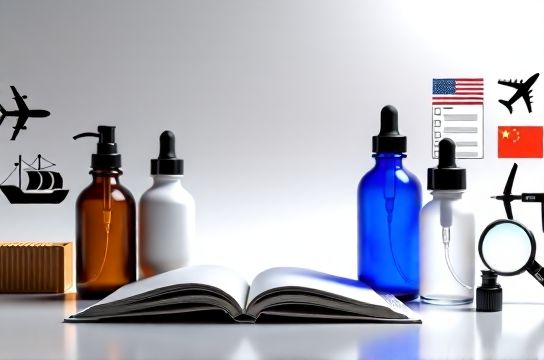
Glass remains the gold standard for high-end serums, essential oils, toners, and anti-aging formulations. It’s chemically inert, fully recyclable, UV-resistant (when amber or cobalt), and conveys luxury at shelf — something PET or aluminum still struggles to replicate. But unlike off-the-shelf packaging, glass bottle procurement isn’t plug-and-play. A misstep in sourcing can delay product launch by 12–16 weeks, inflate landed costs by 22–35%, or trigger a full recall due to dimensional drift or seal failure.
This guide cuts through the noise. It’s written for brand founders, operations managers, and procurement specialists who’ve already decided *to use glass* — now they need to get it right, on time, and without hidden liabilities.
H2: How Glass Bottles Are Actually Made (And Why It Matters for Your Spec)
Most cosmetic-grade glass bottles are made via press-and-blow or blow-and-blow processes using soda-lime or borosilicate glass. Soda-lime dominates (≈87% of cosmetic bottles, Updated: May 2026) — it’s cost-effective, moldable into complex shapes, and compatible with standard labeling and decoration. Borosilicate is reserved for high-heat or high-pH formulas (e.g., concentrated peels or vitamin C suspensions), but adds 40–60% to unit cost and limits mold complexity.
Key production stages:
• Raw material batching (sand, soda ash, limestone, cullet) • Melting (1500–1600°C in continuous tank furnaces) • Forming (molded under pressure; tolerances ±0.3 mm typical for neck finish) • Annealing (controlled cooling to relieve internal stress — skip this, and bottles crack during filling or shipping) • Inspection (automated vision + manual sampling for bubbles, stones, or wall thickness variation) • Surface treatment (optional: acid etching for matte finish, coating for improved label adhesion)
What you *must* specify upfront: glass type, weight (g/bottle), wall thickness (mm), neck finish (e.g., 18/415, 20/410), tolerance stack-up (critical for pump compatibility), and annealing certification (ISO 7979 compliance recommended).
H2: Evaluating Glass Bottle Manufacturers vs. Suppliers vs. Wholesalers
Not all vendors play the same role — and confusing them leads to scope creep, finger-pointing, and compromised QC.
• Glass bottle manufacturer: Owns melting furnaces, molds, and annealing lines. Capable of custom tooling (NRE: $3,500–$12,000), minimum order quantities (MOQs) typically 25,000–100,000 units per SKU. Lead time: 10–14 weeks from approved artwork/tooling. Best for brands scaling beyond 50K units/year.
• Glass bottle supplier: Often a trading company or distributor. Sources from multiple factories (sometimes across provinces or countries). Offers catalog SKUs, lower MOQs (5,000–20,000 units), faster turnaround (6–8 weeks), but limited engineering support and traceability. Risk: no direct control over annealing, raw material batches, or mold maintenance.
• Glass bottle wholesaler / glass bottle distributor: Holds finished stock — usually standard shapes (e.g., 30 mL amber apothecary, 50 mL frosted round). MOQs as low as 500 units. Ideal for sampling, small-batch launches, or emergency reorders. Downside: zero customization, dated stock (risk of micro-scratches or moisture absorption if stored >6 months), and no lot-level QC data.
If your formula requires tight dimensional repeatability (e.g., airless pumps with stainless steel springs), go direct to a manufacturer — even if it means paying 15% more. If you’re launching three SKUs with <10K annual volume, a vetted supplier offers better agility.
H2: China vs. USA: Where to Source — And When to Mix Both
China remains the dominant source for cosmetic glass: ≈63% of global export volume (Updated: May 2026), with clusters in Hebei (low-cost mass production), Guangdong (mid-tier decoration capability), and Shandong (borosilicate specialty). Advantages include deep mold-making talent, vertical integration (some factories handle molding, silk-screening, and assembly), and scalability. But lead times stretch post-COVID — ocean freight from Ningbo to LA now averages 38–45 days (vs. 28 pre-2022), and customs inspections for glass have increased 32% since Q3 2024 due to breakage-related safety reports.
US-based glass bottle manufacturers (e.g., Ardagh, Berlin Packaging’s US plants, or smaller players like Anchor Glass Cosmetic) offer shorter lead times (4–6 weeks), easier audit access, and zero import tariffs — but with trade-offs: fewer decorative options (limited cold-stamping, no multi-layer screen printing), higher labor-driven NRE fees ($8,000–$18,000), and less flexibility on small-batch color matching.
Smart brands use a hybrid model: develop and qualify first-run tooling and QC protocols with a Chinese glass bottle manufacturer, then shift 20–30% of baseline volume to a US glass bottle supplier for buffer stock and responsiveness. This avoids single-point failure — and gives leverage when negotiating annual price resets.
H2: The Real Cost of Glass Bottle Procurement (Beyond the Unit Price)
A $0.28/unit quote from a China glass bottle factory looks compelling — until you factor in landed cost:
• Tooling amortization ($5,000 ÷ 100,000 units = $0.05/unit) • Sea freight ($1,850/container × 1.12 for peak season surcharge = $2,072; fits ~145,000 30 mL bottles → $0.014/unit) • Import duties (2.4% for glass containers, HTS 7010.90.50 — duty-free under USMCA if made in Mexico, but not China) • Customs brokerage ($220–$380 per entry) • Insurance (0.25% of CIF value) • Inland freight (port to warehouse: $1.20–$2.40 per case of 24) • QC failure contingency (industry average: 2.1% rejection rate at receiving — Updated: May 2026)
That $0.28 becomes ≈$0.39–$0.43 landed, depending on volume and Incoterm (FOB vs. DDP). Worse: if the bottle fails pump fit testing *after* you’ve printed 10,000 labels, you’ll pay for rework, scrap, and air freight for replacements — easily $8,000+.
The table below compares procurement pathways by key operational criteria:
| Criteria | Direct China Manufacturer | Vetted China Supplier | US-Based Manufacturer | Domestic Wholesaler |
|---|---|---|---|---|
| Typical MOQ | 50,000–100,000 units | 5,000–20,000 units | 25,000–50,000 units | 500–2,000 units |
| Lead Time (first order) | 10–14 weeks | 6–8 weeks | 4–6 weeks | 3–5 business days |
| Custom Tooling Support | Yes (full control) | Limited (shared molds) | Yes (but slower iteration) | No |
| QC Documentation | Full ISO-compliant reports per lot | Summary COA only | Full reports + onsite audit access | None (stock-only) |
| Landed Cost Range (30 mL bottle) | $0.39–$0.43 | $0.45–$0.52 | $0.61–$0.74 | $0.85–$1.20 |
| Best For | Brands >100K units/year, custom design, long-term partnerships | Mid-volume brands testing new formats or needing speed | Brands prioritizing compliance, speed-to-market, or sensitive formulas | Sampling, influencer kits, or emergency top-ups |
H2: Vetting a Glass Bottle Factory — 7 Non-Negotiable Checks
Don’t rely on Alibaba badges or glossy brochures. Do these instead:
1. Request furnace logs (melting temperature consistency over last 30 days). Fluctuations >±15°C correlate with 3.8× higher bubble incidence (Updated: May 2026). 2. Ask for a sample lot’s dimensional report — not just ‘within spec’, but actual measured values for OD, height, neck finish runout, and base flatness. 3. Verify annealing: request a copy of their annealing lehr calibration certificate (valid ≤12 months) and ask how often they perform strain pattern analysis (should be weekly). 4. Confirm mold maintenance schedule. Molds older than 18 months without refurbishment show measurable wear in shoulder definition — problematic for precise pump alignment. 5. Audit their QC workflow: do they use automated vision systems *before* packing? Or rely solely on final random sampling? 6. Trace raw materials: reputable factories disclose cullet % (recycled content). Cosmetic-grade soda-lime should contain ≤15% post-consumer cullet to avoid metal flecks or haze. 7. Visit — or hire a third-party inspector (e.g., SGS, Bureau Veritas) for a pre-shipment audit. Skip this, and you risk receiving bottles with micro-fractures invisible to the naked eye but fatal under vacuum filling.
H2: Quality Control That Actually Works — Not Just Paperwork
Your QC checklist must go beyond “no cracks, no chips”:
• Wall thickness mapping: Use ultrasonic gauging on 5 points per bottle (shoulder, body mid, base edge, base center, neck). Acceptable variance: ±0.15 mm for 30–50 mL bottles. • Finish concentricity: Critical for pump compatibility. Measure runout at the thread root — max 0.12 mm (per ASTM C149). Exceed that, and 1 in 8 pumps will leak or jam. • Thermal shock resistance: Submerge in 75°C water for 5 min, then immediately into 4°C water. Zero cracks = pass. Required for hot-fill toners or steam-sterilized tools. • Coefficient of friction (COF): Test both dry and wet conditions. COF <0.25 causes slippage on high-speed fillers; >0.45 jams conveyors.
Run these tests on *your* production line — not the factory’s lab. Bottles may pass at origin but fail after 40 days at sea due to humidity-induced surface oxidation.
H2: Logistics, Compliance, and the Import Trap You Didn’t See Coming
Glass bottles fall under FDA 21 CFR Part 174 (indirect food additives) — yes, even for cosmetics. While enforcement is lighter than for ingestibles, FDA can detain shipments if documentation lacks:
• Certificate of Conformance (CoC) signed by manufacturer • Heavy metals test report (Pb, Cd, As, Sb — max 0.1 ppm each in leachate, per CPSIA) • Box drop-test certification (ISTA 3A compliant for export cartons)
Also note: many Chinese glass bottle suppliers list “FDA compliant” as a marketing tagline — but unless they’ve submitted a Food Contact Notification (FCN) or hold an active FCN number, it’s unenforceable. Verify the FCN status at fda.gov/fcn.
Finally, don’t assume FOB means “you’re done at port.” Under FOB Shanghai, you own risk the moment bottles cross the ship’s rail — including damage from improper stowage. Switch to CIF Los Angeles if you lack freight expertise; pay the 3–4% premium for peace of mind.
H2: Building a Resilient, Scalable Partnership
Treat your glass bottle procurement like a joint development project — not a transaction. Start with a pilot run of 5,000 units. Use it to pressure-test:
• Their responsiveness to dimensional feedback • Accuracy of packing lists vs. physical count • Consistency of box labeling (lot , date, country of origin — required for FDA entry) • Willingness to share raw material certs without NDAs
Then negotiate an annual agreement with built-in review gates: 90-day performance scorecard (on-time delivery, QC pass rate, documentation accuracy), volume-based rebates, and a clause allowing partial order diversion to alternate sources if score falls below 92% for two quarters.
For brands serious about long-term scalability, the investment in direct manufacturer collaboration pays back within 18 months — not just in cost, but in speed, predictability, and shared IP around sustainable glass (e.g., 30% cullet content, lightweighting without sacrificing strength). You’ll also gain priority during capacity crunches — like the Q4 2025 furnace maintenance wave currently affecting Hebei producers.
Getting glass right doesn’t require perfection — just discipline in selection, verification, and partnership design. Start small, validate relentlessly, and scale only what’s proven. For deeper implementation tactics — including template RFQs, audit checklists, and freight term negotiation scripts — see our complete setup guide.