How to Verify a Glass Bottle Manufacturer License
- 时间:
- 浏览:120
- 来源:Custom Glass Bottles
H2: Why License & Certification Verification Isn’t Optional — It’s Your First Quality Gate
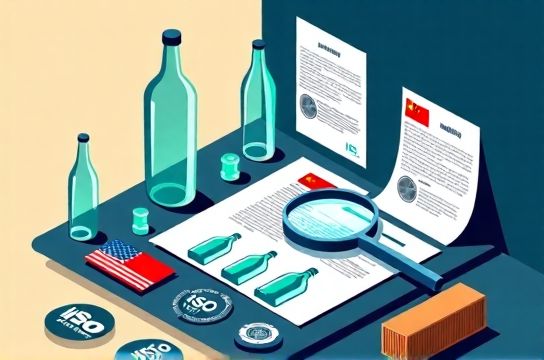
You’ve sourced a promising glass bottle manufacturer in Shandong — competitive pricing, fast lead times, and glossy product photos. You’re ready to issue a PO. But before the first mold is cut or the first pallet shipped, one question must be answered: *Can this supplier legally and safely produce what you need?*
License and certification verification isn’t bureaucracy. It’s your first hard filter against counterfeit documentation, non-compliant production, regulatory rejection at customs (especially under FDA 21 CFR Part 110/800 or EU Regulation (EC) No 1935/2004), and costly recalls. In 2025, over 12% of glass container shipments from China were detained at U.S. ports for documentation gaps or unverified facility registrations (FDA Import Alert 99-07, Updated: May 2026). Most were preventable.
This guide walks you through *exactly* what to check, how to validate it yourself (no third-party middleman required), and where common pitfalls hide — especially when working with glass bottle suppliers in China or the U.S.
H2: The Core Documents You Must Request — and What Each Really Means
Don’t accept a PDF labeled "Certificate of Compliance" without cross-checking its origin, scope, and validity. Here’s what matters:
H3: 1. Business License (Mandatory for All Glass Bottle Factories)
In China, every legal glass bottle factory must hold a valid *Business License* issued by the State Administration for Market Regulation (SAMR). This is non-negotiable — no license = no legal entity to contract with. Key fields to verify:
- Unified Social Credit Code (USCC): 18-digit alphanumeric ID — search it directly on the official National Enterprise Credit Information Publicity System (http://www.gsxt.gov.cn). Look for: "Glass bottle manufacturing" or "glass packaging container production" explicitly listed under *Scope of Business*. Vague terms like "general merchandise" or "industrial products" are red flags. - Registration Date & Validity: Check expiry. Renewals are annual for manufacturing entities. A license expiring in 3 months means the supplier may be operating in limbo. - Legal Representative Name: Match it to signatory on contracts and bank documents.
In the U.S., there’s no federal “manufacturing license,” but state-level business registration + FDA Facility Registration is mandatory for food/drink contact containers. Confirm their FDA registration number via the FDA’s public database (https://www.accessdata.fda.gov/scripts/cdrh/cfdocs/cfRL/rl.cfm) — and verify it’s active, not lapsed or suspended.
H3: 2. ISO Certifications — Not All Are Equal
ISO 9001 is standard — but for glass bottles, context is critical:
- ISO 9001:2015 alone tells you little about quality *control during annealing*, *thermal shock testing*, or *heavy metal leaching protocols*. Look for *scope statements*: Does it cover "design and manufacture of glass containers for pharmaceutical and beverage applications" — or just "sales and distribution"? - ISO 14001 (environmental management) and ISO 45001 (occupational health) signal operational maturity — especially relevant for high-energy glass melting furnaces. - For food-grade use: ISO 22000 or FSSC 22000 is far more valuable than generic ISO 9001. It mandates hazard analysis (e.g., lead/cadmium migration limits per ASTM C1426-22), traceability down to batch-level raw material sourcing (cullet vs. virgin sand), and validated sterilization cycles.
Always request the *full certificate*, not just a logo. Then verify it on the issuing body’s website (e.g., SGS, BV, TÜV) using the certificate number. Fake certificates often fail basic validation checks — wrong font, mismatched serial numbers, or issuer URLs that redirect to unsecured domains.
H3: 3. Product-Specific Certifications
Glass isn’t glass — composition, annealing, and finish determine compliance:
- FDA Letter of Guarantee (for U.S.-bound goods): Not a standalone certificate, but a signed statement affirming compliance with 21 CFR 174–186 (indirect food additives) and 21 CFR 211 (cGMP for packaging). Must include batch-specific declarations on heavy metals (Pb < 0.5 ppm, Cd < 0.1 ppm per ASTM C1426-22, Updated: May 2026). - EU Declaration of Conformity (DoC): Required for CE-marked bottles used in food contact. Must reference Regulation (EC) No 1935/2004 and harmonized standards like EN 1388-1 (migration testing). Supplier must retain technical files for 10 years. - California Prop 65 Compliance: Critical if shipping to CA retailers. Requires documented testing for lead and cadmium leaching from bottle surfaces — especially colored or decorated glass. A generic “compliant” claim without test reports is meaningless.
Never rely on a supplier’s word. Demand dated, accredited lab reports (e.g., SGS, Eurofins, Intertek) showing actual test results — not summaries. Reports must list sample ID, test method (e.g., ASTM C1426-22), LOD/LOQ, and pass/fail against the applicable limit.
H2: How to Verify — Step-by-Step Without Getting Stuck
Verification isn’t about collecting documents. It’s about confirming authenticity, relevance, and continuity.
H3: Step 1: Cross-Reference the Business License
- Copy the full Unified Social Credit Code (China) or FDA Registration Number (U.S.). - Paste into the official source: • China: http://www.gsxt.gov.cn → search bar → enter USCC → check “Abnormal Operation List” and “Serious Violation List.” Any flag = pause. • U.S.: https://www.accessdata.fda.gov/scripts/cdrh/cfdocs/cfRL/rl.cfm → enter FDA reg number → confirm status = "Active," and “Registration Type” = "Domestic Manufacturer" or "Foreign Manufacturer." - Compare the facility address on the license with the physical address on Google Maps Street View. Discrepancies (e.g., license says “No. 88 Industrial Park Rd,” but Street View shows a warehouse with no signage or glass-making equipment) warrant an immediate site visit or third-party audit.
H3: Step 2: Validate ISO Certificates Independently
- Go to the certification body’s official verification portal (e.g., SGS Certificate Search, BV VerifyCert). - Enter the exact certificate number — case-sensitive. - Confirm: Issue date, expiry, scope wording, and whether the certificate covers *manufacturing*, not just trading. - Bonus check: Look up the certifier’s accreditation status. In China, only CNAS-accredited bodies (e.g., CCIC, CQC) issue internationally recognized certs. In the U.S., ANSI-ASQ National Accreditation Board (ANAB) accreditation is the benchmark.
H3: Step 3: Audit the Lab Reports
- Open the PDF report. Right-click → “Document Properties.” Check “Creation Date” — does it predate your inquiry? If it’s from 2022 and you’re ordering in 2026, it’s obsolete. - Find the “Testing Method” field. Accept only ASTM, ISO, EN, or GB standards — never internal methods. - Locate the “Sample Description”: It must match your order — e.g., “Amber glass wine bottle, 750 mL, screw neck, soda-lime composition.” A report for “clear cosmetic jars” doesn’t cover your amber beer bottle. - Verify the lab’s accreditation: Look for ILAC-MRA or A2LA logos. Click the logo — it should link to the accrediting body’s database listing that lab’s scope.
H2: Red Flags — When to Walk Away (or Demand Proof Immediately)
- Certificate issued by “International Certification Alliance” or “Global Quality Assurance Group” — no verifiable website, no ANAB/CNAS listing. - Business license lists “glassware trading” but not “manufacturing” — they’re likely a broker, not a glass bottle factory. - ISO certificate scope says “quality management system for sales department only.” - FDA registration shows “Inactive” status or lists a P.O. Box instead of a physical plant address. - Lab report lacks signature, accreditation logo, or test method reference. - Supplier refuses video walkthrough of furnace lines, annealing ovens, or QC lab — or insists cameras aren’t allowed “for IP reasons.”
These aren’t minor gaps. They’re structural indicators of opacity — and opacity correlates strongly with inconsistent annealing (causing thermal breakage) or uncontrolled cullet sourcing (raising heavy metal risk).
H2: China vs. U.S. Glass Bottle Manufacturers — Key Verification Differences
Working with a China glass bottle manufacturer demands deeper due diligence — not because they’re less capable, but because regulatory enforcement is decentralized and documentation fraud is more prevalent. U.S. suppliers face stricter FDA oversight but often lack scale for low-volume custom runs.
| Verification Aspect | China Glass Bottle Manufacturer | US Glass Bottle Manufacturer | Why It Matters |
|---|---|---|---|
| Primary Legal Document | Business License (SAMR) + Export License (if exporting) | FDA Facility Registration + State Business License | China requires separate export licensing; U.S. ties registration to biennial renewal and prior notice of import. |
| Typical ISO Scope Gap | ISO 9001 covers “production management,” omitting raw material traceability | ISO 9001 often includes design control but skips environmental controls for gas-fired furnaces | Missing traceability increases risk of contaminated cullet; missing environmental controls raise emissions compliance risk. |
| Lab Report Expectation | Must show CNAS-accredited testing for Pb/Cd per GB 4806.5-2016 | Must show FDA-recognized lab testing per 21 CFR 174.170 | GB 4806.5-2016 allows higher Cd limits than FDA — verify which standard applies to your market. |
| Average Lead Time to Verify | 3–5 business days (including translation and SAMR portal delays) | 1–2 business days (FDA database is real-time; state portals vary) | Build verification time into your RFQ timeline — don’t compress it to meet a launch date. |
H2: Beyond Paper — What to Do After Verification
Verification confirms eligibility. It doesn’t guarantee performance. Next steps:
- Order a production sample *from the same batch* used in the lab report — not a pre-production sample from different cullet stock. - Require a Process Flow Diagram (PFD) showing annealing cycle temps/times, cooling rates, and inspection checkpoints — then audit one random shift. - Negotiate contract language: "Supplier warrants all certifications remain valid throughout order fulfillment. Lapse voids acceptance of goods." - For high-volume glass bottle procurement, consider a tiered payment: 30% on PO, 40% on passing pre-shipment inspection (PSI) with certified lab retest, 30% post-clearance.
And remember: A verified glass bottle supplier isn’t a one-time checkpoint. Re-verify annually — and after any major change (new furnace, new raw material supplier, ownership transfer). One expired license can halt your entire holiday season shipment.
If you’re building a repeatable, scalable process for glass bottle sourcing — including vetted supplier shortlists, audit templates, and customs-ready documentation kits — our complete setup guide walks you through each phase with editable checklists and jurisdiction-specific clauses. Start there to turn verification from a hurdle into a repeatable advantage.