Glass Bottle Import Documentation Required for US Customs...
- 时间:
- 浏览:155
- 来源:Custom Glass Bottles
H2: What You *Actually* Need to Clear Glass Bottles Through U.S. Customs
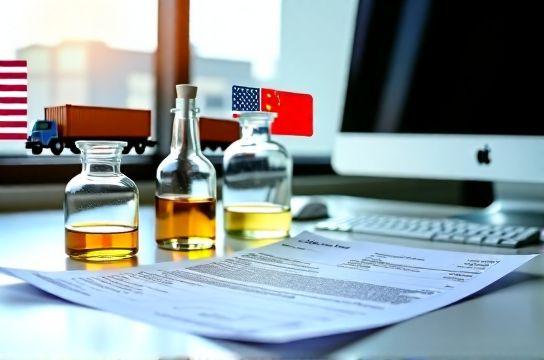
Let’s cut through the noise: importing glass bottles isn’t about stacking paperwork — it’s about timing, accountability, and avoiding $300+ CBP exam fees or 7–14 day port holds. If you’re sourcing from a Chinese glass bottle manufacturer or evaluating a U.S.-based glass bottle supplier for domestic fulfillment, the documentation burden shifts — but never disappears.
This guide is written for procurement managers, brand owners, and sourcing agents who’ve already selected a glass bottle factory (or are vetting one), and now need to move units across the border without delays. It assumes you’re not a customs broker — but that you *must* understand what your broker needs from *you*, and what your supplier must deliver.
H2: The Non-Negotiable Core Documents
There are five documents CBP will request *before* releasing cargo — and three of them must originate from your supplier or your internal compliance team. Missing any triggers automatic referral to secondary inspection.
H3: 1. Commercial Invoice (Supplier-Issued)
Not just a bill. This is CBP’s primary valuation tool. For glass bottle import, it must include: - Full legal name and address of both seller (e.g., 'Shenzhen BrightGlass Co., Ltd.' — verified via business license) and buyer - Itemized description: e.g., "Clear soda-lime glass bottles, 250 mL capacity, 70 mm diameter, annealed, no labeling, packed in corrugated master cartons (12 pcs/carton)" - HTSUS code (see below) - Unit price *and* total value in USD (FOB or CIF — be consistent with Incoterm used) - Country of origin (e.g., "Made in China") — *must match packing list and certificate of origin* - Currency, payment terms, and Incoterm (e.g., FOB Shenzhen Port)
⚠️ Real-world trap: Many Chinese glass bottle suppliers issue invoices with vague descriptions like "glass containers" or omit capacity/dimensions. That triggers CBP’s ‘description deficiency’ flag. Insist on technical specs — they’re part of your quality agreement anyway.
H3: 2. Packing List (Supplier-Issued)
This validates what’s *physically inside the container*. It must reconcile exactly with the commercial invoice and bill of lading. Critical fields: - Net/gross weight per carton and total shipment - Dimensions of master cartons (L×W×H in cm or inches) - Number of inner units per carton (e.g., "12 bottles / carton") - Total number of bottles, not just cartons - Markings on each carton (e.g., "LOT GL-2026-087", "Fragile", "This Way Up")
A mismatch between invoice quantity (12,000 bottles) and packing list (1,000 cartons × 12 = 12,000) is acceptable. A mismatch between packing list (1,000 cartons) and bill of lading (998 cartons) is not — CBP will hold the entire container pending resolution.
H3: 3. Bill of Lading (Carrier-Issued)
Whether ocean or air, this document proves title and movement. For glass bottle import, confirm: - Consignee is your U.S. entity (not your freight forwarder unless they’re acting as importer of record) - Notify party matches your broker’s instructions - Correct port of discharge (e.g., Port of Los Angeles, not “LA”) - Container number and seal number legible and pre-verified with carrier
Pro tip: Request an electronic bill of lading (eBL) if your Chinese glass bottle supplier works with Maersk, COSCO, or OOCL. It cuts release time by 24–48 hours vs. original paper BLs — critical when your first shipment arrives during peak season (July–October).
H3: 4. Entry Summary (CBP Form 7501)
Filed by your licensed U.S. customs broker — *but you provide the data*. You’ll need: - Your IRS-assigned EIN or Social Security Number (if sole proprietor) - Supplier’s full legal name and foreign tax ID (e.g., China’s Unified Social Credit Code) - Accurate HTSUS classification (see next section) - FDA registration number (if applicable — see below) - Anti-dumping case numbers (none currently apply to standard soda-lime glass bottles, Updated: May 2026)
H3: 5. Certificate of Origin (Supplier-Issued)
Required for preferential duty treatment (e.g., under USMCA) — but *also requested routinely for non-preferential imports* to verify country of origin claims. For shipments from China, use the standard non-preferential CO form issued by the China Council for the Promotion of International Trade (CCPIT) or chamber of commerce. Must be signed and stamped — PDF copies without wet ink or official seal are rejected at entry.
H2: HTSUS Classification: Where Most Glass Bottle Importers Trip Up
The Harmonized Tariff Schedule code determines your duty rate — and misclassification is CBP’s 1 audit trigger for consumer packaging.
Standard empty glass bottles (no closures, no labels, no decoration) almost always fall under:
• HTSUS 7010.90.50 — "Bottles… of glass, other, other" — Duty rate: 4.2% ad valorem (Updated: May 2026)
But exceptions exist: - Bottles with applied ceramic decorations (e.g., gold foil, hand-painted motifs): 7013.39.00 (5.8%) - Pharmaceutical-grade amber vials with ISO-certified tolerances: 7020.00.60 (free) - Reusable glass bottles sold with a returnable deposit system: may qualify for partial duty exemption under HTSUS 9802.00.80 — *but requires meticulous recordkeeping and prior CBP ruling*
If your U.S. glass bottle supplier is drop-shipping from their own U.S. warehouse, HTSUS doesn’t apply — but state sales tax nexus rules do. Clarify early.
H2: FDA Requirements: Not Optional, Even for Empty Bottles
Yes — even if you’re importing empty glass bottles for later filling in the U.S., FDA oversight applies.
Under 21 CFR Part 110 and the Food Safety Modernization Act (FSMA), glass containers intended for food, beverage, or cosmetic use must be produced in a facility registered with FDA. Your Chinese glass bottle manufacturer *must* have an active FDA registration — and you, as the U.S. owner/operator, must list yourself as the ‘U.S. Agent’ for that facility.
What you need: - FDA Facility Registration Number (e.g., 1234567890) — verify live status at https://www.access.fda.gov - Signed ‘Letter of Authorization’ from the supplier naming you as their U.S. Agent (required for listing) - Documentation that bottles meet FDA’s indirect food additive requirements (21 CFR 174–186). Most reputable glass bottle factories provide a compliance letter referencing ASTM C1421 or ISO 7458 testing for heavy metals (lead, cadmium leaching) — request it *before* shipment.
Note: FDA does *not* require pre-market approval for glass containers — but failure to register the foreign facility carries civil penalties up to $100,000 per violation (Updated: May 2026).
H2: Supplier Vetting: Beyond the Paper Trail
Documentation only works if your glass bottle supplier is operationally sound. Here’s how procurement teams separate reliable partners from paper-pushers:
• Audit the factory *before* first order — not after. Use a third-party inspector (e.g., SGS or Bureau Veritas) to verify: furnace temperature logs (critical for annealing consistency), batch traceability (can they pull QC records for LOT GL-2026-087?), and packaging integrity (do cartons survive 1.2m drop tests?).
• Require real-time production photos — not stock images. Ask for dated, geotagged shots of bottle molds, annealing ovens, and final packing lines.
• Test sample lead times rigorously. A quoted 25-day production cycle means nothing if the factory ships samples 42 days late — that’s a red flag for capacity strain or subcontracting.
• Confirm logistics ownership. Does your China glass bottle manufacturer handle inland transport to port? Do they have bonded warehousing? Or are they handing off to a local trucker with no customs training? The latter adds 3–5 days and $200–$400 in unplanned fees.
H2: Cost Comparison: China vs. U.S. Glass Bottle Suppliers (Realistic Benchmarks)
Don’t assume offshore = cheaper. When you factor in documentation labor, insurance, duty, and risk, the math shifts — especially for low-volume or fast-turnaround orders.
| Factor | China Glass Bottle Manufacturer | U.S. Glass Bottle Supplier | Notes |
|---|---|---|---|
| Unit Cost (250 mL, clear) | $0.18–$0.27/unit (MOQ 50,000) | $0.42–$0.68/unit (MOQ 5,000) | U.S. pricing includes domestic freight & basic labeling setup |
| Lead Time | 45–75 days (production + ocean) | 12–22 days (ready-to-ship or quick-turn) | China lead time extends to 90+ days during Chinese New Year (Jan–Feb) |
| Documentation Burden | High (FDA reg, CO, bilingual invoices, CBP exams) | Low (no import docs; state-level compliance only) | U.S. suppliers often handle FDA listing as part of service |
| Quality Variability Risk | Moderate–High (depends on mold maintenance & QC staffing) | Low–Moderate (tighter process controls, easier audits) | Rejection rates avg. 1.8% for China-made (Updated: May 2026); 0.4% for U.S.-made |
| Minimum Viable Order | $8,500–$12,000 (covers MOQ + air freight premium for samples) | $2,200–$4,800 (no ocean freight minimums) | U.S. suppliers often waive setup fees for repeat buyers |
H2: Pro Tips for First-Time Glass Bottle Importers
• Assign one internal stakeholder — not your broker, not your supplier — to own documentation reconciliation. That person compares invoice → packing list → BL → entry summary *before* the container sails.
• Pre-clear with FDA *before* vessel departure. Submit your supplier’s registration number and product description to FDA’s Prior Notice System Interface (PNSI) — takes <10 minutes, avoids 24-hour hold at port.
• Use a customs bond *before* your first shipment. Single-entry bonds cost ~$125–$175 per entry. Continuous bonds ($500/year) pay for themselves after 4–5 shipments — and let you file entries same-day.
• Never rely solely on your supplier’s English-speaking staff for regulatory language. Have your broker review draft invoices *before* the supplier finalizes them. One missing decimal point in unit price can inflate duties by 10×.
• For glass bottle wholesale buyers: negotiate documentation support into your contract. Top-tier China glass bottle suppliers (e.g., those certified to ISO 9001:2015 and BRC Packaging) include compliant invoicing, CO issuance, and FDA letter drafting in their service fee — typically adding 1.2–1.8% to landed cost.
H2: When to Consider a Glass Bottle Procurement Service
If your team lacks bandwidth to manage FDA registrations, HTSUS validation, or CBP exam prep — or if you’re scaling beyond 3–4 SKUs — outsourcing to a specialized glass bottle procurement service makes sense. These firms act as your extended sourcing office: they vet factories, conduct pre-shipment inspections, manage documentation handoffs, and even co-sign FDA listings.
They charge either a flat project fee ($1,800–$4,200 per SKU launch) or 3–5% of landed cost — but reduce time-to-market by 30–50% and cut documentation-related rework by 70% (Updated: May 2026). Their biggest value? Knowing which Chinese glass bottle manufacturer actually owns its molds vs. which rents them monthly — a detail that impacts long-term cost and IP control.
For brands weighing speed vs. scale, the decision isn’t ‘China or U.S.’ — it’s ‘which partner owns the risk?’ Reliable U.S. glass bottle suppliers offer transparency on scrap rates and mold amortization. Strong China glass bottle manufacturers offer verifiable test reports and multi-year capacity contracts. Choose based on your bottleneck — not just the lowest line item.
H2: Final Checklist Before Booking Ocean Freight
✅ Verified FDA registration status of supplier (live lookup, not screenshot) ✅ Commercial invoice with full technical description and correct HTSUS ✅ Packing list matching invoice *and* bill of lading down to the unit level ✅ Certificate of Origin signed/stamped by CCPIT or local chamber ✅ Confirmed U.S. consignee EIN and continuous customs bond in place ✅ Prior Notice submitted to FDA PNSI ✅ Inspection report (if required) uploaded to ACE portal
One last note: If your glass bottle purchase includes closures (aluminum caps, plastic pumps), those require *separate* HTSUS codes and FDA compliance — often triggering additional FDA registration for the closure supplier. Treat them as distinct SKUs, not accessories.
Understanding these steps won’t make customs glamorous — but it will keep your first container from sitting idle at Pier 400 while your marketing launch slips. For a complete setup guide covering everything from supplier negotiation scripts to CBP ACE portal navigation, visit our full resource hub.