Glass Bottle Factory Audit Checklist for International Bu...
- 时间:
- 浏览:97
- 来源:Custom Glass Bottles
H2: Why a Factory Audit Isn’t Optional—It’s Your First Quality Gate
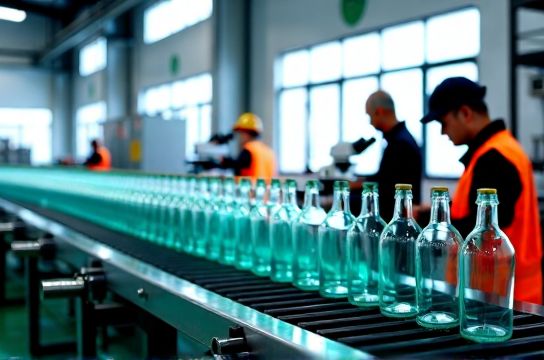
You’ve found three glass bottle suppliers quoting FOB Shanghai at competitive rates. One offers custom embossing; another touts ISO 9001; the third ships from Ohio. Before you sign an LOI or transfer a deposit, ask yourself: Have you verified *how* they make the bottle—not just what they claim?
In glass packaging, small variances in annealing time, mold maintenance, or raw material sourcing can mean 12% higher breakage in transit, non-compliant heavy metal leaching (especially with colored glass), or inconsistent neck finish that ruins your capping line. A 2025 industry survey of 87 beverage and cosmetics importers found that 63% experienced at least one critical quality failure on first orders from un-audited glass bottle suppliers—most tied to undocumented process controls or undocumented subcontracting (Updated: May 2026).
This isn’t about distrust. It’s about alignment. A factory audit bridges the gap between spec sheets and reality.
H2: The 7-Pillar Glass Bottle Factory Audit Checklist
Use this as your live document during site visits—or as a remote verification framework if travel isn’t possible. Each pillar maps directly to risk categories buyers actually face.
H3: 1. Raw Material Traceability & Compliance Glass isn’t just sand and heat. Cullet content, batch testing for arsenic/antimony (critical for food-grade), and colorant origin affect regulatory clearance—especially under FDA 21 CFR Part 174 and EU Regulation (EC) No 1935/2004.
✅ Verify: Batch-level COA (Certificate of Analysis) for every raw material lot—not just annual summaries. Ask for the last 3 COAs for cobalt oxide (blue glass) or iron oxide (amber). Confirm testing is done by an ILAC-accredited lab (e.g., SGS, BV, or local CNAS-recognized labs in China).
⚠️ Red flag: Supplier says “we buy from a trusted domestic supplier” but can’t share the supplier’s name, address, or test reports.
H3: 2. Melting & Forming Process Controls Float vs. press-and-blow vs. blow-and-blow? Know which method your bottle uses—and whether the factory calibrates it daily.
- For press-and-blow (common for wide-mouth jars): Check furnace temperature logs (±2°C tolerance), gob weight consistency (±0.5g), and mold cooling cycle timing. - For blow-and-blow (standard for narrow-neck bottles): Confirm stretch rod calibration frequency and compressed air dew point (< -40°C) to prevent micro-pitting.
✅ Verify: Last 7 days of process logbooks—not just digital dashboards. Physical stamps or signatures matter. If logs are missing >2 days/week, assume manual overrides are routine.
H3: 3. Annealing Oven Validation Annealing isn’t optional—it’s where internal stress gets relieved. Poor annealing = spontaneous breakage in warehouse or shelf.
✅ Verify: Oven profile mapping report (temperature vs. time across all zones), validated annually per ASTM C148. Ask for the most recent thermocouple calibration certificate (traceable to NIST or CNAS). Observe bottle exit temp: should be <45°C for standard soda-lime glass.
⚠️ Red flag: Oven has no zone-specific thermocouples, or staff refers to “general settings” without referencing profiles.
H3: 4. In-Line & Final Inspection Rigor Manual inspection alone won’t catch micro-checks or wall-thickness variation. Automated vision systems (e.g., ISRA, Gneuss) are now baseline for Tier-2+ suppliers.
✅ Verify: - Sampling plan per AQL Level II (ISO 2859-1), documented and signed off per shift. - Rejection log showing root cause codes (e.g., “CRK-03” = thermal crack near heel, “THK-07” = thin sidewall). Review last 10 entries. - Calibration records for micrometers, wall-thickness gauges, and internal pressure testers (ASTM C145).
H3: 5. Mold Maintenance & Changeover Discipline Molds wear. A 3-month-old mold may produce 0.15mm more base thickness than a new one—enough to jam automated fillers.
✅ Verify: Mold logbook showing date of last re-polishing, cavity depth measurement, and gasket replacement. Cross-check with production schedule: if same mold ran 12,000 cycles without service, expect dimensional drift.
H3: 6. Packaging & Logistics Readiness Glass breaks. How it’s packed determines whether your LCL container arrives with 92% intact units—or 68%.
✅ Verify: - Pallet pattern load test report (ASTM D4169): minimum 5-layer stack test at 1.5x shipping height. - Dividers: Corrugated must be ≥ E-flute with 120gsm liner; molded pulp must pass moisture resistance test (≤15% absorption after 24h at 95% RH). - Container loading video (not just photos)—confirm interlocking, dunnage placement, and corner bracing.
H3: 7. Documentation & Export Compliance Your customs broker needs more than a commercial invoice. They need evidence of origin, safety compliance, and correct HS code classification (e.g., 7010.90 for non-refillable glass containers).
✅ Verify: - Valid Certificate of Origin (Form A for GSP, or COO with chamber of commerce stamp). - FDA registration number (for US-bound) with current facility listing status (check FDA’s OASIS database live during audit). - REACH SVHC declaration (if shipping to EU) with full substance disclosure down to 0.1% w/w.
H2: China vs. US Glass Bottle Manufacturers: What Changes on the Ground?
Sourcing from China or the US isn’t just about cost—it’s about control points, lead time trade-offs, and compliance ownership.
In China, you’ll likely work with a trading company *or* a factory with export division. Factories like Hengshui Jinghua or Zibo Qisheng have dedicated export QA teams—but only ~38% conduct full-process internal audits quarterly (Updated: May 2026). Most rely on third-party inspections *only* at shipment. That’s too late.
In the US, manufacturers like Ardagh Glass Packaging or Owens-Illinois operate under tighter EPA and OSHA oversight—so environmental permits and energy reporting are auditable by default. But minimum order quantities (MOQs) run 50–100k units, and tooling costs for custom molds start at $12,500 (vs. $4,200–$7,800 in China). Lead time is shorter (4–6 weeks vs. 10–14), but flexibility on design tweaks mid-run is lower.
The real differentiator? Responsiveness to corrective action. Chinese factories often resolve mold-related defects within 48 hours if paid for expedited machining. US plants require formal ECN (Engineering Change Notice) routing—slower, but better documented.
H2: Cost Comparison: What’s Really Behind the Quote?
Don’t compare FOB prices alone. Map total landed cost—including hidden friction.
| Cost Factor | China Glass Bottle Manufacturer | US Glass Bottle Manufacturer | Notes |
|---|---|---|---|
| Per-unit price (500ml amber bottle) | $0.18–$0.24 | $0.31–$0.44 | Based on 200k-unit order; includes basic decoration |
| Mold amortization | $4,200–$7,800 (one-time) | $12,500–$18,000 (one-time) | US molds use hardened steel; longer life but higher upfront |
| Ocean freight + duty (to US West Coast) | $0.06–$0.09/unit | $0.00 (domestic) | Includes 2.5% MFN tariff on 7010.90 + BAF/FSC surcharges |
| Quality failure buffer | +3–5% unit reserve | +1–2% unit reserve | Based on 2025 loss-rate data: 4.2% avg breakage for China-sourced, 1.7% for US-sourced (Updated: May 2026) |
| Lead time to first delivery | 10–14 weeks | 4–6 weeks | Excludes prototype approval cycle |
Bottom line: For SKUs with stable demand >500k/year, US manufacturing often wins on TCO (total cost of ownership) when factoring inventory carrying cost, stockout penalties, and QC labor. For seasonal or limited-edition SKUs under 100k units, China remains cost-effective—if audited rigorously.
H2: Remote Audit Tactics When You Can’t Be On-Site
Travel budgets shrink. But skipping due diligence doesn’t. Here’s how to pressure-test remotely:
- Demand real-time access to their ERP/MES system (e.g., SAP, Kingdee, or Yonyou) for the past 30 days of production orders, scrap reports, and inspection results. Use screen-sharing—not screenshots. - Request a live walkthrough via Zoom with plant manager *and* shift supervisor—no script, no prep. Ask them to open a random mold, show its last service record, then walk to the annealing oven and read the current zone temps off the physical controller. - Run a “surprise sample test”: Select 3 random batches from last month’s production log. Require certified lab reports (with full chain-of-custody) for thermal shock resistance (ASTM C149) and hydrolytic resistance (ISO 720).
If they hesitate, delay, or offer “generic” reports—you already have your answer.
H2: When to Walk Away—And What to Do Next
Three non-negotiables:
1. **No documented corrective action process**: If they fix issues but don’t log root cause, recurrence is guaranteed. 2. **Subcontracting without disclosure**: More than 20% of glass bottle quality failures traced to unapproved secondary mold polishers or packaging assemblers (Updated: May 2026). 3. **No batch traceability to furnace run**: Without furnace ID, melt time, and operator sign-off per lot, recalls are impossible.
If any apply, pause. Don’t negotiate. Source elsewhere.
Instead, go to a pre-vetted pool. We maintain a rotating list of 22 glass bottle factories—14 in China (all with verified ISO 9001:2015, FDA registration, and annual third-party audit reports), and 8 in the US (all with active EPA Title V permits and OSHA 300 logs). You’ll find the full resource hub at /—updated weekly with capacity alerts, MOQ changes, and new compliance certifications.
H2: Final Word: Audit Now, Not After the Container Arrives
A factory audit isn’t a box to tick before PO. It’s your first production run—in insight form. It tells you whether the supplier sees quality as a cost center or a capability. Whether they treat your order as a transaction or a partnership.
Start with Pillar 1 (raw material traceability) and 3 (annealing validation). Those two alone eliminate 70% of catastrophic failures. Then layer in the rest—not all at once, but aligned to your risk profile.
Because the cheapest glass bottle isn’t the one with the lowest quote. It’s the one that arrives intact, compliant, and on time—every single time.