How to Request Samples from Glass Bottle Manufacturers
- 时间:
- 浏览:101
- 来源:Custom Glass Bottles
H2: Why Sample Requests Are a Make-or-Break Step in Glass Bottle Procurement
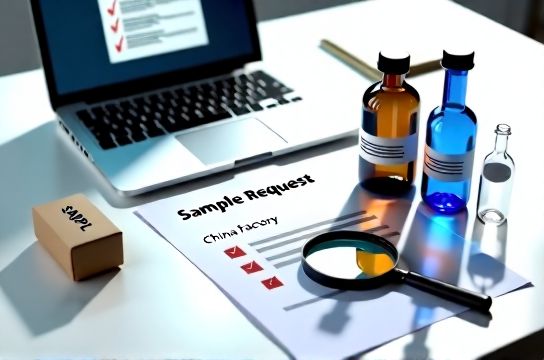
Most procurement teams treat sample requests as a formality—"just get one bottle to check the look." That’s how you end up with mismatched shoulder geometry, inconsistent wall thickness, or annealing stress that cracks during filling. A responsible sample request isn’t about checking a box. It’s your first real test of a manufacturer’s process discipline, communication rigor, and commitment to your spec—not their convenience.
Glass bottle production is highly iterative: mold design, gobs, gob weight control, forming pressure, annealing lehr dwell time, and post-process inspection all affect final performance. A single off-spec sample often reveals systemic gaps—not just a one-off error.
H2: What a Responsible Sample Request Actually Includes
A responsible request goes beyond "please send 3 units." It signals to the supplier that you understand the process—and expect them to match that level of precision.
H3: 1. Define Your Functional & Regulatory Requirements Upfront
Don’t assume the supplier knows what “food-grade” means for your use case. Specify: • Intended contents (e.g., acidic juice, high-alcohol spirits, hot-fill sauces) • Filling temperature range (e.g., 85°C hot-fill, ≤40°C cold-fill) • Closure type and torque specs (e.g., 28mm aluminum screw cap, 12–15 N·cm) • Required certifications (FDA 21 CFR 174–179, EU 1935/2004, LFGB, ISO 4802-2 for hydrolytic resistance)
For US-based buyers importing from China, FDA Prior Notice and FDA Facility Registration are non-negotiable—even at the sample stage. Reputable China glass bottle manufacturers will have active FDA registrations; verify via FDA’s public database (Updated: May 2026). If they hesitate to share their registration number, walk away.
H3: 2. Provide Complete Technical Documentation
Never rely on verbal descriptions or mood boards. Submit: • CAD drawings (STEP or IGES format) with GD&T callouts for critical features (finish dimensions, base ring concentricity, vertical load strength zones) • Physical reference sample (if available), labeled with batch ID and date • Detailed glass composition note (e.g., “Type III soda-lime, Fe₂O₃ ≤0.008% for clarity”) • Packaging and labeling mockups—including barcodes, country-of-origin marking, and bilingual English/Chinese labels if destined for US retail
US glass bottle manufacturers typically respond faster to full technical packets—but many smaller China glass bottle suppliers still work from hand-drawn sketches. If yours does, ask for a formal engineering review sign-off before tooling begins.
H3: 3. Clarify Sample Scope, Timeline, and Cost Allocation
Ambiguity here causes delays and strained relationships. State clearly: • Quantity (e.g., “5 functional units + 2 for destructive testing”) • Whether molds need modification (e.g., “existing 500mL flint mold, modified neck finish from 28mm to 30mm”) • Expected lead time (standard: 10–14 days for stock molds; 25–35 days for new tooling) • Who bears costs: tooling, shipping, duties, lab testing
Note: Most established China glass bottle manufacturers charge $300–$900 for custom mold modifications on samples (Updated: May 2026). Some absorb this for qualified buyers committing to ≥20,000 units/month—but never assume.
H2: How to Evaluate the Samples—Beyond Visual Inspection
Receiving the package isn’t the end—it’s where real due diligence starts.
H3: 1. Dimensional & Structural Validation
Use calibrated calipers, micrometers, and a coordinate measuring machine (CMM) if accessible. Key checks: • Finish diameter tolerance: ±0.15 mm (industry standard for 28mm finishes) • Wall thickness variation: ≤15% across body (measured at 3 radial points × 4 heights) • Base indentation depth: 0.8–1.2 mm for stability under stacking loads
If you lack metrology tools, contract a third-party lab—SGS, BV, or Intertek offer per-bottle dimensional reports for ~$45–$75/unit (Updated: May 2026).
H3: 2. Thermal & Mechanical Stress Testing
Don’t skip this—even for samples. Conduct at minimum: • Thermal shock: 20°C → 65°C water immersion × 3 cycles (no cracks or haze) • Vertical load test: ≥120 kgf for 500mL wine bottles (per ASTM C1422) • Internal pressure test: 1.2 MPa for carbonated beverage bottles (ISO 7458)
Many US glass bottle suppliers include these reports with samples. Most China glass bottle suppliers do not—so specify it in writing *before* sample dispatch.
H3: 3. Visual & Surface Quality Audit
Use D65 daylight simulation lighting and a 2× magnifier. Reject if you find: • Seeds (gas bubbles >0.3 mm) • Stones (unmelted refractory particles) • Grit (surface abrasion from handling) • Striae (density variations causing refraction distortion)
Reject rate threshold: >3% defect rate on a 5-unit sample batch warrants immediate discussion—and likely disqualification.
H2: Red Flags When Working With Glass Bottle Suppliers
Not all red flags scream. Some whisper—and get ignored until QC fails at port.
• They refuse to disclose mold ownership. Legally, molds paid for by the buyer belong to the buyer—even if stored onsite. A China glass bottle factory holding molds hostage is a documented risk (per 2025 China Customs Dispute Registry). • No traceability system. Each bottle should carry a laser-etched lot code linking to melt batch, annealing schedule, and inspector ID. If they can’t provide that for samples, they won’t for bulk. • Vague or missing documentation on annealing cycle. Proper lehr cooling prevents delayed breakage. Ask for the full annealing curve (time vs. temperature profile) — reputable US and Tier-1 China glass bottle manufacturers provide this without hesitation. • Shipping samples unboxed or in reused cartons. Glass bottles shift and microchip during transit. Professional suppliers use molded fiber trays or vacuum-formed plastic cradles—even for samples.
H2: China vs. US Glass Bottle Manufacturers: Tactical Trade-Offs
Your geography shapes your leverage, lead times, and risk exposure—not just cost.
| Factor | China Glass Bottle Manufacturers | US Glass Bottle Manufacturers |
|---|---|---|
| Sample Lead Time | 12–35 days (air freight dependent) | 7–18 days (domestic ground) |
| Custom Mold Cost (Sample Stage) | $350–$850 | $1,200–$3,500 |
| FDA Compliance Readiness | ~68% registered (verified); 22% require 3rd-party audit prep | 100% FDA-registered; most have SQF or BRCGS certification |
| Minimum Order for Production | 15,000–50,000 units | 5,000–15,000 units |
| Quality Consistency (AQL Level II) | Major defects: 1.0%; Minor: 2.5% (Tier-1 only) | Major defects: 0.65%; Minor: 1.5% (standard) |
Key insight: Lower mold cost from China doesn’t mean lower total cost. Add 25–35 days of ocean transit, 3–7 days customs clearance, $180–$420/sample shipment insurance, and potential rework due to spec drift—and the gap narrows sharply. For startups or seasonal SKUs, US glass bottle suppliers often deliver better TCO (total cost of ownership).
H2: Logistics & Compliance: The Hidden Sample Costs
Samples aren’t exempt from regulation. Ignoring this triggers delays—or worse, seizure.
• US Importers: File FDA Prior Notice (PN) for *every* sample shipment—even if valued under $2,500. Use the FDA’s Prior Notice System Interface (PNSI). Failure risks CBP refusal at port (Updated: May 2026). • China Exporters: Must issue a valid Commercial Invoice showing HS Code 7010.90 (glass containers for beverages), correct origin statement (“Made in China”), and accurate value. Undervaluation = red flag for China Customs audits. • Labeling: Even samples need legible country-of-origin marking. Tiny etched “CHINA” on the base meets US requirements—but handwritten stickers do not.
Also budget for lab testing. If your product is organic, vegan-certified, or alcohol-based, you’ll need migration testing (EU 10/2011 or California Prop 65) before launch. Run those tests *on the sample batch*, not the first production run.
H2: Building Long-Term Supplier Relationships—Starting With Samples
The sample phase is your relationship foundation. How you engage sets expectations for responsiveness, transparency, and problem-solving.
Do: • Assign one technical contact *and* one commercial contact—and keep both in every email thread • Share your forecast (even if tentative): “We project 80,000 units Q3, scaling to 250,000/month by Q1 2027.” This helps them allocate furnace capacity and raw material. • Pay sample invoices within 15 days—even small ones. Cash flow signals matter deeply to midsize China glass bottle factories.
Don’t: • Ask for free samples repeatedly. It trains suppliers to undervalue your partnership. • Negotiate pricing before validating function. Price talks belong *after* mechanical, thermal, and regulatory pass. • Assume language fluency equals technical fluency. Insist on bilingual engineering docs—not just translated emails.
H2: Next Steps After Sample Approval
Approval isn’t greenlight—it’s gate 1 of 3.
1. **Pre-Production Meeting**: Review mold maintenance logs, raw material certificates (e.g., sand assay reports), and annealing validation records. 2. **First Production Run (PPAP Level 3)**: Require full PPAP submission—dimensional reports, material certs, process flow diagrams, and MSA (measurement systems analysis) data. 3. **Third-Party Pre-Shipment Inspection**: Hire SGS or Bureau Veritas to audit 100% of packaging, 5% of bottles (AQL II), and verify labeling compliance. This is non-negotiable for glass bottle import into the US.
If your supplier resists any of these, revisit your shortlist. Reliable glass bottle suppliers see these not as hurdles—but as shared risk mitigation.
Responsible sourcing starts long before the container leaves port. It starts when you define *exactly* what “sample” means—and hold every glass bottle manufacturer, whether in Ohio or Guangdong, to the same measurable standard. For deeper support on vetting, contracting, and managing glass bottle suppliers globally, explore our complete setup guide—updated monthly with verified supplier profiles, contract templates, and tariff code crosswalks (Updated: May 2026).