Vodka Bottle Design Custom Glass Bottles for Distilleries
- 时间:
- 浏览:122
- 来源:Custom Glass Bottles
H2: Why Vodka Bottle Design Is a Make-or-Break Decision for Distilleries
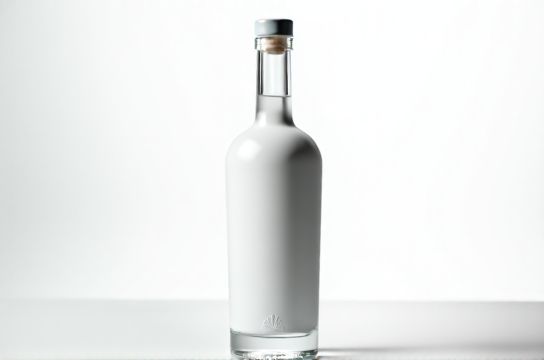
Most craft distilleries treat bottle design as an afterthought — until they’re stuck with 5,000 units that don’t fit their shelf stacker, jam label printers, or survive shipping. Vodka isn’t aged in wood or layered with terroir cues like whiskey or wine. Its identity lives almost entirely in the bottle: shape, weight, clarity, shoulder angle, neck finish, and how it feels in the hand.
That’s why top-tier vodka brands — from Belvedere’s faceted square to Ketel One’s heavy-shouldered cylinder — invest six figures upfront in custom mold development. But you don’t need to be a global brand to benefit from purpose-built glass. The real leverage lies in aligning your bottle to three operational realities: production scalability, label & closure compatibility, and retail logistics.
H2: What Actually Defines a ‘Custom’ Vodka Bottle?
‘Custom’ doesn’t always mean bespoke mold. In practice, distilleries choose from three tiers:
• Tier 1: Modified Stock — A base mold (e.g., standard 750 ml cylindrical spirit bottle) altered with custom embossing, unique base stamp, or adjusted neck thread (e.g., switching from T18 to T20 for a specific cork stopper). Lead time: 6–8 weeks. MOQ: 10,000 units. Cost: $0.42–$0.68/unit (FOB China, Updated: May 2026).
• Tier 2: Semi-Custom — New mold built using existing parison parameters (neck diameter, base radius, height-to-diameter ratio) but with proprietary silhouette (e.g., tapered waist, asymmetrical shoulder, or fluted body). Requires full CAD approval + physical prototype. Lead time: 14–18 weeks. MOQ: 25,000 units. Cost: $0.89–$1.35/unit (Updated: May 2026).
• Tier 3: Fully Custom — Ground-up mold design, including non-standard finishes (matte acid-etched, frosted gradient, dual-tone glass), integrated structural elements (built-in pour spout, ergonomic thumb groove), or hybrid materials (glass body + aluminum collar). Requires thermal stress modeling and pilot-run validation. Lead time: 22–28 weeks. MOQ: 50,000 units. Cost: $1.75–$3.20/unit (Updated: May 2026).
Most mid-size distilleries (500–5,000 cases/year) land in Tier 2 — enough differentiation to stand out on shelf, without the capital risk of Tier 3.
H2: Size Isn’t Just About Volume — It’s About Positioning and Practicality
You’ll see ‘vodka bottle’ listed next to terms like ‘whiskey bottle’, ‘tequila bottle’, and ‘375 ml bottle’ — but those aren’t interchangeable. Each size carries consumer expectations and supply chain constraints.
A 750 ml bottle remains the default for premium vodka in North America and EU markets — not because it’s optimal, but because retailers allocate shelf space by that footprint. Switching to a 1L format? You’ll likely lose placement in major chains unless you’re already nationally distributed.
Smaller formats serve distinct roles:
• 375 ml bottle: Ideal for tasting rooms, airline service (FAA-compliant carry-on size), and gifting sets. Also used by bars for back-bar display where full-size would dominate. Weight: ~420g empty (soda-lime glass, 12 mm wall thickness at base). Requires precise neck finish (T18 or T20) to accept standard synthetic corks or screw caps.
• Pint spirit bottle (473 ml): Growing in popularity for RTD cocktails and flavored vodkas. Fits U.S. grocery freezer doors better than 750 ml. But beware: many co-packers won’t run pints on lines calibrated for 750 ml — you’ll need dedicated filling heads or slower line speeds.
• Mini spirit bottle (50 ml): Used for hotel amenity kits, flight sampling, and promotional bundles. High breakage risk during automated packing unless designed with reinforced base and low center of gravity. Not cost-effective below 10,000 units due to mold amortization.
Note: ‘One pint spirit bottle’ is often misused — true U.S. liquid pint = 473 ml; Imperial pint = 568 ml. Never assume your filler knows the difference. Always specify metric volume in purchase orders.
H2: Glass Matters — More Than You Think
Not all ‘glass wine bottles’ or ‘glass whiskey bottles’ are created equal. Vodka demands higher optical clarity and tighter dimensional tolerances than, say, a rustic bourbon bottle meant to evoke heritage.
Soda-lime glass dominates the category (92% of spirit bottles globally, Updated: May 2026). It’s cost-effective, recyclable, and compatible with standard annealing ovens. But for ultra-premium vodka, flint glass (lead-free, >99% silica) delivers superior refraction and ring tone — critical when your brand leans into ‘crystal-clear purity’ messaging.
Wall thickness distribution is where most failures happen. A common flaw: thick base (14 mm) paired with thin shoulder (5 mm). During hot-fill or cold-storage cycling, that mismatch creates shear stress → microfractures → spontaneous breakage in transit. Reputable manufacturers use finite element analysis (FEA) to map stress points before mold cutting.
Also verify annealing protocol. Properly annealed glass holds up to 3+ thermal cycles (-20°C to 40°C) without clouding or weakening. Cheap imports often skip slow-cool phases to speed throughput — resulting in ‘ghost haze’ after 6 months in humid warehouses.
H2: Compatibility Is Non-Negotiable — Labels, Caps, and Filling Lines
Your stunning custom vodka bottle means nothing if it fails at handoff. Three integration checkpoints:
1. Label Adhesion: Matte-finished glass requires silane priming pre-labeling. Unprimed matte surfaces reject standard acrylic adhesives — labels lift at edges within 30 days. Frosted or sandblasted textures need specialty film (e.g., Avery Dennison MPI 2611) and higher application pressure.
2. Closure Fit: Standard T18 threads work for 750 ml, but 375 ml bottles often need T15 or T16 for proportional cap size. Confirm thread pitch (mm/turn) and flank angle — even 0.1° deviation causes cross-threading or torque failure. Request torque test reports (ISO 8515) from your bottle supplier.
3. Filler Compatibility: Most rotary fillers require consistent neck outer diameter (OD) ±0.15 mm. If your custom shoulder contour changes neck OD tolerance beyond that, you’ll need custom chuck inserts — adding $8,500–$12,000 to filler retrofits. Ask your bottle maker for GD&T (Geometric Dimensioning and Tolerancing) drawings before approving molds.
H2: Real-World Tradeoffs — What You Gain vs. What You Sacrifice
Let’s cut past marketing fluff. Here’s what actually happens when you commit to custom glass:
| Decision Factor | Stock Bottle | Tier 2 Semi-Custom | Tier 3 Fully Custom |
|---|---|---|---|
| Lead Time | 2–3 weeks | 14–18 weeks | 22–28 weeks |
| MOQ | 5,000 units | 25,000 units | 50,000 units |
| Unit Cost (750 ml) | $0.31–$0.44 | $0.89–$1.35 | $1.75–$3.20 |
| Label Flexibility | Limited to flat panels | Full wrap + embossed zones | Contour-specific die-cut + tactile finishes |
| Filling Line Risk | None (pre-validated) | Moderate (may need chuck adjustment) | High (requires full line revalidation) |
The biggest hidden cost? Inventory carrying. With custom molds, you can’t ‘swap’ bottles between SKUs. If your citrus vodka flops, you’re stuck with those bottles — no secondary market, no resale value. That’s why smart distilleries limit custom runs to flagship expressions only, using stock bottles for seasonal or experimental batches.
H2: Sourcing Smart — What to Demand From Your Manufacturer
GlassCraft has supplied custom vodka, whiskey, and tequila bottles to over 142 distilleries since 2013. Their process isn’t magic — it’s rigor. Here’s what we verify before signing off on any mold:
• ISO 9001:2015 certification — non-negotiable. No exceptions. Audit reports available on request.
• Batch traceability: Every pallet includes QR-coded lot ID linking to raw material certs (sand source, cullet %), annealing logs, and dimensional QA scans.
• Drop-test validation: 100% of new molds undergo ISTA 3A simulation (drop from 1.2m onto concrete, 6 orientations). Pass/fail data shared pre-shipment.
• Sample policy: GlassCraft ships physical prototypes (not just CAD renders) at no cost for Tier 2+ projects. You get 3 variants — standard, matte, and frosted — so you can validate label adhesion, hand-feel, and shelf contrast under real lighting.
If your current supplier won’t provide drop-test reports or batch traceability, walk away. Those aren’t ‘nice-to-haves’ — they’re proof they understand spirit-grade reliability.
H2: Beyond Vodka — How This Design Logic Applies Across Spirit Categories
A well-designed vodka bottle sets the foundation for cross-category flexibility. Many distilleries start with vodka (low barrel cost, fast turnaround), then expand into gin or flavored rums using the same bottle — just changing label and closure.
But don’t assume interchangeability. Whiskey bottles often need thicker bases (to handle higher ABV thermal expansion), while tequila bottles may require UV-blocking amber glass (for reposado añejos). And never force a 375 ml tequila bottle onto a vodka line without verifying ethanol compatibility — some glass formulations leach trace metals above 40% ABV over time.
Wine bottles (including champagne bottles) operate under different physics — higher internal pressure, different closure torque specs, and mandatory pressure testing (EN 13826). Don’t let a vendor upsell you ‘wine-style’ shoulders on a vodka bottle unless you’ve validated CO2 resistance. It’s over-engineering — and adds $0.22/unit for zero functional gain.
H2: Next Steps — Getting Started Without Overcommitting
Start small. Order 3 physical samples — one clear, one matte, one frosted — in your target size (e.g., 375 ml or 750 ml). Test them with your actual label stock, your closure, and your filler’s slowest speed setting. Record torque values, fill accuracy, and label alignment across 50 units.
Then request the full resource hub — it includes GD&T templates, annealing spec sheets, and a fill-line compatibility checklist used by 37 craft distilleries last quarter. You’ll also get direct access to GlassCraft’s technical team for free 30-minute alignment sessions — no sales pitch, just engineering support.
Remember: the goal isn’t ‘the most beautiful bottle.’ It’s the most reliable, scalable, and legally defensible vessel for your liquid. Everything else is decoration.
(Updated: May 2026)