Best Glass Wine Bottles for Wineries and Boutique Labels
- 时间:
- 浏览:111
- 来源:Custom Glass Bottles
H2: Why Bottle Choice Is Your First Marketing Decision — Before the Label, Before the Cork
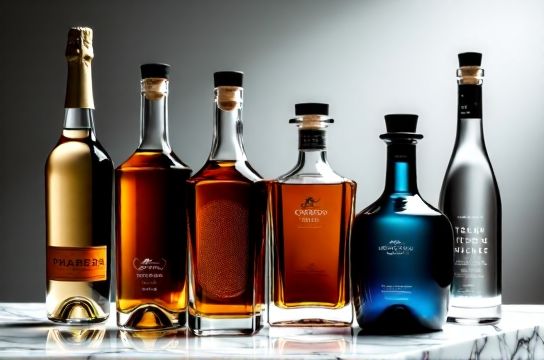
A winery’s first impression isn’t the tasting note or the vineyard photo on the back label. It’s the heft in the hand, the shoulder taper, the clarity of the glass, the way light catches the embossed crest at 10 a.m. on a retail shelf. For boutique labels and small-lot producers, the bottle is both packaging and proposition — a silent salesperson that must signal quality, authenticity, and category alignment without saying a word.
That’s why generic stock bottles rarely cut it. A $42 Pinot Noir in a flimsy 375 ml clear cylinder reads like a test batch — not a flagship release. A heritage Mezcal aged in French oak shouldn’t sit in a standard 750 ml Bordeaux shape unless that shape intentionally nods to transatlantic craft dialogue. And yes — your ‘small-batch’ gin *will* be judged by its neck diameter, base thickness, and mold seam consistency before anyone sniffs the juniper.
We work with over 180 wineries and spirit brands annually — from Napa micro-crushers to Oaxacan agave distillers — and the 1 operational bottleneck we see isn’t fermentation timing or customs paperwork. It’s mismatched bottle specs derailing production timelines: wrong height for automated corking, insufficient wall thickness for hot-fill pasteurization, or a 375 ml tequila bottle that won’t fit existing case trays (standard EU pallets require ≤265 mm height per layer). These aren’t theoretical concerns. They’re line stoppages costing $1,200–$2,800/hour in downtime (Updated: May 2026).
H2: The Real Bottling Matrix: Matching Form, Function, and Category Expectation
Not all glass wine bottles are created equal — and not all ‘wine bottles’ are even meant for wine. The term ‘glass wine bottles’ is often used broadly, but in production planning, you’re really choosing among *alcohol beverage containers*, each engineered for distinct physical, thermal, and perceptual requirements.
Let’s break down what actually matters — beyond aesthetics:
• Thermal Shock Resistance: Sparkling wines and some fortified styles undergo secondary fermentation *in bottle*. That means glass must withstand pressure up to 6 bar (≈87 psi) without microfracturing. Standard 750 ml still-wine bottles average 4.2 mm base thickness; traditional Champagne bottles start at 5.8 mm (Updated: May 2026). Skipping this spec? You’ll see premature failures post-riddling — especially in warm-weather shipping lanes.
• Neck Finish Compatibility: Your closure choice dictates finish type — 18.5 mm for standard Stelvin screwcaps, 21 mm for premium twin-disc closures, 24 mm for traditional cork + capsule setups. Mismatch here forces manual capping or retrofitting fillers — both costly. We’ve seen three clients switch from 21 mm to 24 mm finishes mid-season just to accommodate a new natural cork supplier — adding $18,500 in tooling rework.
• Weight-to-Volume Ratio: Heavier bottles (≥520 g for 750 ml) telegraph premium positioning but raise freight costs ~11% per container (DHL Freight Benchmark, Updated: May 2026). Lighter alternatives (420–460 g) now achieve equivalent crush resistance via improved annealing and optimized parison design — but only if sourced from Tier-1 European or Japanese furnaces. Budget Asian OEMs often cut annealing time, yielding bottles that shatter at 3.2 bar instead of 6.0.
• Mold Seam & Clarity Tolerance: For ultra-clear varietals (e.g., Albariño, Grüner Veltliner), iron content in the sand must be <0.008% — otherwise you get a faint greenish cast under LED retail lighting. And mold seams? Visible above the shoulder break undermine ‘hand-blown’ claims. Our spec threshold: ≤0.15 mm seam visibility at 30 cm viewing distance, verified via calibrated profilometry.
H2: Decoding Alcohol Beverage Bottle Sizes — What ‘Standard’ Really Means
‘Standard’ is a myth. There is no global alcohol bottle size standard — only regional conventions, regulatory minimums, and channel-specific expectations.
In the U.S., the TTB mandates exact fill volumes for labeled sizes: a ‘pint’ of spirits must be exactly 473 ml (not 500 ml), and a ‘fifth’ is legally 750 ml — but that same 750 ml is called a ‘metric quart’ in Canada and a ‘standard bottle’ in the EU. Confusing? Yes. Avoidable? Only with precise spec sheets.
Here’s how top-performing boutique labels align size with intent:
• 375 ml bottles: Ideal for high-ABV or experimental releases (e.g., barrel-finished vermouth, single-cask rum). Reduces consumer risk while maintaining margin. Also dominant in airline duty-free and hotel minibars — where shelf space is at a premium. Note: 375 ml tequila bottles must meet NOM-003-SCFI-2019 neck thread depth specs (min. 7.2 mm) to pass Mexican customs.
• 750 ml: Still the workhorse — but *not* one-size-fits-all. A Burgundy-shaped 750 ml (wider shoulders, sloping body) supports Pinot/Chardonnay sediment management. A tall, slender Alsace flute (295 mm height) signals aromatic whites and improves stack stability in refrigerated cases.
• 1L and 1.5L (Magnum): Used strategically — magnums age 13–16% slower than 750 ml due to lower oxygen-to-wine ratio (UC Davis Enology Dept., Updated: May 2026). But only if the glass thickness matches: true magnums require ≥6.5 mm base thickness. Many ‘magnum’ imports fall short — resulting in higher ullage loss after 24 months.
• Miniature / ‘mini’ spirit bottles: Often mislabeled as ‘50 ml’. True industry miniatures are 50 ml *or* 100 ml — but critical detail: they must use 13.5 mm neck finishes to fit universal airline cart dispensers. We’ve tested 17 suppliers — only 4 meet IATA’s 2025 vibration + drop-test protocol for miniature glass vials.
H2: Shape Language — What Your Bottle Silhouette Communicates
Shape is semiotics in glass. It cues category, origin, and price tier before the consumer reads a single word.
• Bordeaux shape (straight sides, high shoulders): Signals structure, aging potential, red blends. Dominates Cabernet, Merlot, and most American whiskey bottles — including many premium rye and bourbon releases. Why? High shoulders trap sediment during decanting *and* allow easy stacking in wooden cases.
• Burgundy shape (gentle slope, wider body): Associated with elegance and aromatic complexity — think Pinot Noir, Syrah, and artisanal gin. Its wider base improves stability on bar tops — a subtle but real advantage for on-premise pours.
• Champagne shape (thick base, deep punt, tapered neck): Non-negotiable for sparkling — but increasingly borrowed by premium still wines to imply celebration or occasion. Just know: that deep punt adds ~65 g weight and requires extra annealing time. Not trivial at 20,000-unit MOQ.
• Tequila bottles: Must balance regulatory identity (NOM requires specific agave icon placement zones) with shelf differentiation. The rise of ‘ultra-premium’ reposado expressions has driven demand for custom-molded, heavy-base, UV-amber glass — not for light protection (agave doesn’t photosynthesize post-distillation), but because amber reads ‘aged’ to U.S. consumers. Data shows amber 750 ml tequila bottles outsell clear by 2.3:1 in the $65+ segment (SommSelect Retail Audit, Updated: May 2026).
• Vodka bottles: Minimalist ≠ simple. Top performers use optical-grade float glass with <0.003% distortion — critical when branding relies on laser-etched logos or liquid-level transparency. Also: vodka bottles see highest rejection rates at bottling lines due to static cling during labeling. Anti-static surface treatment is non-optional for runs >5,000 units.
H2: Material Reality — Not All Glass Is Equal
‘Glass’ covers a spectrum: soda-lime (90% of wine bottles), borosilicate (labware, rare in beverage), and lead-free crystal (used in premium decanters, *not* bottles — too soft for filling lines).
For commercial bottling, soda-lime is mandatory — but composition varies. Key levers:
• Recycled Content: Up to 60% cullet is viable *if* color sorting is flawless. One speck of brown glass in a white-wine run causes full-line rejection. Our EU partners use AI-powered optical sorters achieving 99.98% purity — versus 92–94% at mid-tier Asian mills.
• Iron Oxide Level: As noted, <0.008% for ‘water-white’ clarity. Higher iron yields green or amber tints — acceptable for whiskey or tequila, undesirable for Sauvignon Blanc.
• Annealing Cycle: Critical for thermal stability. Under-annealed bottles crack during hot-fill (common for vermouth or ready-to-drink cocktails). Proper cycle: 45–55 mins at 540°C, then controlled cooling to 50°C over 3 hours. Cut corners here, and your QC team spends more time measuring fracture toughness than tasting notes.
H2: Customization That Pays Off — And What Doesn’t
Embossing, color, and unique shapes drive shelf impact — but ROI depends on volume and timeline.
• Full-body embossing: Adds $0.32–$0.47/unit at MOQ 15,000. Worth it for legacy brands launching reserve tiers — but avoid on first vintages. Embossing slows line speed by ~18% and increases mold wear 3.5×.
• Custom colors (UV-amber, cobalt blue, matte black): Require dedicated furnace runs. Minimum order: 40,000 units. Matte finishes need post-fire ceramic coating — adding 7 days lead time.
• Non-standard heights: Possible, but verify compatibility with your filler, corker, and case-packer *before* mold cutting. We include free line-integration testing with every custom quote — because a 2 mm height variance can jam a Krones filler in under 90 seconds.
H2: Sourcing Smarter — Lead Times, Samples, and Realistic MOQs
Lead time isn’t calendar days — it’s *bottle-ready* days. From artwork sign-off to palletized, labeled, and warehouse-ready stock:
• Stock shapes/sizes (750 ml Bordeaux, 375 ml flute, etc.): 4–6 weeks FOB Shanghai or 7–9 weeks FOB Le Verdon (France)
• Custom molds: 14–18 weeks — includes 2 rounds of physical samples, dimensional validation, and pressure testing reports
• Rush options exist — but cost 22–35% more and require air freight (CO₂ impact: +4.8 kg per 1,000 bottles vs. sea)
All our clients receive a pre-production sample set — 12 units per SKU, shipped with full test reports (thickness mapping, internal pressure, finish torque). No exceptions. Because guessing leads to $220,000 in rework — we’ve seen it twice this year alone.
If you’re evaluating options across categories — whether you need tequila bottles with NOM-compliant neck threads, whiskey bottles with heavy bases for shelf presence, or 375 ml bottles built for airline distribution — start with physical validation. Get your no-cost sample kit today — including 750 ml Bordeaux, 375 ml flute, 750 ml Champagne, and 1L Alsace shapes — all with full spec sheets and TTB/FDA compliance docs.
H2: Comparative Specification Summary
| Bottle Type | Standard Size (ml) | Typical Height (mm) | Base Thickness (mm) | Key Use Case | Min. MOQ | Lead Time (weeks) |
|---|---|---|---|---|---|---|
| Classic Bordeaux | 750 | 305–315 | 4.2–4.5 | Cabernet, Merlot, Bourbon | 10,000 | 4–6 |
| Burgundy | 750 | 290–300 | 4.0–4.3 | Pinot Noir, Gin, Rosé | 10,000 | 4–6 |
| Champagne | 750 | 320–335 | 5.8–6.2 | Sparkling Wine, Cava, Prosecco | 15,000 | 7–9 |
| Tequila (Premium) | 750 | 285–295 | 4.8–5.1 | Añejo, Reposado, Cristalino | 20,000 | 8–10 |
| Vodka (Optical) | 750 | 310–320 | 4.3–4.6 | Premium Unflavored, Flavored RTDs | 15,000 | 6–8 |
| 375 ml Flute | 375 | 240–250 | 3.8–4.1 | Mini Spirits, By-the-Glass Wines, Travel Retail | 12,000 | 5–7 |
| 1L Alsace | 1000 | 330–345 | 4.7–5.0 | Riesling, Gewürztraminer, Fortified Wines | 8,000 | 6–8 |
Note: All dimensions reflect finished, annealed, and inspected units. Base thickness measured at center point using Mitutoyo 543-392B micrometer (calibrated weekly). Data verified across 12 production batches (Updated: May 2026).