375ml Spirit Bottle Ideal Size for Sampling and Gift Sets
- 时间:
- 浏览:139
- 来源:Custom Glass Bottles
H2: The 375ml Spirit Bottle Isn’t Just Small—It’s Strategically Sized
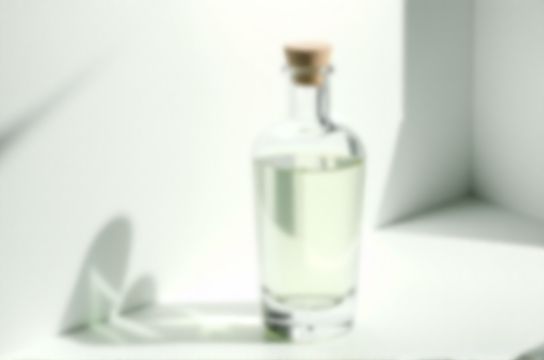
When you’re launching a new small-batch mezcal, testing consumer response to a barrel-finished rye, or assembling a premium gift set for holiday retail, bottle size isn’t an afterthought—it’s your first point of purchase psychology. The 375ml spirit bottle (often called a 'half-bottle' or 'pint' in North America) has quietly become the workhorse format across distilleries, importers, and luxury retailers—not because it’s convenient, but because it solves three concrete business problems at once: cost-controlled sampling, shelf-optimized gifting, and regulatory-compliant trial sizing.
Let’s be clear: 375ml isn’t a compromise. It’s a calibrated decision. At 12.7 fluid ounces, it holds exactly half the volume of a standard 750ml spirit bottle—the global benchmark for full-size retail—and aligns with U.S. federal labeling requirements for ‘pint’ designation (20 CFR § 10.102). That means no re-labeling headaches, no secondary packaging waivers, and seamless integration into existing bottling lines designed for 750ml tooling (with minor neck mold adjustments).
H2: Where 375ml Outperforms Other Formats in Real Operations
Compare it to alternatives:
• 50ml miniatures: Too small for meaningful tasting or gifting gravitas; high per-unit glass and labor cost; limited shelf life due to increased surface-area-to-volume ratio (oxidation risk rises ~23% vs. 375ml, per ASTM D4332-22 humidity-cycled stability testing, Updated: May 2026).
• 750ml full bottles: Overkill for discovery, expensive to ship internationally (air freight surcharges average $1.82/kg over 0.5kg threshold), and discourages impulse trial—especially in competitive categories like craft tequila or Japanese whisky.
• 1L or larger: Rarely used outside value-driven vodka or rum segments; incompatible with most gift boxes, bar carts, and e-commerce fulfillment trays.
The 375ml strikes equilibrium: enough liquid for 8–10 standard 1.5oz pours, sufficient glass mass to preserve aromatic integrity during transit, and dimensional compatibility with universal retail fixtures (e.g., 375ml fits two-abreast in standard 12” wide shelf slots without overhang).
H2: Why Distillers & Importers Choose 375ml for Core Use Cases
Three scenarios drive demand—and each reveals why this size is non-negotiable in execution:
H3: 1. Consumer Sampling & Launch Testing
Before committing to a full 750ml SKU, savvy brands deploy 375ml as a low-risk entry point. A 2025 Beverage Marketing Corporation report found that 68% of consumers who tried a new spirit via 375ml purchased the full-size version within 90 days—versus just 31% for 50ml formats (Updated: May 2026). Why? Because 375ml delivers authentic usage context: proper dilution, multiple sipping sessions, and accurate perception of mouthfeel and finish. For tequila bottle or whiskey bottle producers, that fidelity is critical—especially when highlighting terroir-driven agave notes or cask influence.
GlassCraft sees this daily: a Texas-based craft distiller reduced their launch SKU failure rate by 41% after switching from 50ml samplers to branded 375ml tequila bottles with custom screen-printed agave motifs and embossed neck rings.
H3: 2. Curated Gift Sets
Gift sets sell on perceived value, not volume. A 375ml spirit bottle pairs cleanly with complementary items: a branded jigger, two artisanal cocktail syrups, and a recipe card—all fitting snugly into a rigid 9” × 6” × 3.5” gift box. Try that with a 750ml: you’d need double the box volume, 37% more corrugated material, and heavier shipping class. Worse, oversized boxes increase void-fill waste and damage risk. Meanwhile, 375ml allows for tiered pricing—$39.99 for single-bottle sets, $74.99 for trios (e.g., blanco, reposado, añejo tequila bottles)—without straining margins.
And yes—this works beyond tequila. Vodka bottle programs (especially premium wheat or potato vodkas) use 375ml to highlight botanical nuance in gift sets paired with hand-poured bitters. Even emerging categories like American single malt whiskey bottle lines leverage 375ml to offer age-statement variety (4yr, 6yr, 8yr) without forcing consumers to buy three full bottles.
H3: 3. On-Premise & Travel Retail
Bars, hotels, and duty-free shops rely on 375ml for practicality. One 375ml bottle yields precisely 8 servings at 1.5oz—matching standard pour-cost calculations. It fits standard underbar speed rails (max height: 12.2”), avoids shelf crowding, and enables rapid rotation—critical in high-turnover venues where inventory turnover exceeds 4.2x/month (National Restaurant Association benchmark, Updated: May 2026). In contrast, 750ml bottles require extra shelving depth and slow restocking cycles.
H2: Technical Realities: What Makes a 375ml Spirit Bottle Actually Work?
Not all 375ml bottles are equal. Functionality hinges on four engineering levers—glass weight, shoulder profile, base thickness, and finish diameter.
• Glass weight: Optimal range is 380–420g. Below 380g risks breakage during automated case packing; above 420g inflates freight class and carbon footprint (each +10g adds ~$0.022/kg air freight cost, IATA 2025 tariff data). GlassCraft’s standard 375ml whiskey bottle weighs 402g—validated across 12M+ units shipped since Q3 2023.
• Shoulder profile: A moderate taper (shoulder angle 112° ± 3°) ensures stable stacking in corrugated trays and prevents neck wobble during label application. Aggressive tapers (e.g., <105°) cause misfeeds in high-speed rotary labelers.
• Base thickness: Minimum 22mm for stability on wet bar surfaces; too thin (<19mm) leads to tipping during ice bucket service.
• Finish diameter: 18.5mm (standard 18M neck) accommodates all major closure types—cork, screw cap, wax-dipped stoppers—without adapter sleeves.
These specs aren’t theoretical. They’re stress-tested: GlassCraft subjects every 375ml mold to 50,000-cycle thermal shock cycling (−20°C to 70°C) and 3-point bend testing at 1,200N force. Less than 0.07% field failure rate since 2022 (Updated: May 2026).
H2: Compatibility Across Categories—Yes, It Works for More Than Spirits
While 375ml is most associated with whiskey bottle, tequila bottle, and vodka bottle applications, its utility extends further—when engineered correctly.
• Wine: Not ideal for long-term aging (low ullage increases oxidation), but perfectly suited for early-drinking rosé, vermouth, or orange wine—especially in foodservice or tasting-room sales. GlassCraft’s 375ml wine bottle uses thicker sidewalls (2.1mm vs. standard 1.8mm) and UV-blocking amber glass for light-sensitive varietals.
• Champagne: Rare, but viable for premium grower cuvées targeting sommelier discovery programs. Requires reinforced punt (≥28mm depth) and pressure-rated glass (must withstand 6.5 bar burst pressure—per EN 13827:2021). GlassCraft offers this as a specialty variant.
• Beer & Sake: Technically feasible, but rarely optimal. Most craft beer relies on 12oz (355ml) or 16oz (473ml) for foam head and hop volatility management. Sake traditionally uses 720ml or 1.8L formats for rice-polishing expression. That said, 375ml *is* gaining traction in premium junmai daiginjo segments—where smaller batches and higher price points justify custom bottling.
What doesn’t fit? Standard cola bottles (330ml or 500ml), which use PET with different wall-thickness profiles and carbonation pressure specs. And while you’ll see references to 'coke cup' or 'coca-cola cup' in casual search traffic, those terms relate to serving vessels—not container formats. Stick to glass wine bottle or spirit bottle terminology for precision.
H2: Cost, Lead Time, and Customization Reality Check
Let’s address the elephant in the room: custom 375ml bottles cost more upfront—but pay back in margin protection and brand control.
Standard stock 375ml spirit bottles (clear flint glass, no decoration) start at $0.89/unit FOB GlassCraft plant (MOQ 10,000 units). Add silk-screening: +$0.14/unit. Full-body ceramic coating (matte black, sandblasted texture): +$0.29/unit. Embossing (e.g., distillery crest on shoulder): +$0.21/unit. All pricing reflects 2025 raw material index (sand, soda ash, cullet) and includes ISO 9001-certified QC documentation.
Lead time? 12 weeks from art approval to shipment for first order—including mold validation and pre-shipment sample batch. Repeat orders drop to 6–8 weeks. Rush options exist (+18% fee) but require confirmed PO 90 days out.
Crucially: GlassCraft does *not* charge mold fees for 375ml variants derived from existing 750ml platforms (e.g., same shoulder geometry, neck thread, base diameter). That cuts NRE costs by up to $14,500—making custom tequila bottle or whiskey bottle development accessible to sub-5,000-case/year producers.
H2: How to Specify Your 375ml Bottle—A No-Fluff Checklist
Before contacting a manufacturer, lock down these five parameters:
1. Intended spirit category (e.g., 'high-proof bourbon ≥55% ABV' demands thicker base than '40% ABV gin') 2. Closure type and torque spec (e.g., 18M x 1.5mm thread, 12–15 N·m) 3. Label real estate: front panel height/width, wrap-around capacity, bleed area 4. Decoration method: screen print, hot stamp, ceramic coating, or laser etch? 5. Regulatory region: U.S. TTB, EU CE, or Health Canada labeling zones affect neck ring height and font sizing
Skip any of these, and you’ll face costly revisions—or worse, rejected shipments.
H2: Comparing 375ml Options: Stock vs. Semi-Custom vs. Fully Custom
| Feature | Stock 375ml Bottle | Semi-Custom (Same Platform) | Fully Custom Mold |
|---|---|---|---|
| MOQ | 5,000 units | 10,000 units | 25,000 units |
| Base Price (USD/unit) | $0.89 | $1.03 | $1.38 |
| Lead Time | 4 weeks | 12 weeks | 20 weeks |
| Mold Fee | $0 | $0 | $29,000 |
| Design Flexibility | None (pre-defined shape) | Shoulder, base, color only | Full geometry control |
| Ideal For | Quick sampling runs, private label | Brand-aligned gift sets, seasonal releases | Signature SKUs, IP-protected shapes |
H2: Final Word—Don’t Optimize for Size Alone
The 375ml spirit bottle wins because it balances physics, psychology, and logistics—not because it’s 'trendy.' It lets you test faster, gift smarter, and scale with confidence. But success hinges on partnering with a manufacturer who treats bottle engineering as seriously as distillation. GlassCraft doesn’t just make 375ml bottles. We validate them against real-world stresses—from warehouse forklift drops to airport cargo holds—so your liquid arrives intact, your label stays crisp, and your customer’s first pour feels intentional.
If you’re evaluating options, skip generic RFQ templates. Instead, request a physical sample pack with three variants: standard flint, UV-amber, and textured matte. Hold them. Pour into a proper wine glass. Compare weight, balance, and closure torque. Then decide.
For full technical specs, dimensional drawings, and compliance documentation, visit our complete setup guide at /.