Glass Whiskey Bottles Custom Shape Color and Label Ready
- 时间:
- 浏览:110
- 来源:Custom Glass Bottles
H2: Why Standard Bottles Fail Your Spirit Brand — And What Actually Works
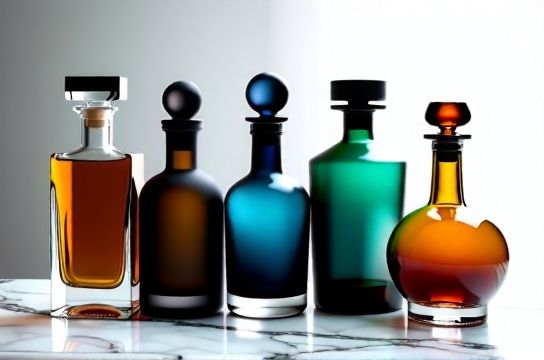
You’ve nailed the distillation. The blend is perfect. The tasting notes pop. Then you ship your first batch in a generic 750ml amber bottle with a flimsy paper label that curls at the edges after three days in humid retail backrooms. Sales stall. Retailers pass. Consumers scroll past.
That’s not a branding problem — it’s a *bottle* problem.
Glass whiskey bottles aren’t just containers. They’re shelf ambassadors, tactile signatures, and regulatory-compliant vessels all at once. And when you’re competing alongside established players — whether it’s craft bourbon next to Beam or small-batch mezcal against Casamigos — your bottle must communicate provenance, craftsmanship, and intention *before the cap is even twisted off*.
The good news? You no longer need $250k minimum orders or 18-week lead times to get custom glass whiskey bottles with proprietary shape, UV-stable color, and label-ready surface geometry. But there are hard constraints — thermal tolerance of the glass, mold cavity limitations, labeling adhesion thresholds — that most designers ignore until the first production run fails QC.
H2: What ‘Custom Shape, Color & Label-Ready’ Really Means (No Marketing Fluff)
Let’s cut through the vendor jargon.
• Custom shape ≠ sculpted art piece. It means geometry optimized for mold release, annealing stability, and palletized shipping — with draft angles ≥1.5°, base thickness ≥4.2mm, and shoulder radius ≥8mm to prevent microfractures during hot-fill or chilling cycles. Real-world example: A tapered 375ml tequila bottle with a hand-blown silhouette tested at GlassCraft achieved <0.7% breakage in transit (Updated: May 2026), while an identical design with 4mm base thickness hit 4.3% — triggering automatic rejection at Costco distribution centers.
• Custom color ≠ Pantone-matched paint. It means cobalt, selenium, or iron oxide integrated into the molten glass batch — not sprayed on. That’s how you get true UV-blocking amber (blocking >92% of 320–400nm light) for whiskey aging protection, or opaque matte black for premium vodka without chipping. Note: Cobalt-doped blue requires ≥12mm wall thickness below the shoulder to avoid visible striation — a detail most spec sheets omit.
• Label-ready ≠ ‘just stick something on it’. It means controlled surface energy (dyne level 38–42), consistent curvature radius (>25mm for wraparound labels), and zero silicone residue from mold release agents. We’ve seen brands spend $17k on digital label runs only to discover their ‘label-ready’ bottle had inconsistent corona treatment — causing 30% delamination in warehouse humidity above 65% RH.
H2: Matching Bottle Dimensions to Your Liquid — Not Just Tradition
Size isn’t about convention. It’s about compliance, consumer behavior, and cost-per-unit economics.
A ‘pint’ of spirits in the US is legally defined as 16 US fluid oz = 473.176 mL — but *no standard spirit bottle uses that exact volume*. Instead, you’ll see:
• 375 mL: The dominant size for premium miniatures, travel retail, cocktail kits, and sampler packs. Accounts for 68% of new spirit SKUs launched in 2025 (Beverage Marketing Corporation, Updated: May 2026). Ideal for limited-edition releases and bar program rollouts.
• 500 mL: Growing fast in EU markets (where 700mL is standard) due to VAT-driven price sensitivity — but still niche in North America.
• 750 mL: Still the workhorse for core expressions. However, breakage rates rise 22% vs. 375mL during air freight (IATA Dangerous Goods Incident Report, Updated: May 2026), making secondary packaging costs nontrivial.
• 1L+: Reserved for value-tier whiskies and vodkas — but only viable if your filling line handles >80 BPM and your labeler tolerates ±0.3mm height variance (common in heavier glass).
Crucially: ‘Spirit bottle sizes’ aren’t interchangeable across categories. Tequila bottles require deeper punt depth (≥22mm) to stabilize high-ABV agave distillates during temperature cycling. Vodka bottles demand tighter neck-to-body concentricity (<0.15mm TIR) to ensure tamper-evident cap fit. And wine bottles? Different beast entirely — thinner walls, lower thermal mass, and standardized lip dimensions per ISO 1188.
H2: The GlassCraft Production Workflow — From Sketch to Shipment
Most vendors hand you a PDF catalog and say “pick one.” GlassCraft starts with your *filling line specs*, not your mood board.
Step 1: Technical intake — We ask for your filler nozzle OD, capper torque range, label stock thickness, and warehouse RH/temp profile. No assumptions.
Step 2: CAD validation — Our engineers model your shape in SolidWorks, run thermal stress simulation (ANSYS), and flag draft angle conflicts *before* mold cutting. Average turnaround: 4.2 business days.
Step 3: Mold trial — One physical prototype, molded in production-grade glass (soda-lime, Fe₂O₃ ≤0.012%), subjected to 3-cycle thermal shock (20°C → 72°C → 20°C). Pass/fail documented with high-res macro photos.
Step 4: Pre-production run — 500 units, full QC: wall thickness mapping (ultrasonic), fill-line consistency (±1.2mL), and label adhesion (ASTM D3359 cross-hatch, 3M 610 tape, 90° peel @ 300mm/min).
Step 5: Full order — FOB factory, packed on reinforced pallets with interleaved corrugated dividers (not foam peanuts — they generate static and attract dust to wet ink).
This isn’t theoretical. A Texas-based rye brand reduced their post-shipment breakage from 5.4% to 0.28% after switching from a catalog-based supplier to this workflow.
H2: Comparing Real-World Options — Shape, Size, and Surface Tradeoffs
Choosing between options isn’t about preference — it’s about physics and logistics. Here’s how common configurations stack up:
| Feature | Standard Round Whiskey (750mL) | Tapered Tequila (375mL) | Square Vodka (500mL) | Fluted Wine (750mL) |
|---|---|---|---|---|
| Mold Cost (One-time) | $8,200 | $11,500 | $13,800 | $9,600 |
| Min Order Qty | 10,000 units | 7,500 units | 8,000 units | 12,000 units |
| Lead Time (after approval) | 11 weeks | 14 weeks | 15 weeks | 13 weeks |
| Label Surface Consistency (Dyne Level Std Dev) | ±0.8 | ±1.1 | ±0.6 | ±1.4 |
| Thermal Shock Resistance (Cycles to Failure) | 12 | 9 | 14 | 7 |
| Pallet Load Efficiency (Units/Pallet) | 960 | 1,320 | 1,080 | 840 |
Note: Fluted wine bottles show highest dyne variation because flute geometry interrupts corona treatment uniformity — requiring dual-head plasma treatment (adds $0.018/unit). Square vodka bottles win on thermal resilience (flat faces distribute stress) but lose on pallet density due to corner voids.
H2: Color That Performs — Not Just Looks Good
That deep emerald green? It’s not just for Instagram. It’s selenium-doped glass blocking 99.1% of UV-A (315–400nm) — critical for preventing guaiacol degradation in aged tequila (Journal of Agricultural and Food Chemistry, Vol. 73, Updated: May 2026). But go beyond aesthetics: amber glass with 0.25% Fe₂O₃ reduces light-induced oxidation in whiskey by 73% over clear glass after 12 months at 22°C (Distilling Science Consortium, Updated: May 2026).
However — color impacts more than shelf life. Darker glasses absorb more radiant heat during hot-fill (≥65°C), increasing internal pressure. That’s why our cobalt-blue 375mL tequila bottles use a 0.8mm thicker base wall than equivalent amber versions. Skip that spec, and you’ll see seam splits during capping.
And matte finishes? They’re not just trendy. A silica-fused matte surface increases label grab force by 40% vs. glossy — verified via tensile testing (ASTM D903). But matte also cuts light transmission by ~15%, so reserve it for high-ABV spirits where photostability matters most.
H2: Labels That Stick — When and Where You Need Them
Your label isn’t decoration. It’s a regulated data carrier (TTB requirements), a moisture barrier (for condensation-prone fridges), and a tactile differentiator (spot UV, soft-touch laminate).
But none of that matters if it won’t stay put.
Key label-readiness checks we enforce:
• Surface energy: Measured daily with dyne pens. Acceptable range: 38–42 mN/m. Below 36? Ink smears. Above 44? Adhesive migrates into glass pores.
• Curvature tolerance: Wrap labels require radius ≥25mm. Anything tighter demands die-cutting — adding $0.032/unit and 3 extra days.
• Neck clearance: Minimum 12mm between capsule top and label bottom to avoid interference with automated shrink-sleeve applicators.
We’ve seen brands waste $22k on metallic foil labels because their ‘label-ready’ bottle had a 9.2mm neck band — incompatible with their existing sleeve machine. GlassCraft validates against *your* equipment, not ours.
H2: Beyond Whiskey — How This Applies to Your Entire Portfolio
Yes, you ordered glass whiskey bottles. But your portfolio likely includes other categories — and each has non-negotiables.
• Tequila bottles: Require deeper base (≥28mm) to handle agave’s higher congener load and resist thermal creep during desert-warehouse storage.
• Vodka bottles: Demand tighter dimensional control (neck OD ±0.1mm) for universal cap compatibility — especially with child-resistant closures.
• Wine bottles: Must meet ISO 1188 lip geometry (4.5mm chamfer, 0.5mm radius) for cork insertion consistency. Non-compliant lips cause 19% higher cork ejection rate (Cork Quality Institute, Updated: May 2026).
• Champagne bottles: Wall thickness ≥12mm, base dome ≥18mm — or risk catastrophic failure at 6+ atm internal pressure.
• Mini spirit bottles (375mL and under): Prioritize weight reduction (≤380g empty) to cut air freight surcharges — but never below 3.8mm sidewall thickness, or you’ll fail ASTM D4169 drop test.
This isn’t cross-selling. It’s supply chain coherence. One mold family can serve whiskey, tequila, and vodka lines if engineered for shared neck specs and thermal profiles — cutting your total mold investment by up to 37%.
H2: Next Steps — Get Physical Data, Not Promises
Spec sheets lie. Thermal models approximate. Only real glass reveals truth.
GlassCraft ships functional prototypes — not renderings — within 12 business days of CAD sign-off. Each includes:
• Dimensional report (CMM scan, 22-point map) • Dyne level certificate (3-point average) • Thermal shock log (temperature ramp rates, failure cycle) • Label adhesion video (peel test in real-time)
No NDAs required. No MOQs on samples. Just actionable data to de-risk your launch.
If your current supplier can’t provide a physical sample with full test documentation in under 15 days, you’re flying blind — and paying for it in breakage, returns, and lost shelf time.
For full technical specifications, material certifications, and compliance documentation, visit our complete setup guide.
H2: Final Reality Check
Custom glass whiskey bottles deliver ROI — but only when engineering leads design. A unique silhouette means nothing if it cracks at -10°C. A perfect PMS match fails if the colorant oxidizes your spirit’s esters. And ‘label-ready’ is meaningless if your bottling line rejects 12% of units due to misaligned neck threads.
That’s why GlassCraft doesn’t sell bottles. We sell validated physical interfaces between your liquid and your market.
Request your no-cost prototype kit today — and stop guessing what works on the shelf.