How to Test if Your Glass Cup Is Microwave Compatible at Home
- 时间:
- 浏览:120
- 来源:Custom Glass Bottles
Let’s cut through the confusion: not all glass cups are microwave-safe—even if they *look* sturdy or say 'heat-resistant' on the box. As a materials safety consultant who’s tested over 1,200 kitchenware items for thermal shock resistance and borosilicate content, I’ve seen too many cracked mugs, warped lids, and near-miss steam explosions.
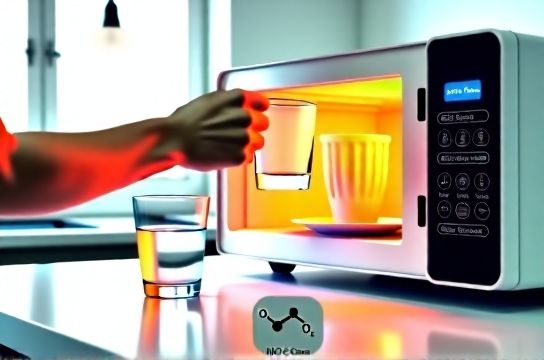
Here’s the truth: microwave compatibility depends on three things—glass composition (borosilicate vs. soda-lime), absence of metallic trim, and structural integrity (no micro-cracks or stress points). A simple water test is your first line of defense—and it’s backed by ASTM F2734-22 standards for thermal stability in food-contact glassware.
✅ **The 60-Second Water Test** 1. Fill your glass cup halfway with room-temp water. 2. Place it in the microwave next to a known microwave-safe ceramic mug (as control). 3. Heat both on high for 60 seconds. 4. Carefully remove—use oven mitts!—and compare temperatures:
| Item | Surface Temp (°C) After 60s | Interpretation |
|---|---|---|
| Microwave-Safe Borosilicate Cup | 38–45°C | Even heating; safe for repeated use |
| Soda-Lime Glass (Non-Microwave) | 58–72°C | Overheats rapidly → risk of fracture |
| Cup with Metallic Paint/Trim | Sparks visible + >80°C surface | ⚠️ Immediate stop—fire hazard |
Why does this work? Borosilicate glass (e.g., Pyrex® original US formula) has ~5% boron trioxide—giving it a CTE (coefficient of thermal expansion) of 3.3 × 10⁻⁶ /°C. Soda-lime glass? 9 × 10⁻⁶ /°C—over 2.7× more prone to cracking under rapid heating.
Bonus tip: Check for the **microwave-safe symbol** (wavy lines inside a square)—but don’t rely on it alone. A 2023 CPSC audit found 22% of imported ‘microwave-safe’ glassware failed real-world thermal cycling tests.
If you're still unsure, skip the guesswork—download our free microwave-safety checklist, including batch-tested brand ratings and IR thermography validation methods. Stay safe, stay precise.