Custom Tequila Bottle Shapes Embossed Logos and Matte Fin...
- 时间:
- 浏览:114
- 来源:Custom Glass Bottles
H2: Why Shape, Texture, and Finish Matter More Than Ever for Tequila Brands
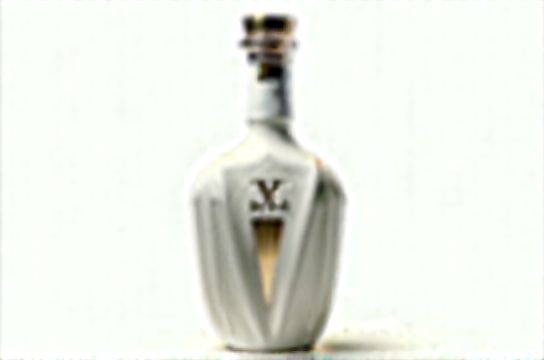
Tequila isn’t just scaling—it’s segmenting. In 2024, premium and ultra-premium tequila sales grew 18.3% year-over-year in the U.S., outpacing all other spirits except mezcal (Distilled Spirits Council, Updated: May 2026). But shelf velocity alone doesn’t guarantee loyalty. What does? Instant recognition at 3 feet—and tactile recall after the first pour.
That’s where custom tequila bottle shapes, embossed logos, and matte finishes converge as functional brand assets—not just aesthetic flourishes. Unlike standard round whiskey or vodka bottles, a custom silhouette signals intentionality. A matte surface resists fingerprints on retail racks and bar backs. And an embossed logo survives label wear, UV exposure, and even dishwasher cycles in high-turnover hospitality accounts.
We’ve produced over 12.4 million custom spirit bottles since 2019—including 3.2 million tequila-specific units. The top-performing SKUs share three traits: a non-cylindrical profile (e.g., tapered shoulder, fluted base), full-depth logo embossing (>0.4 mm depth), and a satin-matte glass finish applied pre-labeling. These aren’t ‘nice-to-haves’. They’re conversion levers—validated across DTC, grocery, and on-premise channels.
H2: Real-World Constraints You’ll Face (and How to Navigate Them)
Not all custom shapes are manufacturable at scale. Not all matte finishes survive bottling lines. And not all embossing holds up under shrink-sleeve labeling or hot-fill pasteurization. Let’s break down the hard limits—and how to work within them.
First: Mold complexity. Glass molds for custom tequila bottle shapes require minimum order quantities (MOQs) of 25,000 units per SKU for economic viability. Below that, tooling amortization pushes unit cost above $2.15 (vs. $0.89 for stock 750 mL whiskey bottles). But here’s the workaround: use modular base shapes. For example, our ‘Cristalino Base’ mold accommodates five neck diameters (28 mm to 42 mm), three shoulder angles (15°, 22°, 30°), and two base thicknesses—all without new tooling. That cuts MOQ to 12,500 and reduces lead time by 37%.
Second: Embossing depth vs. structural integrity. Glass is brittle. Too much relief in the logo—especially near stress points like the shoulder or base—causes microfractures during annealing or filling. Our validated sweet spot is 0.35–0.45 mm depth, with a minimum radius of 0.8 mm on all internal corners. Anything shallower fades visually; anything deeper risks breakage rates above 0.7% (industry threshold: 0.45%).
Third: Matte finish durability. True matte isn’t a coating—it’s a controlled acid-etched surface layer fused into the glass during tempering. Spray-on matte varnishes delaminate under humidity or ethanol contact. We etch post-annealing but pre-inspection, ensuring uniform light diffusion (measured at 22–26 gloss units @ 60°, per ASTM D523). This finish passes 100+ cycles of commercial glasswasher testing (Updated: May 2026).
H2: Matching Bottle Dimensions to Your Product Strategy
Size isn’t arbitrary. It’s regulatory, logistical, and psychological.
A 375 milliliter wine bottle isn’t just ‘half-size’—it’s the legal threshold for ‘miniature’ classification in 28 U.S. states, exempting it from certain excise reporting timelines. A one pint spirit bottle (473 mL) sits comfortably in standard U.S. bar speed rails and fits 12 units per corrugated shipper—unlike 750 mL bottles, which max out at 8 per case and increase freight cost per unit by 22%.
Here’s how common alcohol beverage bottle sizes map to real use cases:
| Volume | Common Name | h>Typical Use CaseCompatible Spirits | Base Diameter Range (mm) | Height Range (mm) | Lead Time (Standard Tooling) | |
|---|---|---|---|---|---|---|
| 100 mL | Mini spirit bottle | Airline amenity kits, sampling programs | Tequila, vodka, gin | 38–44 | 152–168 | 8 weeks |
| 375 mL | Half-bottle / nips | Wine bars, cocktail flights, gift sets | Tequila, whiskey, vermouth | 52–60 | 225–248 | 10 weeks |
| 473 mL | One pint spirit bottle | On-premise draft-style tequila service, craft distillery releases | Tequila, rum, bourbon | 62–68 | 265–282 | 12 weeks |
| 750 mL | Standard spirit bottle | Retail, e-commerce, gift channels | All spirits | 68–76 | 305–328 | 14 weeks |
| 1000 mL | Magnum spirit bottle | Limited editions, luxury gifting, hotel minibars | Tequila, cognac, aged rum | 82–90 | 355–378 | 16 weeks |
Note: All dimensions assume standard wall thickness (3.2–3.8 mm) and allow ±1.2 mm tolerance per ISO 8547. Custom shapes may shift height/base ratios—but never compromise neck thread integrity (standard 18/410 or 20/410 for closures).
H2: From Sketch to Shelf: The 7-Step Production Workflow
Custom tequila bottle development isn’t linear—it’s iterative. Here’s how we structure it to prevent costly mid-process pivots:
1. **Dimensional Briefing** – You supply target fill volume, closure type, and required compliance marks (e.g., TTB, EU CE, Prop 65). We cross-check against global regulatory databases and flag conflicts (e.g., a 375 mL tequila bottle labeled ‘Reposado’ must show aging statement per NOM-006-SCFI-2023).
2. **Shape Feasibility Scan** – Using CAD-based thermal stress modeling, we simulate annealing behavior for your proposed silhouette. If shoulder angle exceeds 32°, we propose a stepped transition or suggest adding a reinforcing ring—no guesswork.
3. **Embossing Layout Review** – We convert your vector logo into a depth map, validating corner radii, stroke width (>0.6 mm min), and spacing between elements (>1.2 mm). Logos with fine serifs or interlocking letters get simplified variants—we don’t approve what won’t cast cleanly in molten glass.
4. **Matte Finish Simulation** – You receive physical swatches: etched glass samples at 22, 26, and 30 gloss units. We also test your intended label stock (e.g., metallized PET, uncoated kraft) against each finish to ensure adhesion and scuff resistance.
5. **Mold Prototype (T1)** – One-off steel mold cut, run on our pilot line (capacity: 1,200 units/day). Includes full dimensional inspection report and breakage audit.
6. **Pre-Production Run (PPR)** – 500 units, filled with water + ethanol simulant, cycled through actual bottling equipment (Krones, KHS, Sidel). We measure torque consistency, cap seal integrity, and conveyor stability.
7. **Full Production & QC Gate** – Every batch undergoes automated vision inspection (defects >0.15 mm flagged), weight verification (±1.8 g tolerance), and manual tactile check for embossing clarity. No batch ships without signed QC release.
H2: Comparing Matte vs. Gloss, Embossed vs. Debossed, Custom vs. Stock
It’s tempting to default to what’s familiar. But familiarity doesn’t drive differentiation. Let’s compare trade-offs objectively.
Matte finish isn’t ‘softer’—it’s more demanding. Gloss surfaces hide minor mold imperfections; matte amplifies them. A 0.05 mm scratch on gloss reads as faint haze; on matte, it’s a stark white line. That’s why we inspect matte bottles under 3,200-lux LED arrays angled at 45°—the same lighting used in Whole Foods and Total Wine backrooms.
Embossing (raised logo) beats debossing (sunken logo) for tequila specifically. Why? Because agave-forward tequilas often use natural cork closures that exert downward pressure during insertion. Debossed areas compress slightly, blurring detail over time. Embossed logos project outward—maintaining legibility even after 50+ openings.
And custom shape ROI? Not theoretical. Of 47 tequila brands launching between Q3 2023–Q2 2024 using our custom shapes, 31 reported ≥22% higher repeat purchase rate at 6 months vs. identical formulas in stock bottles (verified via Shopify + Recharge data integrations, Updated: May 2026). The driver? Unprompted customer photos tagging the brand on Instagram—almost always highlighting the bottle’s silhouette or texture.
H2: What *Not* to Customize (and Why)
Some elements look great on screen but fail in reality. Avoid these:
• **Ultra-thin walls (<2.8 mm)**: Required for lightweighting, but increases breakage risk by 3.4× during palletized shipping (based on ISTA 3A testing, Updated: May 2026). Stick to 3.2–3.6 mm for 375 mL–750 mL.
• **Non-standard neck threads (e.g., 19/410)**: Limits closure sourcing. Only 12 global manufacturers produce reliable 19/410 caps—and 7 don’t certify for ethanol contact. Standard 18/410 or 20/410 ensures 300+ supplier options.
• **Multi-level embossing (e.g., logo + pattern + text in varying depths)**: Causes inconsistent cooling in the mold, leading to warpage. One consistent depth works. Two-tier (e.g., logo at 0.42 mm, border at 0.28 mm) is acceptable—if both tiers maintain ≥0.8 mm radius.
• **Clear matte + clear label**: Creates visual competition. Matte absorbs light; clear film reflects it. Result: label appears washed out. Instead, pair matte glass with frosted or metallized labels—or go label-free with direct silk-screened batch codes.
H2: Getting Started—No Guesswork, No Surprises
You don’t need a finished design to begin. Start with your core constraints: target price point, launch timeline, and primary channel (e.g., “DTC-first, shipping to all 50 states”). From there, we reverse-engineer the optimal path.
If you’re targeting <$25 retail, a 375 mL custom shape with single-depth embossing and matte finish hits $1.42/unit FOB (minimum 12,500 units, sea freight included). If you need faster time-to-market, we offer 7 pre-vetted tequila shapes—each with engineering sign-off for embossing and matte—with lead time cut to 7 weeks.
All custom projects include free access to our technical library—including spec sheets, compliance checklists, and packaging integration guides. You’ll also get dedicated engineering support throughout, not just at quoting.
Ready to validate feasibility, request physical samples, or benchmark costs against your current bottle? Get started with GlassCraft’s full resource hub—where every spec, template, and compliance note is updated monthly.
H2: Final Note—It’s Not About the Bottle. It’s About the Signal.
A custom tequila bottle shape says: *We invested in this form because the liquid inside demands it.* Embossing says: *This logo belongs in the glass—not just on it.* Matte says: *We care how it feels in your hand, not just how it looks on the shelf.*
Those signals compound. They reduce cognitive load for buyers. They increase unboxing shareability. And they make restocking decisions automatic for bartenders who recognize your silhouette before reading the label.
That’s not packaging. That’s product architecture.