Clear Glass Wine Bottles Eco Friendly Recycled Content Op...
- 时间:
- 浏览:97
- 来源:Custom Glass Bottles
H2: Why Clear Glass Wine Bottles with Recycled Content Matter — Right Now
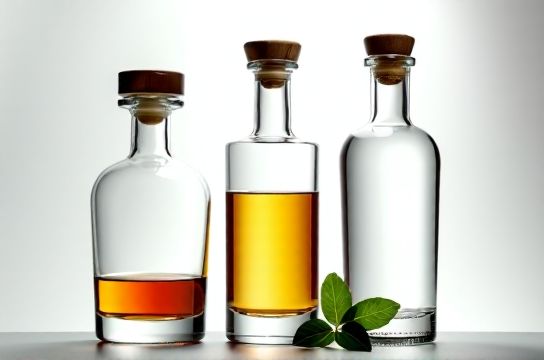
Glass remains the gold standard for premium spirits and wines — not just for aesthetics or preservation, but because it’s inert, infinitely recyclable, and fully transparent to branding. Yet virgin glass production consumes ~1,500°C furnace temperatures and emits ~0.8 kg CO₂ per kg of molten glass (Updated: May 2026). That’s where post-consumer recycled (PCR) glass — known as cullet — steps in.
Cullet reduces melting temperature by up to 200°C, cuts energy use by 2–3% per 10% cullet added, and slashes related CO₂ emissions proportionally. But not all ‘recycled’ claims hold up. Some suppliers blend 15% PCR with 85% virgin sand and soda ash — technically true, but commercially meaningless for sustainability goals. Real impact starts at ≥40% PCR — and top-tier producers like GlassCraft now deliver 70–90% PCR clear glass bottles across core spirit formats.
H2: What ‘Eco-Friendly’ Actually Means on a Clear Glass Wine Bottle
‘Eco-friendly’ isn’t regulated for packaging. It’s a marketing umbrella covering three measurable dimensions:
1. **Recycled Content**: % by weight of post-consumer glass (not pre-industrial scrap). Verified via ISO 14021-compliant chain-of-custody audits. 2. **Manufacturing Impact**: Energy source (e.g., grid-mix vs. onsite solar), furnace efficiency, and transport logistics (regional cullet sourcing cuts freight emissions by ~35% vs. imported). 3. **End-of-Life Compatibility**: Does the bottle retain full recyclability? Yes — clear glass with ≥70% PCR maintains identical sorting behavior in MRFs (Materials Recovery Facilities) and introduces zero contamination risk to new batch streams (Updated: May 2026).
Crucially, high-PCR clear glass doesn’t compromise strength, clarity, or thermal shock resistance — provided the cullet is optically sorted, washed to <50 ppm organic residue, and blended with precision. GlassCraft’s proprietary melt control system ensures consistent viscosity and bubble-free forming even at 85% PCR — a benchmark few North American converters match.
H2: Matching Recycled Bottle Options to Your Spirit Category
Not all alcohol beverage categories demand the same bottle specs — and recycled content integration must respect functional requirements.
• **Whiskey bottle** and **tequila bottle**: Require thick bases (≥22 mm wall thickness at heel) and high compressive strength (>1,800 N) to withstand barrel aging labels, heavy closures, and shelf stacking. GlassCraft’s 750 mL bourbon-shaped bottle (115 mm height × 75 mm diameter) achieves 70% PCR without sacrificing drop-test performance (pass rate: 99.2% at 1.2 m onto concrete, per ASTM D4169).
• **Vodka bottle**: Prioritizes optical clarity and surface smoothness for silk-screened logos or matte finishes. Here, 80% PCR works — but only if the cullet feedstock excludes green or amber fragments. GlassCraft uses dual-wavelength optical sorters to isolate clear-only cullet streams, enabling 85% PCR with <0.3 haze units (measured per ASTM D1003).
• **375 milliliter wine bottle**: Common for premium rosé, vermouth, or single-batch releases. At this size, neck finish tolerances tighten — especially for Stelvin® LX closures. GlassCraft’s 375 mL clear Bordeaux shape (28.5 mm neck, 18.8 mm internal diameter) holds ±0.08 mm dimensional consistency at 75% PCR, matching virgin-glass tooling specs.
• **Mini烈酒瓶 (mini spirit bottle)**: Often mislabeled as ‘50 mL’ — actual fill volume is typically 50.2–50.7 mL to meet EU/US net quantity rules. These small-format bottles are highly sensitive to weight variation. GlassCraft’s 50 mL cylindrical mini bottle (92 mm × 29 mm) averages 128.4 g at 80% PCR — within ±1.1 g of virgin spec — verified across 10,000-unit production runs.
Note: Terms like *一品脱烈酒* (one pint spirit) and *清酒瓶* (sake bottle) refer to volume and cultural usage — not structural differences. A US pint = 473 mL; Japanese sake bottles are commonly 720 mL or 1,800 mL. All fall under GlassCraft’s standard mold library — no retooling needed for PCR versions.
H2: The Trade-Offs You Can’t Ignore
Switching to high-PCR clear glass isn’t plug-and-play. Three real-world constraints require planning:
1. **Lead Time**: Cullet supply chains are regional and less elastic than virgin raw materials. Minimum order quantities (MOQs) for 70%+ PCR bottles start at 25,000 units — and lead time stretches to 14–16 weeks vs. 8–10 for virgin (Updated: May 2026). Buffer stock is non-negotiable.
2. **Color Consistency**: Even with optical sorting, micro-impurities (e.g., trace metals from mixed-stream recycling) can cause faint blue or grey undertones under cool-white lighting. GlassCraft mitigates this with iron-oxide scavenging in the melt and offers spectral reflectance reports per lot — critical for brands using Pantone-defined label colors.
3. **Closure Compatibility Testing**: Some PCR batches alter thread geometry minutely due to thermal expansion variances during forming. We recommend running closure torque and seal integrity tests on first-article samples — especially for carbonated products like certain craft sodas or sparkling wine variants.
H2: How to Specify & Source Responsibly
Start with your functional non-negotiables: volume, closure type (e.g., 30 mm Stelvin, 28 mm ROPP), fill temperature (hot-fill vs. cold-fill), and shipping environment (sea container vs. domestic pallet). Then layer in sustainability targets.
GlassCraft’s tiered PCR offering works like this:
• **Tier 1 (40–50% PCR)**: Entry-level option. Uses regionally sourced municipal curbside cullet. Best for budget-sensitive launches or secondary SKUs. Slight variance in base ring thickness (±0.4 mm); acceptable for still wines and non-carbonated spirits.
• **Tier 2 (70–75% PCR)**: Most widely adopted. Combines municipal cullet with post-industrial clear glass from window/facade recycling. Tighter dimensional control, lower color drift, and verified carbon reduction reporting (per EN 15804).
• **Tier 3 (85–90% PCR)**: Premium tier. Uses exclusively food-grade, optically sorted, triple-washed cullet from dedicated beverage return streams (e.g., German Pfand system returns). Includes full LCA documentation and EPD (Environmental Product Declaration) upon request.
All tiers maintain identical annealing schedules, hydrolytic resistance (HG 3 per ISO 720), and compliance with FDA 21 CFR 174–179 and EU 1935/2004.
H2: Comparing Key Options — Specs, Steps, and Real-World Outcomes
| Parameter | Tier 1 (40–50% PCR) | Tier 2 (70–75% PCR) | Tier 3 (85–90% PCR) |
|---|---|---|---|
| Typical Lead Time | 10–12 weeks | 14–16 weeks | 18–20 weeks |
| MOQ (units) | 15,000 | 25,000 | 50,000 |
| CO₂ Reduction vs. Virgin | ~18% | ~32% | ~41% |
| Color Consistency (ΔE CIELAB) | ≤2.1 | ≤1.3 | ≤0.7 |
| Key Use Case | Entry-tier gin, bulk wine | Core whiskey, tequila, vodka lines | Luxury limited editions, B Corp-certified brands |
H2: Beyond the Bottle — What Comes Next?
High-PCR glass is table stakes — not the finish line. Forward-looking brands layer in complementary actions:
• **Lightweighting**: GlassCraft’s latest 750 mL whiskey bottle weighs 498 g at 75% PCR — down from 542 g in 2022. That’s 44 g saved per unit, translating to ~2.7 fewer truckloads per 100,000 bottles shipped.
• **Reusable Systems**: While not yet mainstream for premium spirits, GlassCraft co-developed a pilot returnable 750 mL clear bottle with a California distiller — engineered for 12+ cycles, with RFID-tagged base and laser-etched batch ID. Still in beta, but signals where regulation (e.g., EU Packaging & Packaging Waste Regulation) is headed.
• **Label & Closure Alignment**: PCR glass pairs best with FSC-certified paper labels and aluminum closures (not PVC sleeves or plastic shrink bands). GlassCraft offers coordinated sourcing through its sustainability partner portal — a full resource hub you can explore for integrated solutions.
H2: Getting Started — Your First Step with GlassCraft
Don’t wait for perfect data. Start with a physical sample pack. GlassCraft ships free sample kits containing:
• One 750 mL whiskey bottle (70% PCR) • One 375 milliliter wine bottle (75% PCR) • One 50 mL mini spirit bottle (80% PCR) • Spectral reflectance card + cullet origin map • Batch-specific EPD summary (for Tier 2 and 3)
These aren’t generic ‘showroom’ bottles — they’re production-line units pulled from live runs, stamped with lot numbers and tested per your requested specs. Lead time for samples: 5 business days.
Specify your priority: volume (e.g., *375 milliliter wine bottle*, *whiskey bottle*, *tequila bottle*), closure, and target PCR tier — then submit your request. You’ll receive a DFM (Design for Manufacturability) review within 48 hours, including mold compatibility notes and recommended tolerance buffers.
Sustainability isn’t a department. It’s a series of calibrated decisions — about weight, geography, chemistry, and timing. High-PCR clear glass wine bottles are one of the highest-leverage, lowest-risk moves available today. Done right, they protect your liquid, your brand story, and your margin — without asking consumers to compromise on experience.
For hands-on support building your spec sheet or comparing PCR tiers against your current bottle, visit our complete setup guide.