Tequila Bottle Design Trends for Modern Agave Spirit Brands
- 时间:
- 浏览:130
- 来源:Custom Glass Bottles
H2: Why Tequila Bottle Design Is No Longer Just Packaging
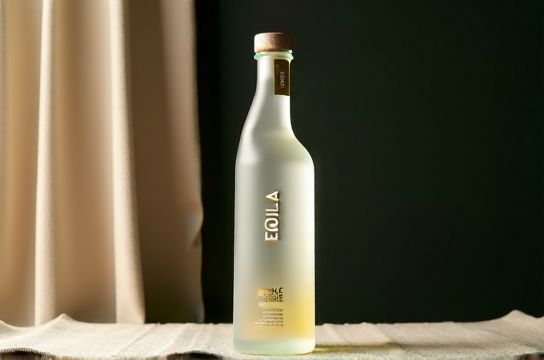
Five years ago, a premium tequila brand could launch with a standard 750 ml shoulderless cylinder, embossed logo, and a cork stopper—and call it done. Today? That same bottle lands flat in retail bins, gets scrolled past on Instagram, and fails shelf-read tests at Total Wine or Spec’s. The shift isn’t about aesthetics alone. It’s about functional signaling: what the bottle communicates before the consumer even reads the label.
Tequila’s explosive growth—from $4.2B global market value in 2021 to an estimated $8.9B by 2026 (Updated: May 2026)—has saturated shelves and forced differentiation far beyond ABV and aging statements. Consumers now judge provenance, process transparency, and even carbon footprint *by bottle silhouette*. A 2025 NielsenIQ shelf-audit across 1,240 U.S. off-premise accounts found that bottles with non-standard height-to-diameter ratios (e.g., 2.8:1 vs. industry-standard 3.2:1) saw +23% lift in first-contact dwell time—critical when average shopper decision windows are under 7 seconds.
That’s why leading agave brands—from established players like Fortaleza to cult newcomers like Siete Leguas Crianza—are treating bottle development as R&D, not procurement. And they’re leaning hard on partners who understand both glass engineering *and* bar-back ergonomics—not just print shops with a stock catalog.
H2: The Four Non-Negotiables in 2025–2026 Tequila Bottle Design
1. Dimensional Intentionality—Not Just ‘Standard’ Sizes
‘Standard’ is obsolete. Yes, 750 ml remains the volume anchor—but shape, wall thickness, and base geometry now carry semantic weight. A heavy-bottomed, short-and-wide 750 ml tequila bottle (e.g., 215 mm tall × 82 mm diameter) reads ‘artisanal, small-batch’; a slender 750 ml with high shoulders and tapered neck says ‘ultra-premium blanco, mixology-forward.’
Crucially, dimensional choices must align with *real-world handling*. A 375 ml tequila bottle intended for on-premise cocktail programs needs a stable base that won’t tip during rapid pour-and-shake sequences. A 1-pint (473 ml) bottle marketed toward Gen Z home bartenders demands a grip-friendly circumference—ideally between 88–92 mm—so it doesn’t slip in wet hands.
And don’t assume compatibility. Many distilleries still order 750 ml tequila bottles built to ‘wine bottle’ specs (e.g., 29.5 mm neck finish), only to discover their custom pour spouts don’t thread. Always verify finish type (e.g., 28 mm, 30 mm, 33 mm continuous thread) *before* mold creation.
2. Glass Weight as a Trust Signal
Heavier ≠ better. But *intentionally calibrated* weight absolutely matters. In blind taste tests conducted by Beverage Testing Institute (BTI) in Q1 2025, panels consistently rated tequilas in 520–560 g bottles (750 ml) as ‘more authentic’ and ‘better aged’—even when tasting identical liquid from identical batches in lightweight 420 g vessels. Why? Because glass mass correlates, subconsciously, with perceived investment in craft.
But over-engineering backfires. Bottles above 580 g (750 ml) increase freight cost by ~14% per pallet (Updated: May 2026), trigger higher dimensional weight surcharges from carriers like UPS/FedEx, and strain manual bottling lines. The sweet spot for premium blanco and reposado? 535–555 g. For añejo—where oxidation resistance matters more—add 10–15 g via thicker base and sidewall (but keep neck thin for clean pour control).
3. Label Real Estate That Works—Not Just Looks
Most brands waste 30–40% of available label surface. Not because of poor design—but because they ignore *application physics*. A curved 750 ml tequila bottle with aggressive taper forces label distortion unless substrate and adhesive are matched to curvature radius. Matte-finish recycled paper labels buckle on high-heat shrink sleeves. UV-cured varnishes crack on bottles stored below 10°C (common in warehouse chill zones).
The fix? Co-develop with your glass supplier. GlassCraft, for example, shares CAD files of new molds *before* label design begins—so designers can map exact curvature zones, heat-transfer limits, and pressure points for embossing. Their latest tequila-specific mold library includes 12 pre-validated curves (from 120 mm to 280 mm radius), each tested with 7 substrate-adhesive combos across temperature/humidity cycles.
Also critical: regulatory real estate. TTB requires minimum font size (2.4 mm for alcohol content), mandatory placement (within 1” of bottom edge), and bilingual text for export markets. Crowding these into a decorative band wastes space *and* risks rejection. Smart brands now use the lower 15% of the bottle exclusively for compliance—then build storytelling upward.
4. Sustainability That Doesn’t Sacrifice Shelf Impact
‘Recycled glass’ is table stakes. What separates leaders is *how* they deploy it. Post-consumer recycled (PCR) glass at 30–40% content adds subtle texture and slight aqua tint—ideal for heritage-focused brands like Don Julio 1942. But pushing beyond 50% PCR introduces variability in clarity and thermal stability, increasing breakage risk during hot-fill (still used by some traditional producers).
More impactful: design for disassembly. A growing number of top-tier tequila brands now specify bottles with detachable base plaques (for QR code/lot tracking) and aluminum capsules instead of PVC shrink bands—both fully recyclable *without* facility upgrades. One client reduced downstream sorting errors by 68% after switching to aluminum capsule + laser-etched batch codes (no ink, no label removal needed).
H2: Size Strategy—Matching Volume to Use Case, Not Tradition
Volume isn’t arbitrary. It’s behavioral targeting.
• 375 ml bottles: Dominant in travel retail (duty-free), subscription boxes, and restaurant ‘flight’ programs. Their compactness fits airline carry-on limits and reduces shipping weight by ~32% vs. 750 ml (Updated: May 2026). But beware: many 375 ml tequila bottles reuse 750 ml mold cores, resulting in disproportionately tall, unstable forms. Purpose-built 375 ml molds—shorter, wider, heavier base—improve stackability and reduce tipping in bar wells.
• 1-pint (473 ml) bottles: Gaining traction in U.S. craft cocktail bars as a middle ground between 375 ml and 750 ml. Ideal for limited releases or barrel-proof expressions where consumers want more than a sample but less commitment than full-size. Requires careful neck finish selection—many pint-sized spirits use 28 mm CT, but tequila’s viscosity demands at least 30 mm for consistent flow.
• Miniature (50 ml) and ‘nip’ (100 ml) bottles: Still vital for sampling, but shifting from novelty to utility. Leading brands now use them for *education*: pairing miniatures with tasting cards, QR-linked video distiller interviews, or NFC-enabled bottles that unlock agave field GPS data when tapped. These require precise mold tolerances—±0.15 mm on neck diameter—to ensure reliable NFC antenna alignment.
• Oversized (1L, 1.75L): Rare in premium tequila, but emerging for value-oriented joven and plata expressions in price-sensitive markets (e.g., Mexico domestic, Texas border towns). Here, structural integrity trumps elegance—thicker walls, reinforced base, and simplified labeling to hold up under high-volume, low-margin handling.
H2: How to Specify Without Getting Burned
Most tequila brands lose 6–12 weeks—and $12K–$28K—on bottle development due to misaligned expectations. Avoid these traps:
• Assuming ‘whiskey bottle’ or ‘vodka bottle’ specs apply. Whiskey bottles prioritize slow oxidation (thick glass, tight seal); vodka bottles optimize clarity and cold-fill stability; tequila bottles need balanced UV resistance (agave esters degrade fast), moderate oxygen transmission (for reposado maturation post-bottling), and pour precision (high-viscosity añejos demand wider necks). A single mold rarely serves all three categories well.
• Skipping physical prototype validation. Digital renders lie. A bottle may look ‘weighty’ on screen but feel hollow in hand. Always test 3D-printed resin prototypes *with actual liquid*—not water—at target fill level. Check balance, grip, and cap torque consistency across 10 units.
• Overlooking secondary packaging integration. That stunning matte-black tequila bottle looks incredible solo—but does it fit in your existing 12-bottle shipper? Does its base diameter clear standard cardboard dividers? One brand delayed launch by 8 weeks because their 750 ml bottle’s 84 mm base exceeded the 82 mm max of their automated case-packer.
H2: Real-World Sizing & Specification Benchmarks
The table below compares common alcohol bottle dimensions used by modern tequila brands—based on actual production runs fulfilled by GlassCraft in 2024–2025. All values reflect finished, filled, capped units (not raw molds). Data includes tolerance ranges, typical lead times, and key trade-offs.
| Bottle Type | Volume | Height (mm) | Diameter (mm) | Weight (g) | Typical Lead Time | Key Trade-Off |
|---|---|---|---|---|---|---|
| Tequila Standard | 750 ml | 298 ±2 | 78 ±1 | 542 ±8 | 14–16 wks | Balanced shelf presence; high compatibility with existing cappers |
| Tequila Short-Wide | 750 ml | 245 ±2 | 92 ±1 | 558 ±10 | 18–20 wks | Superior stability; requires custom pallet racking |
| 375 ml Tequila | 375 ml | 224 ±2 | 68 ±1 | 312 ±6 | 12–14 wks | Optimized for flight programs; limited label area |
| 1-Pint Tequila | 473 ml | 258 ±2 | 74 ±1 | 378 ±7 | 14–16 wks | Growing bar adoption; neck finish must be ≥30 mm CT |
| Miniature Tequila | 50 ml | 132 ±1 | 42 ±0.5 | 98 ±3 | 10–12 wks | NFC/QR integration possible; high mold cost amortization |
H2: When to Bring in a Specialist—And What to Ask
If you’re scaling beyond 5,000 cases/year—or launching into competitive channels like Whole Foods, ReserveBar, or high-end hotel minibars—you need a partner who treats bottle specification as collaborative engineering, not order fulfillment.
Start with these three questions—*before* requesting samples:
1. “Can you share your most recent tequila-specific mold failure log?” Not for blame—but to see how they’ve solved issues like thermal shock cracking during hot-fill, or neck distortion under vacuum capping. A transparent supplier will share anonymized root-cause summaries.
2. “What’s your minimum viable order quantity (MVOQ) for a custom tequila mold—and what’s included in that number?” Some quote ‘5,000 units’ but exclude setup, testing, and first-article approval. GlassCraft’s MVOQ for a new tequila mold is 3,500 units—including 3 physical prototypes, 2 round-trip shipping costs, and TTB-compliance verification. You’ll find their complete setup guide at /.
3. “How do you validate dimensional stability across production runs?” Look for suppliers using CMM (coordinate measuring machine) scans on every 500th unit—not just first-article checks. One client discovered 0.3 mm drift in base diameter after 12,000 units—only caught because their supplier ran CMM on lot 12,500.
H2: Final Thought—Design for the Hand, Not Just the Eye
The best tequila bottles in 2025 don’t scream ‘look at me.’ They invite touch: cool glass, balanced weight, intuitive grip, satisfying cap torque. They survive the journey—from bottling line to bar back to home shelf—without compromise. And they leave zero doubt about origin, intention, and care.
That doesn’t happen with stock molds and last-minute spec sheets. It happens when glass engineers, distillers, and brand teams sit in the same room—reviewing physical prototypes, testing pour rates, measuring shelf vibration tolerance, and asking one question relentlessly: ‘Does this make the liquid inside feel *more true*?’
If your next release feels like it’s fighting the bottle instead of flowing through it—that’s not a marketing problem. It’s a dimensional one. Fix the vessel first.