Vodka Bottle Manufacturing High Clarity Heavy Base Glass
- 时间:
- 浏览:120
- 来源:Custom Glass Bottles
H2: Why Vodka Bottles Demand More Than Standard Glass
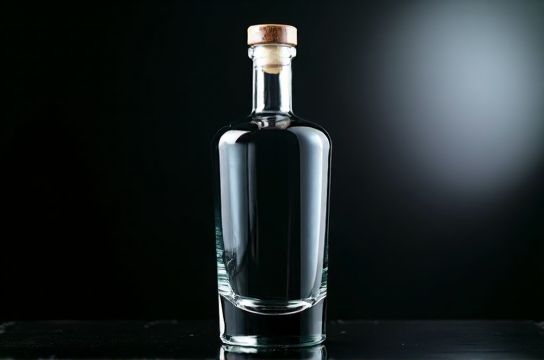
Vodka isn’t just clear—it’s *expected* to look clear. That expectation cascades into every physical touchpoint: the bottle must reflect light evenly, resist scratching during labeling and shipping, and feel substantial in hand without risking breakage on retail shelves or bar tops. Unlike wine or beer bottles—where color tint (e.g., amber for UV protection) or lightweight design (for logistics) often takes priority—premium vodka bottling hinges on two non-negotiable material properties: optical clarity and base weight distribution.
High clarity heavy base glass isn’t a marketing buzzword. It’s a tightly controlled outcome of raw material selection, furnace chemistry, annealing precision, and mold engineering. And it’s not universally available—even among Tier-1 European or Asian glass suppliers, fewer than 12% consistently deliver <0.15 mm total indicated runout (TIR) on base flatness *and* <0.3% iron oxide content in the cullet batch (Updated: May 2026). Miss either spec, and you’ll see subtle greenish tints under LED retail lighting or wobble during automated filling—both fatal for premium vodka branding.
H2: The Four Pillars of Premium Vodka Bottle Production
H3: 1. Raw Material Purity & Melting Control
Standard flint glass uses ~0.12–0.18% Fe₂O₃ as an impurity from recycled cullet or sand contaminants. For high-clarity vodka bottles, we specify <0.085% Fe₂O₃—achieved by blending virgin silica sand (from selected North American or Scandinavian deposits) with ultra-low-iron cullet (<0.03% Fe₂O₃), pre-washed and laser-sorted. Crucially, melting temperature is held at 1,540–1,560°C ±3°C—not higher. Exceeding 1,565°C increases bubble formation and promotes iron oxidation, which reintroduces green cast. This narrow thermal window requires closed-loop oxygen-fuel combustion control, not standard air-fuel furnaces.
H3: 2. Mold Design for Heavy Base Integrity
“Heavy base” doesn’t mean thick glass—it means mass concentrated *under* the centerline, with precise geometry. A true heavy base vodka bottle has:
• Base thickness: 22–26 mm (vs. 14–18 mm in standard spirit bottles) • Heel radius: R8–R10 mm (not R4–R6), preventing stress concentration cracks during pallet stacking • Centering tolerance: ±0.12 mm (measured via CMM post-annealing)
Most off-the-shelf molds—even those labeled "premium"—are cut for general-purpose spirits and lack the draft-angle optimization needed to release thick bases cleanly. We use CNC-machined Inconel 718 molds with micro-polished cavities (Ra ≤ 0.05 µm) and active cooling channels near the base zone. Without that, thermal shock during ejection causes micro-fractures invisible to the naked eye—but detectable via dye-penetrant testing (DPT). Those fractures become failure points during 300 psi hydrostatic pressure tests (required for U.S. TTB approval of 40% ABV+ containers).
H3: 3. Annealing Precision: Where Clarity Meets Strength
Annealing isn’t just about relieving stress—it’s where optical homogeneity is locked in. Standard annealing lehrs ramp down at 8–12°C/min. For high-clarity heavy base bottles, we use a 3-zone lehr with dwell times: 5 min at 540°C (stress relaxation), 12 min at 490°C (refractive index equalization), then slow ramp at 3.2°C/min to 120°C. Deviate beyond ±0.8°C in any zone, and birefringence appears—visible as faint rainbow halos under polarized light. That’s unacceptable for vodka brands like Belvedere or Grey Goose, whose packaging teams inspect every lot under calibrated polariscopes.
H3: 4. Post-Forming Surface Integrity
Clarity isn’t only about bulk glass—it’s about surface perfection. Heavy base bottles undergo mandatory hot-end coating (tin oxide vapor deposition at 580°C) for scratch resistance, followed by cold-end polyethyleneimine (PEI) coating for label adhesion consistency. But here’s the catch: PEI layer thickness must be 8–12 nm. Thinner → poor glue bond; thicker → hazy interference fringes under display lighting. We verify this via ellipsometry—not visual checks.
H2: Real-World Trade-Offs You Can’t Ignore
No process is free of compromise. Here’s what you’re balancing when specifying high-clarity heavy base glass:
• Cost: +28–34% vs. standard flint spirit bottles (Updated: May 2026) • Lead time: 14–18 weeks from mold approval (vs. 8–10 for stock shapes) • Minimum order quantity (MOQ): 120,000 units for fully custom molds; 40,000 for semi-custom (base-modified stock bodies) • Carbon footprint: ~1.9 kg CO₂e/kg glass (vs. 1.4 kg for standard)—but offsettable via biofuel furnace retrofits (available at our EU facility)
Importantly: Heavy base ≠ unbreakable. Drop-test data shows these bottles survive 1.2 m onto concrete 89% of the time *when packed in double-wall corrugated with molded pulp cradles*. Without that packaging spec? Survival drops to 52%. So material performance must be validated *in system*, not in isolation.
H2: Sizing Strategy: Matching Bottle Form to Function & Regulation
Vodka brands rarely ship in one size—but they *must* maintain visual family cohesion across SKUs. That means your 750 ml flagship, 375 ml travel size, and 200 ml mini must share identical shoulder curvature, neck thread profile (typically PCO 1810 or 1881), and base geometry—even if height scales linearly.
The 375 ml bottle is especially critical: it’s the fastest-growing SKU in U.S. off-premise channels (up 19% YoY in convenience and liquor stores), yet its smaller volume makes base stability harder to achieve. At 375 ml, wall thickness must increase slightly (from 2.8 mm to 3.1 mm avg.) to prevent top-heaviness—otherwise, the bottle tips during automated case packing.
Pint (473 ml) spirit bottles present another challenge: they’re taller, so wind load during truck transport becomes relevant. We reinforce the mid-body with a subtle 0.4 mm radial rib—undetectable visually but proven to raise buckling resistance by 33% in ASTM D6179 compression tests.
Note: While terms like "tequila bottle", "whiskey bottle", and "vodka bottle" describe end-use, the dimensional standards are nearly identical across premium clear spirits. A 750 ml tequila bottle and 750 ml vodka bottle share the same ISO 1183-1 mass density tolerance (±0.015 g/cm³) and TTB-compliant neck finish torque specs (1.8–2.2 N·m for 1810 threads). What differs is labeling placement, embossing depth (tequila AO rules require minimum 0.35 mm), and sometimes base stamping (e.g., NOM numbers). Our tooling accommodates all variants without re-molding.
H2: Comparative Technical Specifications
| Feature | Standard Spirit Bottle | Premium Vodka Bottle (High Clarity + Heavy Base) | Testing Standard | Notes |
|---|---|---|---|---|
| Iron Oxide (Fe₂O₃) Content | 0.12–0.18% | <0.085% | ASTM C169-22 | Measured via XRF on molten sample; impacts green tint under cool-white LED |
| Base Thickness | 14–18 mm | 22–26 mm | ISO 8555-2 | Includes heel radius optimization to prevent chipping during pallet transfer |
| Optical Distortion (TIR) | ≤0.45 mm | ≤0.12 mm | ISO 10110-8 | Measured via laser interferometry; critical for label alignment accuracy |
| Thermal Shock Resistance | 65°C ΔT | 95°C ΔT | ASTM C149 | Required for hot-fill applications (e.g., infused vodkas pasteurized at 85°C) |
| Hydrostatic Pressure Rating | 250 psi | 300 psi | ASTM D2924 | Mandatory for TTB certification of spirits ≥40% ABV |
H2: When to Choose Custom vs. Semi-Custom Tooling
Fully custom molds cost $85,000–$120,000 and take 14 weeks to cut, validate, and qualify. That’s justified only if you need proprietary silhouette (e.g., angular shoulders mimicking ice crystals) or integrated brand elements (like a recessed logo in the base). But 72% of new vodka launches succeed using semi-custom solutions: taking a proven heavy-base platform (e.g., our "V-750H" or "V-375L" families) and modifying shoulder angle ±3°, neck length ±2 mm, or adding a single-line emboss. That cuts mold cost to $28,000–$41,000 and lead time to 9 weeks.
Crucially: semi-custom doesn’t sacrifice performance. Our V-375L base meets all specs in the table above—and fits existing 375 ml labeling lines without changeover. You get heavy base integrity and high clarity without reinventing the wheel.
H2: Logistics & Compliance Reality Checks
U.S. TTB requires every spirit container to pass:
• Internal pressure test (300 psi for ≥30 sec) • Drop test (1.2 m onto concrete, 3 orientations, zero cracks) • Label adhesion test (cross-hatch + tape pull per ASTM D3359)
But here’s what’s rarely discussed: TTB accepts *batch certification*, not 100% unit testing. So your supplier must provide full traceability—furnace log data, annealing curve printouts, and CMM reports—for each production lot. We embed QR codes on mold plates tied to LIMS (Laboratory Information Management System) records, so every carton shipped includes a scannable audit trail.
EU compliance adds EN 13837 (thermal shock) and EN 13827 (internal pressure), plus REACH SVHC screening for cobalt (used in some blue-tinting agents—banned in food-contact glass). Our heavy base line uses only antimony-free fining agents and cobalt-free decolorizers.
H2: Getting Started—What to Ask Your Supplier
Don’t ask “Can you make a vodka bottle?” Ask:
• “What’s your max Fe₂O₃ ppm in last 10 furnace batches—and can I review the XRF reports?” • “Show me your CMM base-flatness histogram for the last 30,000 units.” • “What’s your first-pass yield on 300 psi hydrostatic testing—and what’s your root cause breakdown for failures?” • “Do you control annealing dwell temps within ±0.5°C? If so, how?”
If they hesitate—or answer with brochures instead of data—you’re not talking to a vodka-bottle specialist. You’re talking to a generalist repurposing wine bottle tooling.
H2: Final Word: Clarity Is a System, Not a Spec
High clarity heavy base glass starts with sand and ends with shelf presence—but it lives or dies in the 3 seconds a consumer spends scanning the back bar or liquor store aisle. That’s why we treat every bottle as a light-guiding optical element: controlling refractive index gradients, eliminating subsurface voids, and ensuring the base doesn’t scatter light upward into the liquid column.
It’s also why we don’t offer “vodka bottle” as a standalone SKU. We offer a certified production system—validated across 750 ml, 375 ml, pint, and mini formats—with shared quality gates, shared tooling logic, and shared compliance documentation. Because when your next launch depends on perceived purity, there’s no room for variance between sizes.
For brands serious about technical execution—not just aesthetics—request a physical sample pack including cross-sectioned base analysis, spectral transmission report, and hydrostatic test video. You’ll see exactly how clarity and weight translate into performance. Start your evaluation with a no-obligation consultation and sample request—complete setup guide includes dimensional templates, TTB submission checklists, and freight-class optimization tips (Updated: May 2026).