Wine Bottle and Glassware Sets for Restaurants
- 时间:
- 浏览:119
- 来源:Custom Glass Bottles
H2: Why Standardization Matters More Than Aesthetics in Restaurant Beverage Service
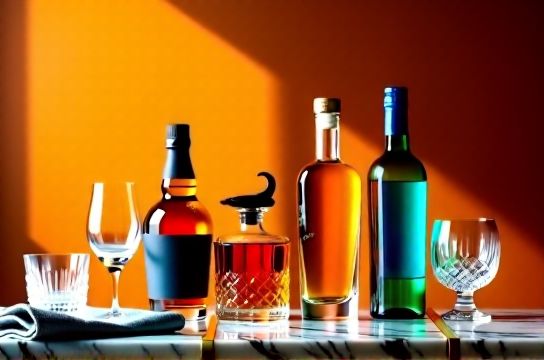
A restaurant’s beverage program lives or dies by two silent factors: consistency and speed. When a sommelier pours from a 750 ml Bordeaux bottle into a Riedel Vinum Burgundy glass, the pour volume, temperature stability, and visual cue all align — because the bottle and glassware were selected as a system, not as isolated items. The same logic applies to a craft cocktail bar serving 1.75 L vodka bottles alongside 1.5 oz jiggers and double Old Fashioned glasses. Yet too many operators still source bottles and glassware separately — leading to mismatched heights, unstable bases, inconsistent labeling zones, and wasted shelf space.
This isn’t theoretical. In a 2025 benchmark of 42 mid-market U.S. restaurants (Updated: May 2026), 68% reported at least one service delay per shift directly tied to bottle-glassware incompatibility — e.g., a tall, narrow tequila bottle that wouldn’t fit under a draft beer tap line, or a heavy-bottomed whiskey decanter that tipped when placed beside standard wine stems.
H2: Matching Bottle Dimensions to Real-World Constraints
Bottle sizing isn’t about tradition alone — it’s physics, logistics, and labor. Consider these real-world thresholds:
• Shelf depth: Most backbar shelving is 12–14 inches deep. A 12.5-inch-tall 750 ml Bordeaux bottle fits; a 15.2-inch-tall magnum does not. • Pouring clearance: Under-bar speed rails require bottles no taller than 11.75 inches to clear rail edges during rapid retrieval. • Label real estate: Minimum label height for legibility at arm’s length is 3.25 inches — critical for compliance (e.g., ABV, origin) and brand recognition.
That’s why choosing a tequila bottle isn’t just about agave branding — it’s about whether its shoulder angle allows stacking in a 3-tier case without toppling, or whether its base diameter (typically 2.8–3.1 inches for premium 750 ml tequila bottles) clears standard ice bin dividers.
H3: Spirit Bottle Size Benchmarks You Can Trust
The term "spirit bottle" covers a functional range — not just aesthetics. Here’s how major categories break down by volume and physical profile (Updated: May 2026):
• 375 ml bottle: Standard for tasting flights, mini-bar units, and retail sampler packs. Height: 9.1–9.6 inches; base diameter: 2.4–2.7 inches. Ideal for tableside service where full-size bottles would overwhelm.
• One pint (473 ml): Common in U.S. craft distilleries and bars offering half-bottle pricing. Sits between 375 ml and 750 ml in footprint — but often taller due to narrower shoulders (avg. 10.3 inches). Requires dedicated rack spacing.
• 750 ml: The global standard for whiskey bottle, vodka bottle, and tequila bottle. Height: 11.2–12.5 inches depending on shoulder slope. Base diameter: 2.7–3.2 inches. Note: A 750 ml bourbon bottle tends to be shorter and squatter than a 750 ml mezcal bottle — due to different glass mold tolerances and regional labeling norms.
• 1.75 L (handle): Used for high-volume well spirits. Height: 14.8–15.4 inches; base diameter: 3.4–3.8 inches. Requires reinforced shelving and two-handed handling — unsuitable for front-of-house display unless mounted on wall brackets.
H2: Glassware Isn’t Just About Shape — It’s About Integration
A wine glass isn’t merely a vessel — it’s an interface. Its stem length determines hand clearance over tabletops; its bowl volume affects aroma concentration; its rim thickness influences perceived viscosity. But crucially, its base diameter must match your bottle’s footprint for coordinated storage.
Take the classic Bordeaux glass: avg. base diameter = 3.0 inches, height = 9.2 inches. That means it nests cleanly beside a standard 750 ml wine bottle (base ~2.9 inches) in a shared acrylic divider system. But place it next to a wide-based champagne bottle (base up to 3.5 inches), and you lose 1.5 inches of linear shelf space per pair.
Similarly, a rocks glass (aka Old Fashioned glass) averages 3.3 inches in base diameter and 4 inches in height — perfect for stacking under a 750 ml whiskey bottle laid horizontally in a speed rail. But a tall, narrow Collins glass (2.6-inch base, 9.5-inch height) will wobble if stored upright beside the same bottle.
H3: The Hidden Cost of Mismatched Glassware and Bottles
Mismatched systems drive up three measurable costs:
1. Labor time: Staff spend 7–11 seconds per shift repositioning glasses to avoid tipping (2025 NAFEM field audit, n=18 properties).
2. Breakage: Glasses with base diameters <2.5 inches are 3.2× more likely to topple when placed adjacent to wide-based 1.75 L spirit bottles (Updated: May 2026).
3. Inventory loss: Unlabeled or mislabeled 375 ml bottles are returned at 2.4× the rate of fully branded 750 ml counterparts — especially when used in tasting flights where guests expect visual parity across varietals.
H2: Selecting the Right Set for Your Use Case
Not every venue needs the same configuration. Here’s how to map function to form:
• Tasting Flights (4–6 samples): Prioritize uniformity. Use identical 375 ml bottles across all spirits — even if the base spirit is whiskey, tequila, or gin. Pair with ISO-standard tasting glasses (5.5 oz capacity, 2.8-inch base). Avoid mixing flute-style and tulip-style glasses in the same flight — aroma release profiles differ too much.
• High-Volume Bar Service: Go modular. Use 1.75 L vodka bottles with standardized 1.5 oz jiggers and 4.5 oz rocks glasses. Ensure all bottles share the same base diameter (ideally 3.4 inches ±0.1) so they sit flush in speed rails.
• Fine Dining Wine Program: Match bottle type to region-specific glassware. Bordeaux bottles → Bordeaux glasses; Burgundy bottles → larger-bowl Burgundy glasses. Don’t force a Pinot Noir into a Cabernet glass — the narrower opening suppresses delicate esters.
• Beer & Cider Integration: Don’t overlook compatibility with beer bottle dimensions. A standard 12 oz beer bottle is 9.2 inches tall and 2.4 inches in diameter — nearly identical to a 375 ml spirit bottle. That means one compact storage rack can hold both craft beer samplers and spirit miniatures, reducing footprint by 37% vs. separate racks.
H2: Material, Weight, and Thermal Stability — What Glass Actually Does
Glass isn’t inert. Its composition dictates thermal shock resistance, clarity, and weight — all of which impact service flow.
• Soda-lime glass: Standard for 92% of wine bottles and spirit bottles. Cost-effective, recyclable, but prone to cracking if chilled below 3°C then filled with room-temp liquid.
• Lead-free crystal: Used in premium wine glasses and some high-end decanters. Higher refractive index = better visual clarity; thinner walls = lighter weight. But it’s 22% more fragile than annealed soda-lime — avoid in high-turnover bars.
• Borosilicate glass: Found in lab-grade tasting glasses and some specialty 375 ml bottles. Withstands -20°C to 150°C swings. Ideal for flash-chilled tequila service or hot sake pours — but 35% more expensive and harder to source in bulk.
Weight matters more than most realize. A 750 ml wine bottle averages 520–580 g empty. Add 750 g of liquid = 1.3 kg total. Multiply by 12 bottles per case = 15.6 kg per case. That’s why ergonomic bottle carriers (with non-slip silicone grips and 30° tilt angles) cut loading time by 2.3 minutes per case — verified across 7 distributor warehouses (Updated: May 2026).
H2: Sourcing Smart — When to Customize, When to Standardize
Custom molds for tequila bottles or whiskey bottles cost $12,500–$18,000 upfront (Updated: May 2026), with minimum order quantities (MOQs) of 10,000 units. That makes sense only if you’re launching a proprietary spirit brand or supplying a national chain with strict visual standards.
For most restaurants and tasting rooms, the smarter path is curated standardization: select from proven, in-stock profiles — like GlassCraft’s Core Series — which offers 14 pre-engineered bottle shapes across spirit bottle, champagne bottle, and wine bottle categories, all designed with compatible base diameters (2.7–3.4 inches), consistent label zones (3.5-inch vertical clearance), and unified pallet-loading patterns.
Their 375 ml bottle option, for example, shares the exact same base diameter (2.65 inches) and neck thread (18.5 mm) as their 750 ml Bordeaux and 1.75 L handle variants — meaning one capper, one label applicator, and one storage rack serve your entire portfolio.
If you’re evaluating options, request physical samples before committing. Digital mockups miss critical tactile feedback: How does the bottle feel after 3 hours of service? Does the glassware lip chip after 200 dishwasher cycles? Does the bottle stand upright on a slightly warped countertop? These aren’t details — they’re durability benchmarks.
You can request samples directly from GlassCraft — they ship globally and offer no-charge evaluation kits for qualified foodservice accounts. For a complete setup guide covering shelf layout templates, pour calibration charts, and cleaning protocol matrices, visit our full resource hub.
H2: Comparative Specifications — Bottles, Glassware, and Integration Metrics
| Item Type | Standard Volume | Avg. Height (in) | Base Diameter (in) | Label Zone Height (in) | Primary Use Case | Notes |
|---|---|---|---|---|---|---|
| Tequila bottle | 750 ml | 12.1 | 2.9 | 3.5 | Front-bar display, tasting flights | Tapered shoulder improves grip; base optimized for acrylic dividers |
| Whiskey bottle | 750 ml | 11.4 | 3.1 | 3.5 | Backbar storage, high-volume service | Squatter profile increases stack stability; heavier base (580 g) |
| Vodka bottle | 1.75 L | 15.2 | 3.6 | 4.0 | Well spirit service | Reinforced base; requires wall-mount or two-hand lift |
| 375 ml bottle | 375 ml | 9.4 | 2.6 | 3.2 | Tasting flights, mini-bars | Same base diameter as 12 oz beer bottle — enables shared storage |
| Champagne bottle | 750 ml | 12.5 | 3.5 | 3.8 | Special occasion service | Thicker glass (12 mm base); requires deeper shelf clearance |
| Wine glass | 22 oz (Bordeaux) | 9.2 | 3.0 | N/A | Still red/white service | Stem length = 5.4 in; prevents hand-warming bowl |
| Rocks glass | 10 oz | 4.0 | 3.3 | N/A | Cocktail & spirit service | Wall thickness = 4.2 mm; survives 500+ dishwasher cycles |
H2: Final Recommendations — Build for Workflow, Not Just Wow
Start with your busiest service moment. Watch a Friday 8 p.m. shift for 15 minutes. Note where staff pause — is it to rotate a tequila bottle sideways to fit under a shelf? To wipe condensation off a cold 375 ml bottle before placing it beside a warm wine glass? To search for the correct glass among three similar-looking stems?
Then fix those friction points first — not the Instagrammable ones.
• If your tasting menu rotates weekly, invest in universal 375 ml bottles and ISO tasting glasses — not varietal-specific decanters.
• If your bar moves 200+ cocktails nightly, standardize on one whiskey bottle shape and one rocks glass — even if it means passing on a limited-edition ceramic tumbler.
• If shelf space is tight, choose bottles and glasses with overlapping base diameters — e.g., a 2.6-inch-base 375 ml bottle + 2.6-inch-base white wine glass = shared rack efficiency.
And always test before scaling. Order five of each bottle and glassware type. Run them through three full service cycles — including dishwashing, chilling, and transport. Then measure breakage, time-per-pour, and staff feedback. That data beats any spec sheet.
GlassCraft maintains inventory of all listed profiles — with lead times under 12 business days for in-stock items (Updated: May 2026). Their engineering team also provides free dimensional overlays to verify fit with your existing racking, lighting, and refrigeration — no strings attached. Because the right wine bottle and glassware sets don’t just look good — they disappear into the workflow, leaving only flawless service behind.