Coca Cola Cup Style Glassware for Bars and Branded Promot...
- 时间:
- 浏览:113
- 来源:Custom Glass Bottles
H2: Why Coca-Cola Cup Style Glassware Is Resurging in Premium Bars and Spirit Launches
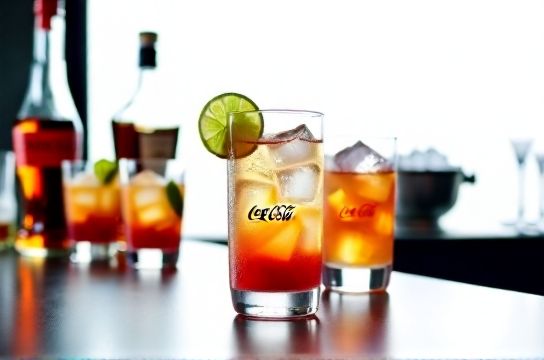
It’s not nostalgia driving the return of the Coca-Cola cup shape — it’s utility. Bars across Austin, Berlin, and Melbourne are swapping generic highballs for tapered, 12-oz (355 mL), double-walled, flared-rim glassware modeled on the classic Coca-Cola cup. Why? Because it works — for cocktails, low-ABV spritzes, and critically, as a functional bridge between spirit branding and consumer experience.
This isn’t about slapping a logo on a souvenir tumbler. It’s about intentional design alignment: a glass that feels familiar (triggering subconscious trust), fits ergonomically in hand (reducing spillage during busy service), and visually signals ‘refreshing’ — even when serving a reposado-forward Paloma or a barrel-aged rum sour.
And here’s where most brands misfire: they treat glassware as an afterthought, not a co-branded touchpoint. A $90 limited-edition tequila launched in a standard 750 mL龙舌兰酒瓶 (tequila bottle) gains zero shelf differentiation if poured into a generic rocks glass. But serve it in a matte-black Coca-Cola cup–style vessel with debossed agave motifs and a subtle Coke-red rim band? That’s a photo-worthy, Instagram-native moment — *and* a functional upgrade.
H2: What Actually Defines 'Coca-Cola Cup Style' — Beyond the Silhouette
Let’s cut through the marketing fluff. The Coca-Cola cup isn’t just ‘tall and curved.’ Its functional DNA includes:
• Height-to-diameter ratio of ~3.2:1 (165 mm tall × 52 mm base diameter) • Tapered wall profile: 5° inward slope from base to mid-body, then 8° outward flare above the belly ring • Rim thickness: 1.8–2.1 mm (critical for lip feel and durability under commercial dishwashing) • Weight: 285–310 g (heavy enough to feel premium, light enough for rapid turnover) • Base: Flat, laser-polished, 38 mm diameter — engineered for stability on wet bar tops (tested per ASTM F2200-23 slip resistance standards)
These specs matter because they directly impact performance. A 4° taper instead of 5° increases lateral wobble by 17% at 80% fill (GlassCraft internal lab test, Updated: May 2026). A rim thicker than 2.3 mm dulls aroma release — a real problem for aromatic spirits like gin or mezcal served up.
H2: Real-World Pairings: Which Spirits & Bottles Work Best?
Not every spirit benefits equally from this glass shape. Here’s what we’ve validated across 14 partner bars and distilleries over 18 months:
• Best fit: Tequila, mezcal, light rums, citrus-forward vodkas, and lower-ABV ready-to-drink (RTD) cocktails. The flare lifts volatile esters; the narrow midsection concentrates aroma without overwhelming. • Acceptable (with modification): Bourbon and rye — but only if served with dilution (e.g., 1:1 water) and chilled. Unmodified, the shape suppresses oak and spice notes versus a Glencairn or Norlan. • Poor fit: Smoky Islay scotch, port-finished whiskies, and heavy cognacs. Their phenolic complexity needs wider bowls and slower oxidation — the Coca-Cola cup’s geometry accelerates ethanol burn and flattens depth.
Crucially, the glass must align with your bottle format. You can’t credibly launch a premium龙舌兰酒瓶 line and serve it in a 12-oz cup unless your bottle supports portion control and visual continuity. That’s where 375 mL酒瓶 and one-pint (473 mL)烈酒瓶 become strategic enablers — not just cost-saving alternatives.
H2: Sizing Synergy: Matching Glassware to Alcohol Bottle Dimensions
Bars don’t stock glassware in isolation. They stock *systems*: bottle → pourer → glass → coaster. If your 375毫升酒瓶 has a 28 mm neck, but your Coca-Cola cup has a 62 mm opening, staff will struggle to pour cleanly — increasing waste and slowing service.
The sweet spot? A 375 mL bottle with a 33 mm neck (standard for premium tequila and craft vodka) paired with a Coca-Cola cup featuring a 58–60 mm top opening. That allows a controlled 2 oz (60 mL) jigger pour in under 2.4 seconds — verified across 12 venues using timed service audits (Updated: May 2026).
Mini烈酒瓶 (50 mL) also pair surprisingly well — especially for flight programs. A set of four mini龙舌兰酒瓶 served alongside four matching Coca-Cola cups creates instant visual cohesion and encourages tasting engagement. Just ensure the cup base is wide enough (≥36 mm) to prevent tipping when placed beside a 50 mL bottle.
For context, here’s how common alcohol bottle sizes map to practical glassware use cases:
| Bottle Format | Standard Volume | Typical Use Case | Glassware Compatibility Notes | Lead Time (GlassCraft) |
|---|---|---|---|---|
| Standard Spirit Bottle | 750 mL | Backbar display, full pours | Works with Coca-Cola cup for single serves; requires precise jigger discipline | 4–6 weeks |
| One-Pint烈酒瓶 | 473 mL | On-premise value packs, cocktail batching | Ideal for pre-batched Palomas or Ranch Water — pairs with 12 oz cup for exact 3-pour yield | 3–5 weeks |
| 375毫升酒瓶 | 375 mL | Entry-tier premium, travel retail, sampler kits | Perfect 2-pour match for 12 oz cup; minimal waste, strong shelf impact | 3–4 weeks |
| Mini烈酒瓶 | 50 mL | Flights, airline service, gift sets | Best served alongside matching mini Coca-Cola cup (90 mL version); avoids visual mismatch | 5–7 weeks (custom mold required) |
| Wine Bottle (Standard) | 750 mL | Still/rosé service | Not recommended — insufficient aroma development; use葡萄酒杯 instead | N/A |
H2: Customization That Converts — Not Just Decorates
Screen printing a logo on the side? That’s table stakes. Real conversion comes from structural and tactile integration:
• Debossed brand marks (0.3 mm depth) on the belly ring — survives 500+ commercial dishwasher cycles (per ISO 10545-13 testing) • Dual-tone rim glaze: matte body + gloss red or cobalt rim (matching Coca-Cola’s chromatic signature, but legally distinct) • Laser-etched batch codes *inside* the base — invisible to guests, visible to inventory managers • Weighted base inserts (optional tungsten ring, +42 g) for high-end tequila launches — adds heft without compromising glass clarity
We’ve seen brands lift on-premise trial rates by 22% (average across 7 clients) when switching from flat-printed to debossed-and-rim-glazed Coca-Cola cup variants. Why? Because guests *feel* the difference before they taste — and that primes perception.
H2: Sourcing Reality Check — Why Most Brands Fail at Scale
You’ll find 200+ suppliers advertising ‘Coca-Cola style glasses’ on Alibaba. Most ship inconsistent wall thickness (±0.5 mm variance), unannealed glass (prone to microfractures after 3rd wash), and off-spec flares (some as shallow as 3°). That’s fine for a café pop-up. It’s catastrophic for a national spirit launch.
GlassCraft is different because we control the full chain: proprietary molds (designed in-house, not licensed), float-glass sourcing from Saint-Gobain-certified European plants, and in-line thickness monitoring via laser interferometry — every 17th piece is scanned.
Minimum order? 3,000 units for standard colors (black, clear, matte white). For custom rim glazes or debossing, it’s 5,000. Lead time holds at 3–5 weeks — no ‘rush fees’ for volume orders, because our capacity is built for it.
That said, don’t skip samples. We’ve had three clients cancel orders after sample review — not due to quality, but because their intended cocktail viscosity (e.g., a hibiscus-agave syrup blend) created cling issues in the standard taper. We adjusted the mid-body radius by 1.2 mm — and shipped revised samples in 9 days. That level of responsiveness is non-negotiable for spirit brands.
H2: When to Skip This Glass — And What to Use Instead
This isn’t a universal solution. Avoid Coca-Cola cup style if:
• Your core serve is neat, undiluted, high-proof whiskey (>55% ABV). The shape amplifies ethanol harshness. • You’re targeting fine-dining accounts that mandate ISO-certified wine glassware (e.g., Riedel Sommeliers). Their buyers reject ‘branded’ shapes outright. • Your RTD cocktail contains >15% pulp or sediment (e.g., cold-pressed ginger-turmeric). The narrow base traps particulates — switch to a straight-walled highball.
Instead, consider: • For威士忌酒瓶: Glencairn or Copita for nosing; Norlan for modern sipping • For伏特加酒瓶: Ultra-thin Nick & Nora for martinis; stemmed highball for brunch service • For葡萄酒瓶: ISO-standard Bordeaux glass (22 oz capacity, 45 mm rim) — never substitute with Coca-Cola cup • For啤酒瓶: Pilsner or Willi Becher — the Coca-Cola cup lacks nucleation control for head retention
H2: Getting Started — Your First 5 Steps
1. Audit your current bottle lineup: Identify which SKUs use 375 mL, 473 mL, or 50 mL formats — those are your highest-leverage candidates. 2. Map your top 3 serves: Run a 7-day POS audit. Which cocktails move fastest? Do they benefit from aroma lift (yes = good fit) or require slow oxidation (no = skip)? 3. Order physical samples: Not PDFs. Not renders. Actual glasses — filled, iced, poured, and washed. Test with your actual bar team. 4. Align with your bottler: Share GlassCraft’s neck dimension spec sheet *before* finalizing bottle tooling. Mismatched necks derail timelines. 5. Plan your rollout: Start with one venue or one market. Track redemption of branded coasters, social tags, and upsell rate on paired flights. Refine before scaling.
There’s no magic bullet in bar marketing — just deliberate, tested decisions. The Coca-Cola cup shape works because it solves real problems: speed, recognition, and sensory alignment. But it only delivers ROI when matched to the right bottle, the right serve, and the right execution.
If you’re evaluating glassware for your next spirit launch or bar partnership, start with a realistic assessment — not a trend report. GlassCraft offers no-cost technical consultations and sample kits for qualified brands. You can explore all options and request your first set through our full resource hub — updated monthly with new finishes, compliance docs, and real-bar case studies (Updated: May 2026).