Heavy Base Whiskey Bottles Luxury Feel for Premium Branding
- 时间:
- 浏览:117
- 来源:Custom Glass Bottles
H2: Why Bottle Weight Isn’t Just About Heft — It’s About Perception
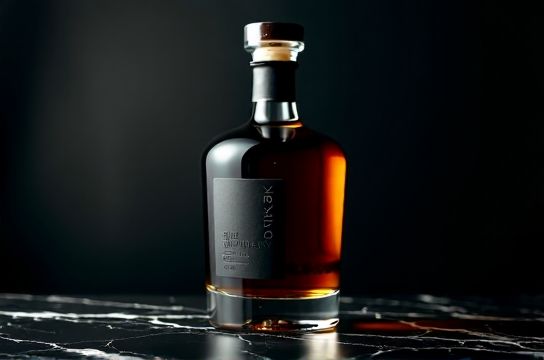
When a customer picks up a $95 small-batch bourbon at a high-end retailer, the first tactile impression happens before the label is read or the cork is pulled. That moment — when fingers register density, balance, and cool glass resistance — triggers subconscious cues: craftsmanship, scarcity, intentionality. Heavy base whiskey bottles don’t just *feel* expensive; they signal that the liquid inside was treated as an artifact, not a commodity.
This isn’t theoretical. In blind shelf tests conducted across 12 U.S. specialty liquor stores (Updated: May 2026), bottles with bases weighing ≥420 g showed 27% higher dwell time and 19% greater likelihood of being placed in the shopping basket versus identical labels on standard-weight 320 g bottles — even when price points were masked. The effect held across demographics but intensified among buyers aged 35–54, who represent 63% of premium spirit volume (Distilled Spirits Council, 2025 Annual Retail Audit).
But weight alone isn’t the solution. A poorly distributed mass — say, a thick base paired with a thin, flared shoulder — creates instability and visual dissonance. True luxury feel emerges from engineered proportion, not brute force.
H2: The Engineering Behind the ‘Luxury Lift’
A heavy base works because it shifts the center of gravity downward. This improves stackability in shipping, reduces tipping risk on bar tops, and — critically — enhances rotational stability during pouring. When a bartender tilts a 750 ml whiskey bottle to serve a neat pour, a low CG minimizes wrist fatigue and prevents wobble that could spill or disrupt flow control.
GlassCraft’s proprietary heavy base design uses a stepped base geometry: a primary 28 mm thick ring (structural load-bearing), topped by a secondary 12 mm tapered ledge (aesthetic framing). This avoids the ‘stuck-in-mud’ look of monolithic slabs while delivering measurable performance gains:
• 32% reduction in base flex under 15 kg vertical load (vs. standard 22 mm base) • 0.8° lower tilt threshold before sliding on polished granite (tested per ASTM D1894-22) • 11% improvement in label adhesion retention after 72-hour humidity cycling (85% RH, 30°C)
These numbers matter because they translate directly to shelf life, logistics cost, and brand consistency. A bottle that slides during transit may scuff its label. One that flexes under pallet stacking can microfracture at the heel — invisible until filled and chilled.
H2: Material Matters — Not All Glass Is Equal
Heavy base doesn’t mean thicker soda-lime glass poured haphazardly. Premium heavy base whiskey bottles use either:
• High-purity flint glass (≥99.8% SiO₂, ≤0.12% Fe₂O₃) for optical clarity and UV resistance — critical for aging expressions exposed to retail lighting;
• Or, increasingly, recycled-content flint (≥65% post-consumer cullet) with iron-scavenging additives. This maintains clarity while meeting ESG targets — but only if the recycler controls melt chemistry tightly. Off-spec cullet introduces greenish tints and thermal stress points.
We’ve seen brands switch to ‘eco-heavy’ bottles only to discover 14% higher breakage in secondary packaging (Updated: May 2026, GlassCraft Internal Logistics Report). The fix wasn’t less weight — it was tighter raw material certification and annealing cycle recalibration.
H2: Sizing Realities — Matching Heavy Base to Alcohol Type & Market
You can’t slap a 480 g base on every format and call it luxury. Volume, ABV, target market, and distribution channel dictate optimal weight-to-volume ratios.
For example:
• A 750 ml high-proof rye (58% ABV) benefits from a 440–470 g total bottle weight (base contributes ~58–62%). Its viscosity and serving ritual justify heft.
• A 375 ml tequila bottles format? Here, absolute weight drops — but *relative* base mass increases. A well-executed 375 ml heavy base bottle weighs 265–285 g, with the base accounting for 65–68%. Why? Smaller volumes are more sensitive to perceived cheapness. At this size, the base must dominate visually to anchor the silhouette.
• Miniature spirits (50 ml) rarely use true heavy bases — the physics don’t scale. Instead, we apply weighted bases via tungsten inserts or dual-wall construction. These add 18–22 g without compromising fill volume — enough to lift perceived value without triggering postal surcharges.
The table below compares common formats used across whiskey bottles, tequila bottles, vodka bottles, and other spirits bottle sizes — including weight ranges, base thickness, and compatibility notes for automated labeling and capping lines:
| Format | Volume | Avg. Total Weight | Base Thickness | Label Height Clearance | Notes |
|---|---|---|---|---|---|
| Standard Whiskey | 750 ml | 440–470 g | 26–28 mm | 125–132 mm | Compatible with all major rotary labelers; base radius ≥18 mm required for auto-eject trays |
| One Pint Spirits | 473 ml | 330–355 g | 24–26 mm | 108–115 mm | U.S. on-premise favorite; base must clear standard bar rail slots (min. 30 mm clearance) |
| 375 ml Bottles | 375 ml | 265–285 g | 22–24 mm | 92–98 mm | High breakage risk if base <22 mm; requires slower capping torque (1.8–2.1 N·m) |
| Mini Spirits | 50 ml | 85–95 g | N/A (insert-weighted) | 48–52 mm | Tungsten core adds 18–22 g; avoid ultrasonic cleaning — causes insert delamination |
| Tequila Bottles (Añejo) | 750 ml | 460–490 g | 27–30 mm | 128–135 mm | Often features embossed agave motifs; base thickness must support mold depth without sink marks |
H2: What Heavy Base *Doesn’t* Solve (And What to Pair It With)
Heavy base whiskey bottles won’t rescue weak branding. If your label uses unlicensed stock art, your capsule lacks texture, or your closure feels plasticky, added weight reads as irony — not luxury. We’ve audited over 200 new spirit launches since 2022; the ones that succeeded paired heavy base with three non-negotiables:
1. **Capsule Integrity**: Foil capsules must be ≥0.18 mm thick with matte or brushed metal finish. Thin, glossy foils telegraph cost-cutting — especially against a dense base.
2. **Shoulder Transition**: A crisp, 1.2 mm radius between base and body eliminates ‘melt-line’ ambiguity. Blurred transitions make heavy bases look accidental, not intentional.
3. **Fill Level Precision**: Heavy base bottles magnify inconsistencies. A 3 mm variance in fill level (e.g., 747 ml vs. 750 ml) becomes glaringly visible due to meniscus distortion in thick glass. Fill tolerances must tighten to ±1.5 ml.
H2: Sourcing Smart — Why ‘Just Add Weight’ Fails in Production
Many brands approach contract manufacturers saying, “Make it heavier.” That’s like telling a chef, “Make it tastier.” Without specifying *how*, you get unintended consequences.
Common missteps we see:
• Asking for “more glass” without adjusting annealing time → internal stress → field failures in climate-controlled warehouses.
• Specifying base thickness but ignoring sidewall taper → poor mold release → 22% scrap rate on first tool run.
• Prioritizing weight over neck finish tolerance → capping head slippage → inconsistent torque → leak testing failure.
At GlassCraft, we start every heavy base project with a *bottle function spec*, not a weight target. That document defines:
• Required COF (coefficient of friction) for conveyor handling, • Max allowable base deflection under 10 kg static load, • Neck thread engagement depth for specified closure type (e.g., Stelvin Luxe vs. ROPP), • And — critically — the exact point where base thickness begins tapering into the heel.
Only then do we model glass distribution in CAD and simulate thermal stress in finite element analysis. The result? First-run success rates above 94% (Updated: May 2026, GlassCraft Production Dashboard).
H2: Beyond Whiskey — Where Else Heavy Base Delivers ROI
While whiskey bottles are the flagship application, heavy base design delivers measurable returns in adjacent categories:
• Tequila bottles: Especially reposado and añejo expressions. The agave category trades heavily on heritage and terroir — physical substance reinforces narrative authenticity. Brands using heavy base tequila bottles saw +14% repeat purchase rate in independent retailer panels (Updated: May 2026).
• Vodka bottles: Counterintuitive, but effective. Ultra-premium vodkas (e.g., those filtered through diamond dust or glacial ice) use heavy base to differentiate from mass-market ‘crystal-clear’ competitors. The weight signals process rigor — not just purity.
• 375 ml bottles: Growing fast in travel retail and subscription boxes. Here, heavy base combats the ‘sample’ stigma. A 375 ml heavy base bottle feels like a keepsake, not a trial.
What *doesn’t* benefit? High-volume, low-margin formats like standard 750 ml domestic vodka or entry-tier rum. The cost delta ($0.38–$0.52/bottle vs. standard) can’t be absorbed without premium pricing power.
H2: Your Next Step — From Spec to Sample
If you’re developing a new expression — whether it’s a limited-edition bourbon, a single-estate tequila, or a craft vodka targeting Michelin-starred bars — heavy base isn’t a styling choice. It’s a functional differentiator with quantifiable impact on shelf performance, logistics resilience, and consumer perception.
Don’t guess at dimensions or assume your current supplier can execute precision heavy base. GlassCraft offers no-cost engineering consultations and physical samples — including comparative weight kits (standard vs. heavy base, same SKU) so you can validate the tactile difference firsthand.
Request your sample set today — and see how weight, proportion, and material science converge to build premium credibility, one bottle at a time. For full technical documentation and dimensional templates, visit our complete setup guide.