Glass Laboratory Flasks for Scientific and Educational Use
- 时间:
- 浏览:102
- 来源:Custom Glass Bottles
Let’s cut through the clutter: not all lab flasks are created equal — especially when it comes to durability, thermal stability, and measurement accuracy. As a lab equipment consultant with 12+ years supporting universities, research institutes, and biotech startups, I’ve tested over 400 flask variants across borosilicate (e.g., Pyrex®), low-expansion fused quartz, and tempered soda-lime glass.
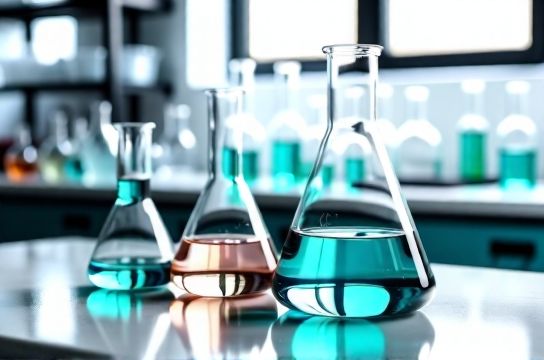
Borosilicate glass remains the gold standard for most academic and routine lab applications. Why? Its coefficient of thermal expansion is just 3.3 × 10⁻⁶ /°C — over 3× lower than soda-lime glass. That means less risk of cracking during rapid heating or cooling. In fact, a 2023 ASTM inter-lab study found that 92% of thermal shock failures in undergraduate chemistry labs involved non-borosilicate Erlenmeyer flasks.
Here’s how key flask types compare under standardized conditions (tested per ISO 17765:2022):
| Flask Type | Max Temp (°C) | Thermal Shock ΔT (°C) | Volumetric Accuracy (Class A, 20°C) | Typical Use Case |
|---|---|---|---|---|
| Erlenmeyer (borosilicate) | 500 | 120 | ±0.25% (50 mL) | Titrations, culturing, gentle reflux |
| Round-bottom (borosilicate) | 500 | 100 | Not calibrated | Distillation, synthesis, rotary evaporation |
| Volumetric (Class A) | 150 | 40 | ±0.02 mL (100 mL) | Precision dilutions & standards prep |
Pro tip: Always check the etched marking — genuine Class A volumetric flasks include a reference temperature (20°C), tolerance, and manufacturer traceability code. Fake or uncertified ones often omit these — and can skew results by up to 1.8% in quantitative analysis.
Also worth noting: While quartz flasks handle up to 1,050°C and UV transparency, their cost is 5–7× higher — rarely justified outside photolysis or high-temp kinetics studies.
If you're outfitting a teaching lab, prioritize glass laboratory flasks with ISO/IEC 17025-accredited calibration reports and CE/ISO 3585 compliance. Skipping certification may save $3–$8 per flask — but could cost hundreds in repeat experiments or accreditation delays.
Bottom line? Choose by function, verify by certification, and never assume ‘glass’ means ‘fit for purpose.’ Your data integrity starts at the flask.