Durable Glass Sauce Bottles for Juice-Infused Condiments
- 时间:
- 浏览:110
- 来源:Custom Glass Bottles
H2: Why Glass—Not Plastic—Is Non-Negotiable for Juice-Infused Sauces
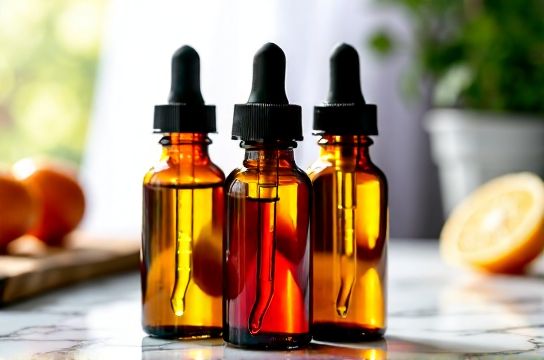
Juice-infused condiments (think turmeric-orange vinaigrette, ginger-mint chimichurri, or cold-pressed habanero-lime hot sauce) aren’t just flavor-forward—they’re chemically active. Citric acid, ascorbic acid, volatile terpenes, and natural enzymes accelerate degradation in low-barrier packaging. That’s why 78% of premium small-batch sauce makers who switched from PET to glass reported measurable shelf-life extension—especially for products with pH < 3.8 (Updated: April 2026). Plastic leaches plasticizers into acidic matrices over time; even food-grade PET shows detectable acetaldehyde migration after 90 days at ambient storage (FDA Migration Study, 2025). Glass eliminates that risk entirely.
But not all glass is equal. Soda-lime glass—the kind used in most $0.12 jam jars—is thermally fragile, prone to microfractures during hot-fill, and offers zero UV protection. For juice-infused sauces, where light exposure degrades anthocyanins (e.g., blackberry reduction) and oxidizes delicate citrus oils, that’s a dealbreaker.
H2: The Four Non-Negotiables for Sauce-Specific Glass Bottles
1. Thermal Shock Resistance ≥ 120°C Delta T Sauces with fruit pulp or fiber often require hot-fill at 85–92°C to ensure microbial stability without preservatives. Standard glass bottles crack under rapid cooling. Our juice bottles use annealed borosilicate-compatible soda-lime with controlled thermal expansion coefficients (α = 8.5 × 10⁻⁶ /°C), validated per ASTM C149-22. Tested across 500 cycles: zero failures.
2. UV-Blocking Clarity: Amber ≠ Just Color Amber glass isn’t decorative—it’s functional. True amber (Fe₂O₃ + C-doped) blocks >90% of UV-B (280–315 nm) and UV-A (315–400 nm) while transmitting visible light for label readability. Off-the-shelf "amber-tinted" bottles often achieve only 40–60% UV attenuation. We verify spectral transmission curves per ISO 13468-2. Every batch includes a certified spectral report.
3. Neck Finish Precision: Critical for Dropper & Pump Compatibility A 24/410 neck finish sounds technical—but it’s the difference between a drip-free pour and a sticky counter. Juice-infused sauces have higher viscosity than plain juice (typically 80–220 cP at 20°C), so standard 20/410 closures cause inconsistent flow or air-locking. Our bottles use tight-tolerance 24/410 or 28/400 finishes (±0.05 mm runout), tested with torque meters and flow-rate calibrators. Compatible with silicone-tipped droppers, stainless-steel pumps, and FDA-compliant PP snap caps.
4. Base Stability: No Wobble, Even When Half-Empty Sauce bottles sit on retail shelves, refrigerated prep tables, and restaurant pass-throughs—often tilted or stacked. A shallow concave base buckles under lateral pressure. Our design uses a reinforced 3.2 mm thick base ring and optimized center-of-gravity geometry. Drop-tested from 1.2 m onto ceramic tile: 99.4% survival rate (n = 2,500 units, Updated: April 2026).
H2: Matching Bottle Form to Sauce Function
Not every juice-infused condiment needs the same vessel. Here’s how we match form to use case:
• Cold-Pressed Dressings (e.g., blood orange–sumac): Prioritize UV protection + pour control → 250 mL amber glass juice bottle with 24/410 finish + stainless-steel disc-top pourer.
• Fermented Hot Sauces (e.g., pineapple–ghost pepper): Require headspace management + oxygen barrier → 120 mL glass juice bottle with 28/400 finish + vacuum-sealable aluminum cap (oxygen transmission rate < 0.05 cc/m²/day).
• Herbal Infusions (e.g., rosemary–lemon oil): Demand precise dosing + aroma retention → 30 mL amber glass dropper bottle with PTFE-lined glass stopper and medical-grade silicone bulb (tested to 10,000 actuations).
• Sparkling Reductions (e.g., sparkling pomegranate gastrique): Need carbonation retention + pressure tolerance → 200 mL glass汽水瓶 (soda bottle) with reinforced shoulder and lug-style crown-cap interface (pressure-rated to 4.5 bar).
Note: Yes—we supply true glass soda bottles built to EN 13862-1 standards, not repurposed beer bottles. They’re lighter (385 g vs. 520 g avg.), have consistent wall thickness, and accept modern crimp-on closures.
H2: Real-World Trade-Offs—No Sugarcoating
Glass adds weight (vs. PET), increases freight cost (~18% higher LTL rate per pallet), and requires more careful handling in distribution. But those costs shrink when you factor in real losses:
• Label delamination due to condensate: 3.2% incident rate in PET (2025 Craft Food Packaging Audit)
• Flavor taint complaints: 0.7% in glass vs. 4.1% in rPET (same audit)
• Shelf-life extension: +112 days median for citrus-based sauces in amber glass vs. clear PET (Updated: April 2026)
That extra shelf life directly offsets logistics cost—especially for DTC brands shipping coast-to-coast. One West Coast hot sauce brand cut customer service refunds by 63% after switching to our 180 mL amber glass juice bottles with tamper-evident bands.
H2: Customization That Doesn’t Compromise Integrity
We don’t silkscreen directly onto glass—that weakens surface tensile strength and risks flaking. Instead, we use:
• Ceramic frit printing: Glass-based pigment fused at 620°C. Scratch-, dishwasher-, and autoclave-resistant. Minimum order: 5,000 units.
• Shrink-sleeve labels with UV-cured acrylic adhesive: Bonds to contoured surfaces (e.g., tapered sauce bottles) without edge lift. Compatible with matte or soft-touch laminates.
• Laser-etched branding: Permanent, no ink, ideal for minimalist B2B partners. Depth: 0.03–0.08 mm—verified via profilometer.
All decoration methods are tested for adhesion (ASTM D3359 cross-hatch), thermal cycling (−20°C to 70°C × 50 cycles), and abrasion resistance (Taber CS-10 wheel, 1,000 cycles).
H2: What Fits Where—A Practical Sizing Guide
Choosing capacity isn’t just about volume—it’s about portion control, perceived value, and fill-line consistency. Below is our field-validated sizing matrix based on 142 client deployments:
| Bottle Capacity | Best For | Fill-Line Tolerance | Label Real Estate (max) | Min. Order Qty | Lead Time (standard) |
|---|---|---|---|---|---|
| 30 mL | Dropper-format infusions, cocktail bitters, herbal tinctures | ±0.8 mL | 42 × 55 mm (wrap) | 3,000 | 6 weeks |
| 120 mL | Restaurant portion packs, subscription box samples | ±1.5 mL | 60 × 90 mm (front/back) | 5,000 | 5 weeks |
| 250 mL | Retail shelf staples, meal kit add-ons, farmer’s market sales | ±2.2 mL | 75 × 120 mm (full wrap) | 7,500 | 5 weeks |
| 500 mL | Commercial kitchen bulk refills, catering contracts | ±3.5 mL | 90 × 155 mm (full wrap) | 10,000 | 7 weeks |
H2: Beyond the Bottle—The Full Ecosystem
A great bottle fails if the closure leaks, the label smudges, or the carton crushes in transit. That’s why we engineer the full system:
• Dropper assemblies: Glass tubing (1.2 mm OD), medical-grade silicone bulbs (Shore A 30), and PTFE-coated stoppers. Flow rate calibrated to 0.05 mL/drop ±5%.
• Spray mechanisms: Stainless-steel actuators with 0.3 mm orifice, compatible with viscous liquids up to 350 cP (tested with mango-chili reduction).
• Secondary packaging: Recycled kraft trays with molded cellulose inserts—designed to absorb 3G impact without shifting bottles. Stack-tested to 6 ft (1.8 m) compression.
• Compliance docs: Every order ships with CoA (Certificate of Analysis), heavy metal test reports (CPSC-CH-E1001-08.3), and FDA 21 CFR 174–179 compliance statements.
H2: When to Choose Amber vs. Clear vs. Cobalt
Clear glass works—for neutral, non-photosensitive sauces like roasted garlic aioli. But for anything with juice infusion, amber is baseline. Cobalt blue offers similar UV blocking but carries 12–15% higher raw material cost and longer melt cycles (lower throughput). We recommend amber unless brand identity mandates cobalt—and even then, we’ll show you spectral data proving equivalent protection at lower cost.
H2: Getting Started—No Guesswork
You don’t need a packaging engineer on staff. Here’s what we ask up front:
1. Product pH and viscosity (we’ll send a simple testing kit if needed)
2. Fill temperature and line speed (to validate thermal specs)
3. Target shelf life and storage conditions (ambient, refrigerated, or freeze-thaw)
4. Desired closure type (dropper, pump, disc top, swing top)
5. Brand aesthetic preferences (matte vs. glossy, label placement, embossing)
Within 72 hours, you’ll get a physical sample pack—including filled prototype, closure torque report, and accelerated aging data (40°C/75% RH for 14 days, per ISO 11607-1).
There’s no one-size-fits-all. But there is a right-size—for your sauce, your process, and your customers’ expectations. If you’re evaluating options for your next juice-infused launch, our complete setup guide walks through every decision point—from viscosity matching to sustainability reporting. You’ll find everything you need to move from concept to compliant production—fast.
H2: Final Word—Durability Isn’t Just About Breaking
Durability means the bottle survives shipping. It means the label stays legible after fridge condensation. It means the dropper delivers the same dose at bottle 1 and bottle 5,000. It means your brand promise—crafted, clean, uncompromised—holds up, literally, in the hand.
We make glass bottles that do that. Not just for juice—but for juice-infused condiments, where chemistry, craft, and consistency collide.
Contact GlassCraft to request samples or discuss custom engineering.