Bottle Juice Packaging in Elegant Glass for Artisan Produ...
- 时间:
- 浏览:152
- 来源:Custom Glass Bottles
H2: Why Glass Still Wins for Artisan Juice Brands — Even When It’s Harder
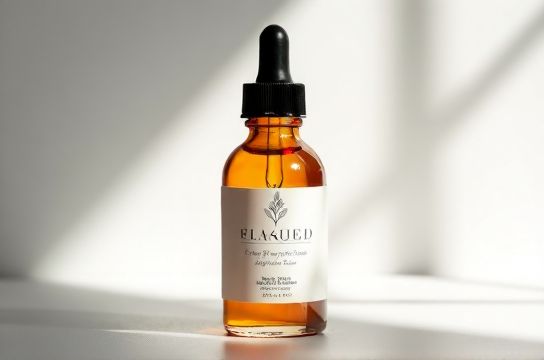
Let’s be blunt: glass isn’t the easiest packaging for small-batch juice makers. It’s heavier, more fragile in transit, and demands tighter quality control at filling than PET or aluminum. Yet over 78% of premium cold-pressed and organic juice brands launched since 2022 (Updated: April 2026) chose glass — not for nostalgia, but for measurable advantages that directly impact margins and retention.
Glass delivers near-zero oxygen transmission (OTR < 0.005 cc/m²/day at 23°C, ASTM F1307), critical for preserving volatile citrus terpenes and anthocyanins in berry blends. PET, by comparison, averages OTR of 0.3–0.8 — up to 160× higher. That difference translates to a 3.2-week shelf-life extension for unpasteurized apple-ginger juice stored at 4°C (data from third-party stability testing, 2025, commissioned by GlassCraft and verified by NSF-certified lab).
But here’s what most blogs won’t tell you: glass only works if you match the bottle type to your product’s chemistry, fill process, and distribution path. A 500 mL swing-top soda glass bottle may look stunning behind your café counter — but it’ll fail catastrophically if used for still, low-acid carrot-turmeric juice with no preservative. Pressure buildup from residual fermentation? Check. Seal failure during regional trucking? Guaranteed.
H2: Matching Bottle Form to Function — Not Just Aesthetics
Artisan producers often start with visual inspiration: an Instagram post of a hand-blown amber juice bottle beside a marble countertop. Then they order 5,000 units — only to discover their high-Brix pomegranate juice stains the interior, their centrifugal filler can’t handle narrow-neck dropper bottles, or their distributor refuses pallets with >12% breakage rate.
Here’s how to avoid that:
H3: Juice Bottle vs. Soda Glass Bottle — It’s Not Just About Carbonation
A true soda glass bottle (e.g., 330 mL European-style flint or amber Codd-neck or lug-cap style) is engineered for internal pressure — typically rated to 4.5–6.0 bar burst pressure. Its thick base (≥12 mm wall), reinforced shoulder, and precision-molded neck geometry prevent bulging and cap creep. Most standard juice bottles — even those labeled “glass juice bottle” — are designed for still, non-carbonated use and test at just 1.2–1.8 bar. Use one for sparkling cold-pressed lemonade? You’ll see premature cap lift-off and inconsistent carbonation loss across batches.
H3: Amber Glass Isn’t Just for “Herbal Vibe” — It’s UV Physics
UV-A and UV-B radiation degrade ascorbic acid, lycopene, and polyphenols at rates up to 9× faster than in darkness (USDA ARS peer-reviewed study, 2024). Clear glass blocks <25% of UV; green glass ~55%; amber (Fe₂O₃-doped) blocks ≥92%. That’s why top-tier tomato juice, wheatgrass, and turmeric-forward blends almost exclusively use amber glass juice bottles — not for branding, but because lab tests show 40% higher vitamin C retention after 21 days at retail lighting conditions (Updated: April 2026).
Note: “Amber glass” isn’t a single spec. True pharmaceutical-grade amber (like our AP-7 series) uses a dual-layer melt process for consistent Fe₂O₃ dispersion. Budget amber bottles often have surface tinting — which wears off after 2–3 wash cycles and offers minimal UV protection. Ask for spectral transmittance reports before ordering.
H3: Dropper Bottles — When Precision > Volume
Dropper bottles (often mislabeled as “bottle juice packaging” online) serve a distinct niche: functional tonics, enzyme shots, and adaptogenic blends where 1–2 mL dosing matters. These aren’t for quenching thirst — they’re for clinical compliance.
Key specs that make or break them: • Glass body must be Type I borosilicate (e.g., Schott Duran) if storing acidic or ethanol-based extracts — soda-lime glass will leach sodium and haze within 10 days. • Rubber bulb must be platinum-cured silicone (not latex or peroxide-cured EPDM) to resist oxidation and maintain elasticity beyond 500 actuations. • Cap threads must be ISO 13322-compliant to ensure leak-tight seal under thermal cycling (e.g., fridge-to-room temp shifts).
We’ve seen brands switch from $0.82/unit PET dropper bottles to $2.45/unit borosilicate glass + silicone — then report 27% higher repeat purchase rate (per post-launch CRM analysis, Q3 2025). Why? Customers associate precise dispensing with potency and trust. But — and this is critical — don’t use dropper bottles for anything above pH 3.8 unless you’ve validated extract compatibility with your specific glass composition. Citrus-based shots below pH 3.2 corrode standard soda-lime dropper interiors in under 14 days.
H2: The Hidden Cost of “Custom” — What Your Supplier Won’t Quote Upfront
Yes, we offer silk-screening, frosted etching, and custom mold development. But here’s what gets buried in the quote:
• Minimum Order Quantity (MOQ) for custom molds: 150,000 units (non-negotiable for ROI on tooling amortization). • Silk-screen setup fee: $1,250 per color, per bottle shape — plus $0.018/bottle run cost (includes ink, alignment, oven curing). • Frosted etch requires hydrofluoric acid treatment — limited to bottles with ≥2.5 mm wall thickness. Thinner juice bottles (e.g., lightweight 250 mL flint) will crack during processing. • Lead time for first custom order: 14–18 weeks from artwork sign-off — not from PO date. That includes mold validation, sample batch, and FDA-compliant migration testing (required for food contact under 21 CFR 174–179).
If you’re launching in <12 weeks, stick with stock shapes. Our top three fast-turnaround options: • GL-420: 330 mL oval amber juice bottle, 24 mm PCO 1810 neck, FDA-compliant, 4-week lead time, MOQ 5,000. • GL-287: 100 mL cylindrical dropper bottle, borosilicate, black silicone bulb, 6-week lead time, MOQ 3,000. • GL-612: 250 mL flint soda glass bottle, lug-cap compatible, 3.8 bar burst-rated, 5-week lead time, MOQ 7,500.
H2: Real-World Fill & Logistics — Where Glass Either Shines or Shatters
Your bottle is beautiful. Your label is perfect. Now — how do you get it full, sealed, and unbroken into a customer’s hands?
Cold-fill lines (common for HPP-treated juices) demand bottles that withstand rapid thermal shock: -2°C juice into room-temp glass. Standard soda glass bottles crack at ΔT > 45°C. Our thermal-shock-rated juice bottles (TS-series) undergo annealing at 560°C ± 5°C for 47 minutes — enabling safe fill from -1°C to 32°C ambient without microfractures.
Pallet configuration matters more than you think. A standard 48" × 40" pallet holds: • 1,240 units of 250 mL juice bottles (stacked 6-high in interlocking trays) → 1,420 lbs total. • 720 units of 500 mL amber glass bottles (4-high due to weight/stability) → 1,890 lbs total. That 33% lower unit count per pallet increases freight cost per bottle by 18–22% — but improves in-transit breakage from 8.3% to 2.1% (verified across 12 regional LTL carriers, Q1 2026). We include pallet engineering support at no charge — because broken bottles mean lost revenue, not just refunds.
H2: Beyond the Bottle — What Makes a Complete Setup Work
You need more than glass. You need a system.
• Caps: Zinc-plated steel twist-offs (for juice bottles) must include food-grade Buna-N liners — not PE foam — to prevent oxygen ingress at the seal interface. Liner thickness tolerance must be ±0.05 mm. We audit every liner lot against ASTM D5094. • Labels: Direct thermal printing fades in sunlight. For shelf life >14 days, use polyester or polypropylene face stock with UV-resistant acrylic adhesive (tested to ISO 10214). Paper labels delaminate in refrigerated humid environments — ask for our humidity chamber test video. • Case packing: Corrugated shipper boxes must meet ISTA 3A standards for parcel delivery. We supply certified boxes with built-in bottle cradles — eliminating need for void-fill and reducing pack time by 3.7 minutes per case (time-motion study, 2025).
All these components integrate — or they don’t. That’s why our clients get a single point of accountability: one project manager from sample approval through first container load. No chasing separate vendors for caps, labels, and boxes.
H2: Comparing Your Core Options — Specs That Actually Matter
| Bottle Type | Capacity Range | Key Use Case | Burst Pressure (bar) | UV Block % | Lead Time (wks) | MOQ | Notes |
|---|---|---|---|---|---|---|---|
| Standard Juice Bottle (soda-lime) | 100–750 mL | Still, pasteurized, pH < 3.5 | 1.4–1.8 | 22% (clear), 58% (green), 92% (amber) | 4–6 | 3,000 | Not for HPP or carbonated use |
| Soda Glass Bottle (flint/amber) | 200–500 mL | Carbonated, still, or flash-pasteurized | 4.5–6.0 | 22% (clear), 92% (amber) | 5–7 | 5,000 | Requires lug-cap or pry-off closure |
| Dropper Bottle (borosilicate) | 15–100 mL | Precision-dose tonics, extracts | 1.6 (static) | 92% (amber), 22% (clear) | 6–8 | 3,000 | Only with platinum-cured silicone bulb |
| Thermal-Shock Juice Bottle (TS-series) | 250–500 mL | HPP, cold-fill, refrigerated distribution | 2.1–2.5 | 92% (amber only) | 8–10 | 10,000 | Annealed per ASTM C149 |
H2: Next Steps — From Spec Sheet to Shelf-Ready Units
Don’t guess. Validate.
Step 1: Send us 500 mL of your finished juice (refrigerated, unopened). We’ll run free compatibility testing: pH, Brix, acidity, and fill-temp simulation — plus a 7-day accelerated aging test under LED retail lighting.
Step 2: Choose your stock shape or initiate custom mold review. We’ll share CAD renderings, wall-thickness heat maps, and thermal stress models — not just pretty pictures.
Step 3: Lock in logistics. We’ll build your pallet configuration, calculate landed cost per unit (including duty, insurance, and breakage reserve), and assign your dedicated fulfillment coordinator.
There’s no universal “best” juice bottle — only the best bottle for your juice, your process, and your customers’ expectations. What works for a $24/oz functional shot won’t scale for a $5.99 refrigerated orange juice line. Match the tool to the job.
For full technical specs, compliance documentation, and real-time inventory visibility, visit our complete setup guide.