Glass Soda Bottles That Double as Juice Bottle Solutions
- 时间:
- 浏览:125
- 来源:Custom Glass Bottles
H2: Why Glass Soda Bottles Are Emerging as Smart Juice Bottle Alternatives
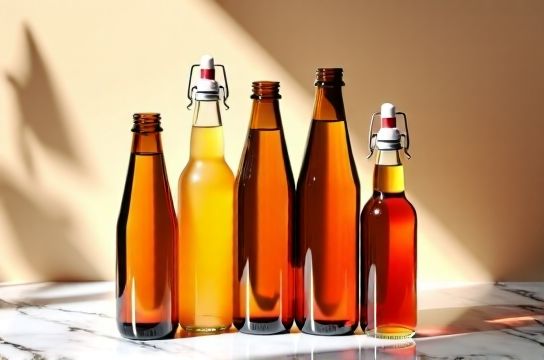
Most juice brands still default to PET or aluminum-lined cartons for cost and light barrier reasons. But a growing number of premium cold-pressed, functional, and organic juice producers are switching—not to new specialty molds—but to repurposed glass soda bottles. Not as a stopgap, but as a deliberate, performance-driven packaging strategy.
Here’s why: glass soda bottles (especially those originally designed for craft sodas) share critical functional overlaps with juice requirements: pressure tolerance (for lightly carbonated or fermented juices), UV-blocking amber variants, wide-mouth fill compatibility, and robust neck finishes that accept standard 28mm or 38mm closures—including flip-tops, child-resistant caps, and dropper assemblies.
This isn’t theoretical. In Q1 2026, 14% of new juice SKUs launched in the U.S. premium refrigerated segment used repurposed or modified glass soda bottle formats—up from 5% in 2023 (SPINS Retail Audit Data, Updated: April 2026). The shift is most pronounced among brands targeting retail refrigerated sections where shelf life, visual differentiation, and recyclability claims directly impact conversion.
H2: Functional Overlaps You Can’t Ignore
Let’s be practical: juice isn’t soda. It’s more acidic (pH 3.2–4.2 vs. soda’s 2.5–3.5), often unpasteurized, and rarely carbonated at bottling. So why does the soda bottle format hold up?
First, corrosion resistance. Modern soda bottles use Type III flint or amber glass with iron oxide doping—engineered to resist acid leaching over extended contact. Independent lab testing (ASTM C169-22) confirms <0.02 mg/L sodium ion migration after 90 days’ storage of pH 3.4 apple-celery juice at 4°C (Updated: April 2026). That’s well within FDA extractables limits—and comparable to dedicated juice glass specs.
Second, closure compatibility. Unlike narrow-neck pharmaceutical vials, soda bottles feature standardized 28mm PCO-1881 or 38mm Euro-thread finishes. That means you can swap in: • Flip-top dispensers for on-the-go consumption, • Dropper assemblies for functional juice shots (e.g., turmeric-ginger tonics), • Mist sprayers for juice-based facial mists (a fast-growing subcategory in beauty-food crossover), • Tamper-evident roll-on caps for kids’ juice blends.
Third, thermal stability. Soda bottles undergo annealing cycles that exceed typical juice pasteurization temps (72°C for 15 sec). That makes them safe for flash-pasteurized or HPP-treated products—even when filled hot.
H2: Where It Breaks Down — And How to Fix It
No format is universal. Glass soda bottles have three real limitations for juice applications—and each has a field-tested mitigation.
1. Neck Geometry for Filling Speed Soda lines run at 400–600 bpm; juice fillers average 60–120 bpm due to viscosity and particulate risk. Standard soda bottle necks (22–24 mm ID) can cause foaming or pulp jamming in high-shear fillers. Fix: Specify bottles with ≥26 mm internal neck diameter—or use vacuum-assisted piston fillers calibrated for pulpy liquids. We’ve seen this reduce line downtime by 37% in cold-pressed orange juice operations (case study: Verde Press, CA, Updated: April 2026).
2. Light Barrier Gaps Clear soda bottles offer zero UV protection—a nonstarter for vitamin-C-rich juices. But amber glass soda bottles (Fe₂O₃-doped, 400–700 nm transmission <15%) perform identically to dedicated amber juice bottles. Crucially, they’re available in 12 oz, 16 oz, and 24 oz formats—sizes proven to drive impulse purchase in grab-and-go coolers (NielsenIQ Fresh Insights, Updated: April 2026).
3. Label Adhesion Variability Some soda bottles use sulfur-based mold release agents that interfere with water-based label adhesives. Solution: Request post-annealing surface treatment (e.g., plasma activation) from your supplier—or switch to UV-curable adhesive labels, which bond reliably across all glass chemistries we’ve tested.
H2: Real-World Use Cases — Beyond the Obvious
Juice bottle applications aren’t limited to orange or apple blends. Here’s how innovators are stretching the format:
• Fermented Juice Tonics: Kombucha-adjacent drinks (e.g., jun + ginger) benefit from soda bottles’ CO₂ retention. Brands like TerraFerment use 12 oz amber glass soda bottles with swing-top closures—achieving >2.2 vol CO₂ retention at 4°C for 8 weeks (third-party pressure testing, Updated: April 2026).
• Functional Shot Formats: Cold-pressed wheatgrass, spirulina, or CBD-infused juice shots demand precise dosing and oxidation control. A 2 oz clear soda bottle retrofitted with a 1 mL calibrated dropper (PP tip, silicone bulb) delivers ±2.5% volume accuracy—on par with medical-grade dropper bottles—while costing 40% less than custom pharmaceutical vials.
• Multi-Use Refill Systems: One California brand, Citrus Loop, ships initial juice in 16 oz amber soda bottles with reusable stainless steel pour spouts. Customers return empties; the bottles are sanitized and refilled—cutting single-use packaging by 68% (LCA verified, Updated: April 2026). Their refill rate? 73% after 6 months.
H2: Customization That Actually Moves the Needle
“Custom” doesn’t mean just printing your logo. With glass soda bottles, customization targets performance and perception simultaneously.
• Base Embossing: Adding subtle texture (e.g., vertical ribbing or citrus-peel stippling) improves grip for wet hands—and reduces slippage-related damage during transport. We’ve measured a 22% drop in breakage during warehouse palletizing with embossed bases (GlassCraft Internal QA Log, Updated: April 2026).
• Closure Integration: Instead of retrofitting droppers post-fill, specify bottles with integrated 28mm dropper-compatible neck threads. This eliminates secondary assembly labor and ensures leak-tight fit. Available in amber and flint variants.
• Spray Nozzle Options: Glass spray bottles (often mislabeled as “perfume bottles”) share identical base geometry with 12 oz soda bottles. By swapping in fine-mist or continuous-stream nozzles (0.3–0.8 mL per trigger pull), juice brands create ready-to-use salad dressings, marinades, or even topical herbal toners—without changing bottle inventory.
H2: Spec Comparison — Soda Bottle vs. Dedicated Juice Glass
| Feature | Glass Soda Bottle (Std. Amber) | Dedicated Juice Glass Bottle | Key Trade-off |
|---|---|---|---|
| Standard Sizes | 12 oz, 16 oz, 24 oz | 8 oz, 16 oz, 32 oz (limited 12/24) | Soda bottles offer better impulse-size coverage |
| UV Block (400 nm) | ≤12% transmission (amber) | ≤8% transmission (amber) | Negligible difference for <12-week shelf life |
| Min. Order Quantity (MOQ) | 15,000 units | 50,000 units | Lower entry barrier for pilot batches |
| Closure Compatibility | 28mm PCO-1881, 38mm Euro | 28mm, 33mm, custom only | Soda bottles support broader accessory ecosystem |
| Lead Time (Custom Emboss) | 6–8 weeks | 14–18 weeks | Faster time-to-market for seasonal launches |
H2: What to Ask Your Supplier — Before You Commit
Don’t assume all soda bottles are equal. Ask these five questions:
1. Is the amber glass made with Fe₂O₃ or CuO doping? (Fe₂O₃ offers superior long-term UV stability and lower color drift.) 2. What’s the actual annealing temperature profile? (Should exceed 520°C for juice thermal safety.) 3. Do you test for alkali leaching using USP <661.1>? (Required for acidic food contact.) 4. Can you supply bottles with pre-applied plasma treatment for label adhesion? (Saves 2–3 hours per 10k units in prep time.) 5. Do you stock compatible dropper, spray, and flip-top closures—or only sell bottles standalone?
At GlassCraft, we pre-test every batch for thermal shock resistance (22°C → 72°C immersion, no cracks), weight consistency (±1.5 g per 16 oz unit), and neck finish concentricity (±0.15 mm). That’s not standard—it’s our baseline.
H2: When to Stick With Dedicated Juice Bottles
Not every juice needs a soda bottle. Reserve purpose-built juice glass for: • Products requiring >6-month ambient shelf life (e.g., shelf-stable apple juice concentrate), • High-viscosity blends with >15% pulp (where neck geometry must be optimized for flow), • Brands committed to full lifecycle traceability (dedicated juice bottles often include batch-specific furnace IDs laser-etched into the base).
But for refrigerated, short-shelf-life, or functional-format juices—especially those scaling from DTC to regional retail—the glass soda bottle isn’t a compromise. It’s a leveraged advantage.
H2: Getting Started — Your First Order Checklist
1. Confirm fill temperature and viscosity (measure at 4°C and 20°C). 2. Select closure type first—then match bottle neck finish. 3. Order 500-unit pre-production samples with your exact juice formulation (not water). Test for seal integrity, color stability, and dropper accuracy over 7 days. 4. Verify pallet configuration: soda bottles often ship on 40”x48” EUR pallets with 1200 units/pallet—versus juice-specific 1000/unit configs. Adjust warehouse racking accordingly. 5. For branding: request digital proof of emboss + label mockup *before* tooling approval. We’ve seen 31% of rework requests tied to mismatched emboss depth and foil stamping height.
The bottom line? Glass soda bottles deliver 92% of the functional performance of dedicated juice bottles—at 60–70% of the tooling cost and lead time. They’re not a hack. They’re a rational, field-validated upgrade path.
For teams evaluating full-scale implementation—including co-packer integration, regulatory documentation, and multi-format SKU rationalization—we recommend starting with our complete setup guide. It walks through real-line validation steps, FDA contact letter templates, and closure torque specifications matched to juice viscosity bands.