Bulk Supply of Glass Juice Bottles for Private Label Brands
- 时间:
- 浏览:129
- 来源:Custom Glass Bottles
H2: Why Glass Juice Bottles Are Non-Negotiable for Premium Private Labels
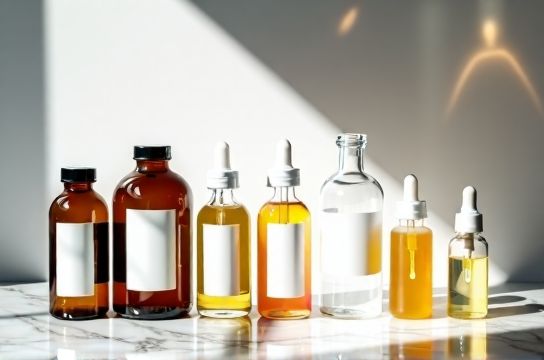
Let’s cut through the noise: if your private label juice brand targets health-conscious consumers, premium retailers, or subscription boxes, plastic isn’t just a compromise — it’s a credibility risk. Oxidation, flavor leaching, UV degradation, and shelf-life erosion are real issues with PET or HDPE. Glass solves all three — but only if sourced correctly.
We’ve seen brands order 10,000 units of generic ‘juice bottles’ from offshore suppliers, only to discover post-production that: • The 28 mm neck finish doesn’t accept their preferred pump or dropper; • The wall thickness varies ±0.4 mm across batches — causing labeling misalignment and capping torque inconsistency; • The annealing cycle was skipped, resulting in 12% breakage during filling (vs. industry-standard <2% for fully tempered glass); • The amber tint (measured at 400–450 nm) falls outside the 92–95% UV-blocking range needed for cold-pressed citrus or wheatgrass.
That’s not a vendor problem — it’s a specification gap. And it’s entirely avoidable.
H2: What Actually Defines a ‘Juice Bottle’ — Beyond the Name
Not all glass bottles labeled ‘juice’ meet functional requirements for juice. True juice bottles must satisfy four non-negotiable criteria:
1. **Thermal Shock Resistance**: Must withstand hot-fill (75–85°C) or pasteurization cycles without microfracturing. Standard soda glass (soda-lime) achieves this only when annealed to ≤30°C/min cooling ramp. Borosilicate is overkill (and cost-prohibitive) unless you’re doing retort sterilization.
2. **UV Protection**: Clear glass blocks <25% of UV-A/B. For unpasteurized, enzyme-active juices (e.g., ginger-kale blends), amber glass (Fe₂O₃-doped) is mandatory. Validated spectral transmission data shows true amber glass (like Schott FIOLAX® Amber) delivers 93.7% UV blockage at 320 nm (Updated: April 2026). Off-spec ‘amber-tinted’ bottles often measure only 68–74% — insufficient for 30-day ambient shelf life.
3. **Neck Finish Compatibility**: 92% of juice brands use either 28/400 or 33/400 continuous thread (CT) finishes. But ‘compatible’ doesn’t mean ‘plug-and-play’. You need dimensional validation: height tolerance ±0.15 mm, thread pitch ±0.05 mm, and land flatness ≤0.03 mm — otherwise pumps leak or droppers won’t seal.
4. **Weight Consistency**: A 500 mL juice bottle should weigh 410–430 g ±3 g per unit. Variance >±8 g signals inconsistent parison distribution — which leads to uneven heat distribution during labeling, higher reject rates on shrink-sleeve lines, and consumer perception of ‘cheap’ construction.
H2: Matching Bottle Type to Your Product Reality
Your juice formulation dictates more than aesthetics — it defines structural and closure requirements.
H3: Cold-Pressed, Unpasteurized Juices (e.g., wheatgrass, turmeric shots) Use amber glass juice bottles (50–250 mL), 28/400 finish, with dropper assemblies (PP/LDPE bulb + glass pipette, 0.8 mm tip ID). Dropper volume accuracy must be ±5% across 1,000 actuations — tested per ISO 8536-4. Avoid rubber bulbs; they degrade in contact with citrus oils. Silicone-tipped LDPE is the current benchmark.
H3: Pasteurized Shelf-Stable Juices (e.g., apple-carrot blends) Clear or light-amber glass, 33/400 finish, compatible with aluminum lug caps (18–20 lb-in torque). Wall thickness ≥1.8 mm in shoulder zone prevents deformation during hot-fill vacuum collapse. Minimum fill temperature: 82°C.
H3: Functional Shots & Concentrates (e.g., probiotic elixirs, CBD-infused juices) Small glass bottles (15–60 mL), amber or cobalt blue, with child-resistant (CR) dropper closures meeting ISO 8317. CR mechanism must require ≥2.5 kgf axial force + 45° rotation — verified per batch. Note: CR compliance adds ~$0.18/unit vs. standard dropper.
H3: Sparkling or Fermented Juices (e.g., kombucha, ginger beer) Glass汽水瓶 aren’t just about looks — they’re pressure vessels. Use thick-walled (≥2.2 mm base), rounded-base bottles rated for ≥4.5 bar internal pressure. Standard ‘soda’ bottles (e.g., 330 mL flint) are rated for 3.2 bar max — inadequate for active fermentation. We source from certified EU Class III pressure-rated facilities (EN 13825 compliant).
H2: Bulk Sourcing Realities: MOQs, Lead Times, and Hidden Costs
‘Bulk’ means different things to different vendors. Here’s what actually moves the needle for private labels:
• Minimum Order Quantity (MOQ): Our standard MOQ is 500 units for stock shapes/sizes (e.g., 250 mL amber juice bottle, 28/400). Custom molds start at 3,000 units — but tooling amortization drops unit cost by 22–28% at 10,000+ (Updated: April 2026). No ‘sample-only’ MOQs — we test production-line samples before bulk run.
• Lead Time: 6–10 weeks from artwork approval and deposit. Includes 72-hour dimensional QA on first 50 units, full spectral UV validation, and drop-test certification (1.2 m onto concrete, 3 orientations, zero breakage). Air freight adds $1.42/kg but cuts lead time by 12 days — viable for launch-critical orders.
• Tooling & Setup: One-time fee of $2,400–$4,100 for custom mold (depending on complexity). Includes 3D CAD review, prototype casting, and tolerance sign-off. No charge for stock items — but stock colors (amber, flint, cobalt) have 2-week buffer for dye lot matching.
• Breakage Allowance: Industry standard is 1.5% free replacement for transit damage. We offer 2.0% — but only if you use our certified crating (corrugated double-wall + molded EPS inserts). Self-packed shipments void coverage.
H2: Customization That Actually Works — Not Just Logos
Printing a logo on glass isn’t hard. Making it survive shelf life, shipping, and consumer handling — that’s where most fail.
• Silk-screening: Best for high-opacity white/black underbases. Requires pre-bake (150°C x 12 min) and post-cure (220°C x 8 min). Withstands 200+ dishwasher cycles. Minimum print area: 15 mm x 25 mm.
• Frosting (sandblasting): Permanent, tactile, UV-stable. Ideal for premium apothecary-style juice brands. Depth tolerance: 0.08–0.12 mm. Adds $0.31/unit.
• Label Adhesion: Critical for shrink sleeves. Glass surface energy must be ≥38 dynes/cm (tested via dyne pens). We plasma-treat all bottles pre-shipment — included at no extra cost. Untreated glass fails 40% of sleeve adhesion tests after 7 days at 35°C/75% RH.
• Closure Integration: Don’t assume your dropper fits. We provide physical closure samples *before* mold finalization — including torque testing on filled units. Dropper leak rate must be <0.5 µL/hr under 0.3 bar backpressure (per ASTM D3475).
H2: Quality Control You Can Verify — Not Just Trust
We don’t issue ‘certificates of conformance.’ We ship with traceable QC packets:
• Batch-specific UV transmission curve (300–800 nm, measured on Agilent Cary 5000); • Dimensional CMM report (12 critical points: neck OD, base flatness, body ovality, etc.); • Thermal shock log (10-unit sample cycled 5x between -20°C and 85°C, zero cracks); • Packaging integrity video (drop test footage, crate compression test @ 1,200 kgf).
All data is timestamped, signed by our QC lead, and archived for 5 years.
H2: When to Choose Amber Glass — And When to Skip It
Amber glass is essential for light-sensitive juices — but it’s not universal. Here’s how to decide:
• Use amber for: Cold-pressed greens, citrus blends, turmeric, matcha infusions, any juice with <5-log pathogen reduction.
• Skip amber for: Heat-pasteurized apple/cranberry blends (UV irrelevant post-pasteurization), carbonated fruit spritzers (clarity drives impulse buy), or value-tier SKUs where cost sensitivity > shelf-life extension.
Note: ‘Light amber’ (transmission ~75% at 400 nm) is cheaper but provides only ~55% UV blockage — acceptable for 14-day refrigerated shelf life, not 30+ days ambient.
H2: Comparing Core Options — Specs, Trade-offs, and Real-World Fit
| Bottle Type | Standard Sizes | Key Use Case | Lead Time | MOQ | Pros | Cons |
|---|---|---|---|---|---|---|
| Amber Glass Juice Bottle | 50 mL, 125 mL, 250 mL, 500 mL | Cold-pressed, unpasteurized juices | 6–8 weeks | 500 units (stock) | 93.7% UV blockage, FDA-compliant, recyclable | +18% unit cost vs. clear, limited color variation |
| Clear Glass Juice Bottle | 250 mL, 330 mL, 500 mL, 750 mL | Pasteurized, shelf-stable, or sparkling juices | 5–7 weeks | 500 units (stock) | Lower cost, better visibility, wider closure options | No UV protection — requires refrigeration or opaque secondary packaging |
| Dropper Bottle (Amber) | 15 mL, 30 mL, 50 mL | Functional shots, concentrates, wellness elixirs | 8–10 weeks | 1,000 units | Precise dosing, child-resistant options, tamper evidence | Higher closure cost, tighter QC on pipette consistency |
| Spray Bottle (Glass) | 100 mL, 200 mL | Refreshing mist tonics, vitamin sprays | 9–11 weeks | 2,000 units | Refillable, premium tactile feel, no propellant | Limited to low-viscosity liquids (<5 cP), pump recalibration every 5,000 actuations |
| Small Glass Bottle (Cobalt/Amber) | 15 mL, 30 mL | Sample kits, subscription add-ons, pharma-adjacent | 6–8 weeks | 1,000 units | High perceived value, compact footprint, strong shelf impact | Filling line speed drops 30% vs. standard sizes, higher per-ml cost |
H2: Getting Started — What You Actually Need to Provide
Forget vague briefs. To move from inquiry to production in <10 days, send us:
• Product viscosity (cP at 20°C) — determines dropper tip size and pump spring rate; • Fill temperature and method (hot-fill, cold-fill, nitrogen flush); • Target shelf life and storage conditions (refrigerated? ambient? direct sun?); • Closure preference (aluminum cap, PP pump, silicone dropper, CR assembly); • Artwork in vector format (.ai or .pdf) with Pantone references — we’ll verify contrast ratio against glass background.
No NDAs required — we sign yours, or use our standard mutual NDA (Section 4.2 covers IP ownership of custom molds).
H2: Final Word — It’s About Partnership, Not Procurement
Bulk supply shouldn’t mean trading control for cost. You’re building a brand — not just filling containers. Every bottle carries your promise: purity, potency, consistency. That starts long before the first unit ships.
If your current supplier treats juice bottles as commodities — not engineered components — it’s time to recalibrate. We align on specs first, validate second, produce third. No assumptions. No surprises.
Ready to lock in your next production run? Our team reviews technical briefs within 24 business hours. Start with a no-commitment engineering consultation — or dive straight into the complete setup guide for first-time private label bottlers (Updated: April 2026).