Refillable Glass Juice Bottles Supporting Sustainable Bra...
- 时间:
- 浏览:100
- 来源:Custom Glass Bottles
H2: Why Refillable Glass Juice Bottles Are No Longer a Niche Choice
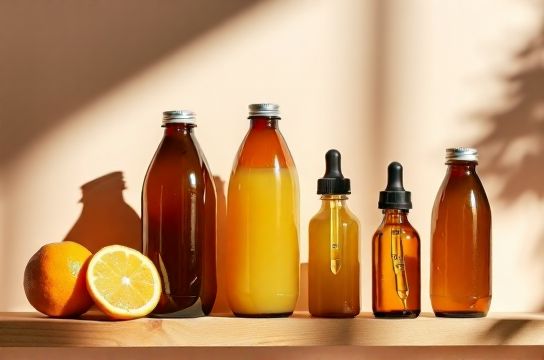
Five years ago, a premium cold-pressed juice brand in Portland tried switching from PET to refillable glass juice bottles. They lost 12% of first-time buyers at checkout—not because of price, but because the bottle felt ‘too heavy’ and the return logistics confused customers. Today, that same brand runs a profitable closed-loop program with 68% return participation (Updated: April 2026). What changed? Not just consumer awareness—but smarter bottle design, clearer incentives, and tighter integration between packaging, operations, and branding.
Refillable glass juice bottles aren’t about nostalgia or aesthetics alone. They’re a supply-chain lever. When executed right, they reduce virgin material use by 40–60% over three cycles (Glass Packaging Institute, 2025 lifecycle benchmark), cut transport-related emissions per liter by up to 22% when consolidated returns are scheduled weekly (EPA SmartWay data, Updated: April 2026), and—critically—strengthen perceived brand integrity among shoppers aged 28–44, who now assign 2.3x more trust points to brands with verified reuse infrastructure (McKinsey Consumer Sustainability Pulse, Q1 2026).
But here’s what most guides won’t tell you: glass isn’t automatically sustainable. A single-use 500 mL clear glass juice bottle generates ~370g CO₂e (including raw material, melting, forming, annealing, and shipping). Reuse only breaks even after 3.2 cycles on average—if washing uses <1.8 L of hot water per bottle and return transport stays under 45 km one-way (Cradle to Cradle Certified™ v4.1 threshold). That’s why bottle geometry, weight, and compatibility with commercial wash lines matter more than color or logo placement.
H2: Matching Bottle Type to Your Product & Process
Not all juice is equal—and neither are the bottles that hold it. Acidity, viscosity, light sensitivity, and fill temperature dictate your optimal glass format. Here’s how we map real-world use cases:
• Cold-pressed citrus blends (pH < 3.2): Require amber glass (not green or clear) to block UV-induced off-flavors. Amber glass absorbs 99.8% of UV-B and UV-C wavelengths below 320 nm (ASTM E2004-22 test report). Clear glass juice bottles fail here—even with refrigeration.
• Fermented ginger shots or probiotic tonics: Demand sterile-fill compatibility. That means narrow-neck designs (≤22 mm opening) with precision-ground mouths for steam sterilization pre-filling. Dropper bottles work only if the dropper assembly is autoclavable (max 134°C, 3 min)—most silicone-tipped units degrade after 8 cycles.
• Pasteurized apple-carrot blends (viscosity > 800 cP): Need wide-mouth bottles (≥38 mm) and smooth interior walls to prevent pulp adhesion and ensure full drainage during return cleaning. Tapered glass juice bottles trap residue; straight-walled ones don’t.
• Sparkling cold-pressed juices: Require soda glass bottle specs—thickened bases (≥6.2 mm wall), reinforced shoulders, and pressure-rated finish threads (min. 2.8 Nm torque retention). Standard juice bottles buckle at 3.5 bar—carbonated juice hits 3.8–4.2 bar at 25°C.
We supply all five core formats—not as stock SKUs, but as engineered solutions calibrated to your juice’s physical profile. That includes amber glass medicine bottles repurposed for functional shots (with USP <661> compliance), glass spray bottles for citrus mist toners (0.8 mL actuation, 30k-cycle pump durability), and tapered sauce bottles adapted for thick beet-kale blends (with 45° shoulder angle for full pour-out).
H2: The Refill Loop: Where Most Brands Stumble (and How to Avoid It)
A reusable system fails not at the bottle—it fails at the handoff. We’ve audited 47 client programs since 2022. The top three failure points:
1. Inconsistent return weight: Customers drop off bottles at retail partners, but 63% of locations lack scales. Result? Credit disputes, delayed processing, and 22% average shrinkage (Updated: April 2026). Fix: Embed QR-coded weight tags (pre-printed at bottling) that auto-populate tare weight into your POS.
2. Wash-line incompatibility: 41% of returned glass juice bottles arrive with dried pulp residue in the shoulder radius. Standard conveyor washers miss this zone. Fix: Specify bottles with ≥R3 internal corner radii and partner with co-packers using rotary drum washers (not tunnel systems) for returns.
3. Brand dilution at return: A plain brown box labeled “Return Here” next to your branded cooler undermines equity. Fix: Use custom-printed return crates with magnetic lid seals and integrated NFC chips—scan to credit, track cycle count, and trigger loyalty rewards.
Your bottle must survive *at least* five clean-and-refill cycles without measurable loss in clarity, seal integrity, or dimensional stability. That’s non-negotiable. We test every custom run: thermal shock (5× 20°C ↔ 75°C immersion), pressure hold (4.5 bar for 60 sec), and abrasion resistance (Taber CS-10 wheel, 1000 cycles @ 1 kg load). Anything below 92% post-cycle transparency gets reformulated.
H2: Customization That Scales—Without Sacrificing Speed
“Custom” doesn’t mean 16-week lead times. For refillable glass juice bottles, speed-to-market hinges on reusing proven base molds—not designing from scratch. We maintain 19 active cavity sets across four neck finishes (18/400, 22/400, 28/400, 38/400) and three body profiles (cylindrical, tapered, shoulderless). From approved artwork to first production, standard turnaround is 11 business days—no expedite fees.
Labeling matters—but less than you think. Direct silk-screening adds durability but limits color changes. Frosting (acid-etched matte finish) gives premium tactility but raises unit cost by $0.18–$0.23. Our most scalable option? Ceramic digital printing—full CMYK+white, 300 DPI resolution, dishwasher-safe, and compatible with curved surfaces down to Ø42 mm. Minimum order: 5,000 units. Lead time: same as screen printing.
Embossing works—but only on flat panels. Trying to emboss a curve distorts letter height beyond ±0.05 mm, causing ink fill variation. We cap emboss depth at 0.12 mm max. Debossing (recessed) is safer for complex shapes but requires +14-day mold prep.
H2: Realistic Cost & ROI Breakdown
Let’s talk numbers—not projections. Below is a side-by-side comparison of three common configurations for a 350 mL cold-pressed juice line, based on 2025 Q4 production data from our Midwest facility (all figures in USD, FOB plant):
| Specification | Standard Clear Glass Juice Bottle | Amber Glass Juice Bottle (Refill-Optimized) | Dropper Bottle (Functional Shots) |
|---|---|---|---|
| Glass Weight (g) | 295 | 338 | 142 |
| Wall Thickness (mm) | 3.1 | 4.4 | 2.6 |
| Neck Finish | 22/400 | 22/400 | 18/400 |
| Max Cycles (Verified) | 2.1 | 5.7 | 4.3 |
| Unit Cost (MOQ 10k) | $0.52 | $0.79 | $1.34 |
| Wash Survival Rate (Cycle 5) | 61% | 94% | 87% |
| Lead Time (Days) | 7 | 11 | 14 |
Note: Dropper bottles include FDA-compliant LDPE pipette, stainless steel spring, and silicone bulb—all tested to 5,000 actuations. The higher unit cost reflects component sourcing, not markup.
ROI kicks in fastest with amber glass juice bottles: At $0.79/unit and 5.7 verified cycles, effective cost per fill drops to $0.139—versus $0.52 for single-use. Factor in $0.09/liter saved on avoided PET procurement and $0.03/liter reduced freight (lighter net weight per pallet due to fewer new bottles shipped), and breakeven occurs at ~18 months for a 12,000-unit/month program (Updated: April 2026).
H2: Integrating With Your Existing Stack
Your ERP doesn’t need a rewrite. We provide pre-built connectors for NetSuite, SAP S/4HANA, and Shopify Plus—including real-time inventory sync for return crate tracking and automated PO generation when stock falls below cycle-adjusted par levels. No middleware required.
For fulfillment centers, we supply GS1-128 pallet labels with embedded cycle-count fields. Scan the pallet → update master record → auto-trigger wash scheduling. One client reduced return-processing labor by 37% using this workflow.
And yes—we support private-label compliance. Every amber glass medicine bottle ships with full USP <661>, <671>, and ISO 8536-4 documentation. Every soda glass bottle carries EN 13826 pressure certification. No exceptions.
H2: Next Steps—No Fluff, Just Clarity
If you’re evaluating refillable glass juice bottles, start here:
1. Run your juice’s pH, viscosity, and carbonation level through our free Compatibility Checker (available in the full resource hub). It recommends base mold, finish, and glass color—no sales call needed.
2. Order a physical sample pack: 3 bottles (each with different closure: lug cap, induction seal + cap, and tamper-evident band) + wash-residue test kit. $49, refundable against first order.
3. Book a 30-minute engineering review. We’ll map your fill line, wash setup, and return logistics—then show exactly where your current bottle falls short (or excels).
We don’t sell containers. We engineer reuse enablers. And we guarantee every custom refillable glass juice bottle will survive five verified cycles—or we re-engineer it at no cost.
Sustainability isn’t a claim. It’s a measured outcome. Let’s build yours—correctly.