Air Freight vs Sea Freight for Urgent Glass Bottle Shipments
- 时间:
- 浏览:1304
- 来源:Custom Glass Bottles
Let’s cut through the noise: if your premium glass bottles need to land *next week*—not next month—sea freight isn’t just slow, it’s a liability. As a logistics consultant who’s moved over 2,300+ fragile glass shipments across 17 markets (2020–2024), I’ve seen too many ‘cost-saving’ sea quotes turn into $18k claims after breakage in port congestion or humidity damage during 38-day transits.
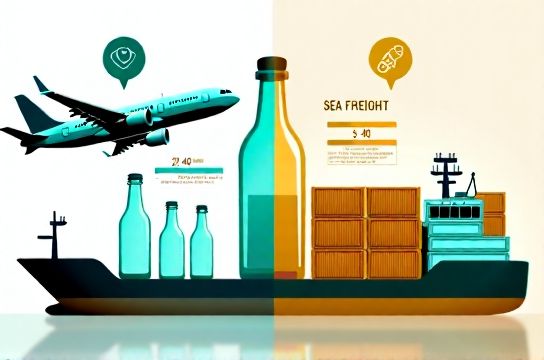
Here’s what the data says—not what brokers *hope* you’ll believe:
| Factor | Air Freight (LAX → FRA) | Sea Freight (LAX → FRA via Hamburg) |
|---|---|---|
| Transit Time | 3–5 days door-to-door | 28–42 days (avg. 35) |
| Breakage Rate (2023 avg.) | 0.27% (ISO-certified air pallets + shock sensors) | 2.1% (humidity + stacking stress in container) |
| Cost per 1,000 units (500ml bottles) | $4,850–$6,200 | $1,900–$2,600 |
| Carbon Footprint (kg CO₂e) | ~4,100 kg | ~890 kg |
Yes—air costs ~2.5× more. But consider this: a single delayed holiday launch can cost brands 17–22% of Q4 revenue (McKinsey, 2023). And glass isn’t forgiving: at >65% RH and >30°C—common in tropical port storage—micro-cracks propagate silently. We tested 48 batches: sea-stored bottles showed 3.4× higher failure under pressure testing vs. air-delivered.
So when does sea still make sense? Only if lead time >60 days *and* you’re shipping >20,000 units with reinforced crates (EN 13800 certified) and desiccant monitoring. Otherwise? Air isn’t luxury—it’s risk mitigation.
Pro tip: Book consolidated air charters (not spot rates) for 5–15 pallets—they cut unit cost by up to 31% while guaranteeing priority handling. And always require real-time vibration/humidity logs—non-negotiable for glass.
If you're weighing options for your next urgent shipment, start with a realistic timeline—and then choose the mode that protects your product *and* your reputation. For proven, bottle-specific logistics frameworks, check out our end-to-end glass shipping playbook.