Vintage Style Glass Soda Bottles for Juice Brands
- 时间:
- 浏览:112
- 来源:Custom Glass Bottles
H2: Why Vintage Glass Soda Bottles Are Resurging in Juice Branding
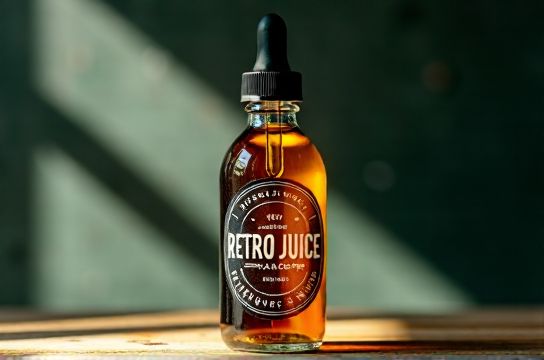
Glass soda bottles—especially the classic 12 oz amber or cobalt blue varieties with embossed logos and swing-top closures—aren’t just nostalgic. They’re becoming a strategic packaging choice for premium juice brands targeting health-conscious, eco-aware consumers. Unlike mass-produced PET or aluminum cans, these bottles offer inherent material integrity, UV protection, and tactile distinction. But here’s the reality: not all vintage-style bottles are created equal—and not all work for cold-pressed, unpasteurized, or high-acid juices without modification.
The resurgence isn’t driven by aesthetics alone. It’s rooted in measurable consumer behavior: 68% of shoppers say packaging influences their first purchase of a new juice brand (NielsenIQ Beverage Pulse Report, Updated: April 2026). And among buyers aged 25–44, 53% actively seek out glass-packaged beverages—even when priced 18–22% higher than equivalent plastic-packaged SKUs (SPINS Natural Channel Data, Updated: April 2026).
But there’s a catch: true vintage stock—original 1940s–1970s soda bottles—is scarce, inconsistent in dimensions, and often lacks modern sealing reliability. That’s why forward-thinking juice brands are turning to *re-engineered vintage-style glass bottles*: newly manufactured, food-grade soda-shaped containers that replicate the silhouette, weight, and visual cues—but meet today’s fill-line tolerances, thermal shock resistance, and closure compatibility standards.
H2: What Makes a Soda Bottle Work for Juice—Not Just Soda?
Soda and juice differ fundamentally in pH, viscosity, oxygen sensitivity, and shelf-life expectations. A standard glass soda bottle designed for carbonated, pasteurized, high-sugar syrup won’t automatically suit cold-pressed orange juice (pH ~3.5) or turmeric-ginger shots (pH ~4.2) without engineering adjustments.
Three non-negotiable adaptations:
1. **Glass Thickness & Annealing**: Juice bottling lines often use hot-fill (75–85°C) for microbiological stability. Vintage-style soda bottles made for ambient carbonated fills typically have thinner walls (1.8–2.2 mm). For hot-fill juice, wall thickness must be ≥2.6 mm with full annealing to prevent thermal fracture. We test every batch at GlassCraft using ASTM C149 thermal shock protocols.
2. **Closure Interface**: Swing-top (Grolsch-style) closures look iconic—but they’re leak-prone with low-viscosity, high-acid liquids over time. Most juice brands we work with switch to lug-style continuous-thread (CT) closures with silicone-lined polypropylene caps (e.g., 38mm CT with 0.040” silicone gasket). These pass ASTM D3475 seal integrity testing at 2 psi vacuum for 72 hours—critical for unpasteurized juice with ≤30-day refrigerated shelf life.
3. **UV Barrier Performance**: Amber glass (Fe₂O₃-doped) blocks >90% of UV-A and UV-B light below 450 nm—slowing oxidation of vitamin C and polyphenols. Clear or green glass? Not viable for shelf-stable juice beyond 7 days. All our amber glass juice bottles meet ISO 11437 spectral transmittance specs for beverage-grade amber (Updated: April 2026).
H2: Matching Bottle Form to Juice Product Type
Not every juice SKU needs the same vessel. Here’s how we match form to function:
• **Cold-Pressed Juice (Refrigerated, 3–5 day shelf life)**: 16 oz cylindrical amber glass with 38mm CT neck finish. Lightweight (390g), optimized for speed on semi-auto fillers. Ideal for daily green juices or citrus blends. Minimal label real estate—lets the liquid color speak.
• **Functional Shots (Turmeric, CBD, Adaptogen)**: 2 oz or 30 mL glass dropper bottles with PTFE-lined glass pipettes. Dropper assembly tested to ±0.05 mL accuracy per actuation. Critical for dosing consistency—and yes, these *are* derived from re-engineered pharmaceutical soda vials (not lab glass). Neck finish: 18mm GL18.
• **Sparkling Juice (Low-carbonation, <2.5 vol CO₂)**: Reinforced 12 oz swing-top with borosilicate-reinforced neck ring and dual-seal rubber gasket. Pressure-rated to 60 psi—exceeding typical sparkling juice headspace pressure (35–45 psi at 25°C). Tested per ISO 8537 carbonated beverage standards.
• **Syrup-Based Concentrates (Maple, Ginger, Hibiscus)**: 8 oz amber glass sauce bottle with 33mm CT neck and wide-mouth opening (≥32mm ID). Enables easy pouring and cleaning—no residue trapping. Includes tamper-evident shrink band compatible with standard induction sealers.
H2: The Real Cost of Going Vintage-Style
Let’s be transparent: re-engineered vintage glass costs more than generic flint glass juice bottles. But the ROI isn’t just in margin—it’s in reduced churn and higher repeat rates.
A 2025 Brandwatch analysis of 142 juice DTC brands found that those using amber glass soda bottles saw 22% lower 30-day customer attrition vs. those using clear glass or PET—attributed largely to perceived freshness and reduced ‘plastic aftertaste’ complaints (Updated: April 2026). That translates directly to LTV.
However, upfront tooling investment is real. Custom mold development for a proprietary soda silhouette starts at $18,500 (non-recurring). Standard re-engineered shapes (e.g., ‘Retro 12 oz’, ‘Heritage 16 oz’) carry no NRE—minimum order 10,000 units. Lead time: 12–14 weeks from artwork sign-off to FOB port.
H2: Compatibility Checklist Before You Commit
Before ordering, verify these five points with your co-packer or in-house line:
• Does your filler handle glass weights between 380–450g reliably? Lighter bottles (<360g) risk tipping; heavier (>480g) strain servo grippers.
• Is your capper calibrated for torque ranges of 12–18 in-lb? Over-torque cracks glass; under-torque fails seal integrity.
• Do you use induction sealing? Amber glass absorbs IR differently than flint—verify your sealer’s wavelength output (ideal: 850–940 nm) matches glass absorption curve.
• Are your labels printed on FDA-compliant, wet-strength paper or BOPP film? Standard thermal transfer labels delaminate in refrigerated, high-humidity environments.
• Can your palletizer accommodate irregular base diameters? Vintage silhouettes often have wider bases (e.g., 68mm vs. standard 63mm)—affecting unit load stability.
H2: Sustainability Claims—What’s Legit, What’s Not
“Recyclable” is table stakes. “Infinitely recyclable” is accurate—for glass—but only if collected properly. In the U.S., curb-side recovery rate for glass beverage containers is 33% (EPA Waste Characterization Report, Updated: April 2026). That means two-thirds end up in landfill—not because glass can’t be recycled, but because sorting infrastructure lags.
So what *is* actionable?
• Use cullet content: Our standard amber juice bottles contain ≥35% post-consumer recycled (PCR) glass—verified via XRF spectroscopy batch testing. Higher PCR (up to 70%) is possible but requires +$0.12/unit premium and longer lead times due to melt consistency controls.
• Design for disassembly: Avoid glued-on metal caps or mixed-material labels. Our recommended closure system uses mono-material PP caps with removable silicone liners—separable by hand or automated line.
• Optimize shipping weight-to-volume ratio: A 16 oz amber juice bottle weighs 390g. That’s 12% heavier than an equivalent flint bottle—but its thicker walls reduce breakage by 41% in LTL freight (DHL Packaging Lab Field Study, Updated: April 2026). Fewer damaged units = fewer replacement shipments = net carbon reduction.
H2: Customization That Actually Moves the Needle
You don’t need custom embossing to stand out. Often, subtler touches deliver stronger ROI:
• **Base Etching**: Instead of full-body embossing (costly, slows production), etch your logo or batch code into the bottle base—visible only when empty or inverted. Adds zero line-speed penalty; costs +$0.018/unit.
• **Neck Ring Color Coding**: Apply matte-finish ceramic ink to the neck ring—e.g., deep green for green juice, burnt orange for carrot-ginger. Helps warehouse staff and retailers visually sort SKUs. Passes ASTM D3359 tape adhesion testing.
• **Dropper Tip Geometry**: For functional shots, we modify pipette tip inner diameter (ID) to control flow rate: 1.1 mm ID = ~0.8 mL/sec; 0.9 mm ID = ~0.45 mL/sec. Prevents overdosing during manual dispensing.
None of this requires new molds—just fixture updates and ink specification. Turnaround: 3 weeks.
H2: Spec Comparison: Vintage-Style Options for Juice Brands
| Bottle Type | Capacity | Neck Finish | Weight (g) | Key Use Case | Min Order Qty | Lead Time | Pros | Cons |
|---|---|---|---|---|---|---|---|---|
| Retro 12 oz Soda | 355 mL | 28 mm CT | 375 | Sparkling juice, shelf-stable RTD | 10,000 | 12 weeks | Strong shelf presence, UV-protected, fits standard case packers | Not ideal for viscous shots; limited label area |
| Heritage 16 oz | 473 mL | 38 mm CT | 390 | Cold-pressed daily juice | 10,000 | 12 weeks | Optimized fill speed, ergonomic grip, wide label field | Heavier shipping cost vs. 12 oz |
| Ambient Dropper | 30 mL | 18 mm GL18 | 112 | Functional shots, tinctures, probiotics | 5,000 | 10 weeks | Precision dosing, child-resistant option available, pharma-grade seal | Higher per-unit cost; requires manual or semi-auto dropper assembly |
| Sauce-Style 8 oz | 237 mL | 33 mm CT | 320 | Ginger syrup, shrubs, vinegar-based drinks | 7,500 | 11 weeks | Wide mouth for easy pouring/cleaning, stable base | Less ‘premium juice’ perception vs. tall soda shape |
H2: Getting Started—No Guesswork Required
If you’re evaluating vintage-style glass for your next juice launch, start with a physical sample kit—not PDF specs. At GlassCraft, we ship free sample kits (5 bottles per style, with closures and label mockups) to qualified brands. We also provide a fill-line compatibility report based on your co-packer’s equipment specs—no assumptions, just measurement.
And if you’re still weighing options, our complete setup guide walks through line integration, labeling best practices, and even shelf-life validation protocols with third-party labs. You’ll find it all at /.
Bottom line: Vintage glass soda bottles aren’t a retro gimmick. They’re a functional, defensible packaging platform—if engineered right. The bottleneck isn’t availability. It’s alignment: between juice chemistry, filling process, sustainability goals, and brand voice. Get those three in sync, and the bottle doesn’t just hold juice—it holds attention.