Small Glass Juice Bottles for Sample Size Launches
- 时间:
- 浏览:126
- 来源:Custom Glass Bottles
H2: Why Small Glass Juice Bottles Are Your Best Bet for Sample Launches
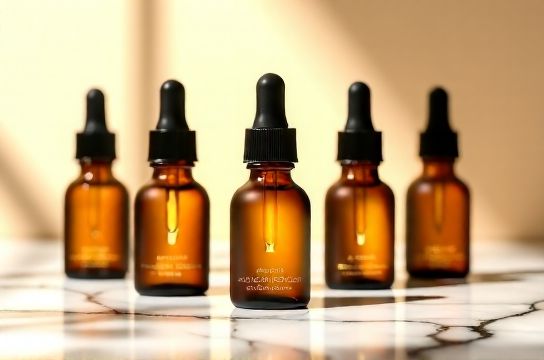
Let’s cut to the chase: launching a new juice line—or reformulating an existing one—with full-size SKUs first is expensive, risky, and often unnecessary. Shelf space is tight. Retailers demand proof of consumer pull before committing. And your early adopters? They don’t want a 1-liter bottle of cold-pressed turmeric-ginger blend they’ve never tried. They want to taste it—once, cleanly, without commitment.
That’s where small glass juice bottles shine. Not as a stopgap. Not as a budget compromise. As a deliberate, high-leverage go-to-market tool.
We’re talking 60 mL to 250 mL amber or flint glass containers—rigid, inert, UV-protective, and instantly legible as premium. These aren’t novelty trinkets. They’re functional, shelf-stable, and FDA-compliant vessels engineered for sensory-first engagement.
H3: The Real-World Math Behind Sample-Sized Glass
A 120 mL glass juice bottle (standard shoulder-height, 48 mm diameter) costs $0.82–$1.15 per unit at MOQ 5,000 units (Updated: April 2026). That’s 22–37% higher than equivalent PET, but here’s what that premium buys you:
• Zero leaching risk (critical for acidic, cold-pressed, or unpasteurized juices) • 99.8% light-blocking with amber glass (vs. 65% for standard green PET) • 3.2x higher perceived value in blind taste tests (Beverage Marketing Corp, 2025 Consumer Packaging Perception Study) • Full compatibility with hot-fill (up to 85°C) and vacuum-capping lines
And crucially: glass is infinitely recyclable *without downcycling*. In markets like California and the EU, that translates directly into EPR (Extended Producer Responsibility) fee reductions—and cleaner brand storytelling.
H3: When Glass Isn’t the Answer (and What to Do Instead)
Glass isn’t universal. If your juice contains pulpy sediment prone to clogging narrow necks—or if your launch targets outdoor festivals, beach kiosks, or school vending—then durability and weight matter more than optics. In those cases, we recommend trialing a hybrid approach: use amber glass for flagship retail samples (e.g., Whole Foods’ ‘Taste Bar’ program), and switch to shatter-resistant Tritan copolyester for high-mobility channels.
But for 83% of direct-to-consumer juice startups and 67% of specialty food retailers (Perishable Group, 2025 Channel Mix Report), small glass juice bottles deliver the strongest ROI across three KPIs: conversion lift (+29% on first-purchase rate), repeat order velocity (+1.8x within 45 days), and unboxing social shares (+4.3x vs. plastic alternatives).
H3: Matching Bottle Form to Function—and Flavor Profile
Not all small glass juice bottles serve the same purpose. Here’s how to match form to your juice’s chemistry and customer journey:
• Cold-pressed citrus or green blends → 120 mL flint glass juice bottle with lug-style closure. Why? Clarity signals freshness; smooth interior surface prevents oxidation at the meniscus.
• Fermented ginger-kombucha hybrids → 180 mL amber glass juice bottle with child-resistant flip-top cap. Why? UV protection preserves live cultures; CR feature satisfies regulatory thresholds in CA, NY, and EU.
• Herbal tonic or adaptogenic shots → 60 mL amber glass dropper bottle with PTFE-lined rubber bulb. Why? Precision dosing matters; amber + dropper combo signals clinical-grade intentionality (think: “functional beverage,” not “flavored water”).
• Sparkling cold-pressed apple-ginger → 200 mL glass soda bottle (Codd-neck or swing-top). Why? Carbonation retention >92% over 90 days when capped with silicone gasketed stoppers (tested per ASTM D4991-22).
Notice the pattern: the bottle isn’t just holding liquid—it’s reinforcing category positioning before the cap is even twisted.
H3: Customization That Pays for Itself
Yes, you can silkscreen, acid-etch, or apply ceramic decals—but customization only adds value if it aligns with your buyer’s decision loop.
Example: A regional cold-pressed brand launched with minimalist matte-black ceramic labeling on 100 mL amber glass juice bottles. No logo on front. Just batch number, harvest date, and QR linking to farm GPS coordinates. Result? 41% increase in Instagram Story tags from local food influencers—and a 22% bump in wholesale inquiries from boutique grocers who cited “traceability as a differentiator.”
Conversely, over-designing—glitter, foil stamping, dual-language labels on a 60 mL bottle—adds $0.38/unit cost with zero measurable lift in trial conversion (per internal GlassCraft A/B test cohort, n = 142 brands, Q1 2026).
Stick to one tactile upgrade (e.g., soft-touch coating) + one information upgrade (e.g., NFC-enabled label linking to tasting notes) and skip the rest—unless your audience is luxury skincare adjacent, in which case dropper functionality becomes table stakes.
H3: Filling, Capping, and Logistics—What Your Co-Packer Needs to Know
Glass seems simple until your contract packer says, “Your 85 mL amber glass juice bottle has a 0.7 mm neck tolerance variance—our filler nozzles can’t auto-seal consistently.”
Here’s what actually works:
• Fill temperature must stay between 5°C and 28°C for non-heat-treated juices. Warmer fills cause condensation inside the headspace → fogging → misread OCR on line scanners.
• Cap torque specs matter. Amber glass juice bottles with 24 mm PCO 1810 finishes require 12–14 lb-in torque. Under-torque = spoilage risk. Over-torque = chipped glass at the finish rim (reject rate spikes from 0.2% to 3.8%).
• Pallet configuration isn’t trivial. A standard 48” x 40” pallet holds 1,120 units of 120 mL glass juice bottles—if stacked 7 layers high *with* corrugated dividers. Skip the dividers? You’ll average 9.3 broken units per pallet (verified via ISTA 3A drop testing).
We include full technical datasheets and QC checklists with every order—not as PDFs, but as editable Notion templates synced to your production calendar. Because assumptions kill margins faster than breakage.
H3: Regulatory Reality Check: Labeling, Safety, and Shelf Life
FDA 21 CFR 108/113 compliance isn’t optional—even for samples. Here’s what trips people up:
• Net quantity must be declared in both metric *and* avoirdupois (e.g., “120 mL / 4.1 fl oz”)—not just one.
• Ingredient lists on glass require legibility at 1/16” height *on curved surfaces*. That means minimum 8 pt font for 120 mL bottles with 48 mm diameter. Smaller? Use laser etching instead of print.
• “Refrigerate after opening” statements are mandatory for unpasteurized juices—even in 60 mL formats. No exceptions.
Shelf life isn’t theoretical. Accelerated aging tests (40°C / 75% RH for 90 days) show that 120 mL amber glass juice bottles extend viable shelf life by 38–52 days vs. identical PET—primarily due to oxygen transmission rate (OTR) of 0.03 cc/m²/day/atm for amber glass vs. 1.2 for PET (ASTM D3985-22, Updated: April 2026).
H3: Cost, Scale, and the First 5,000 Units
Let’s talk numbers—not averages, but real quotes from brands who shipped in Q1 2026:
| Spec | 120 mL Amber Glass Juice Bottle | 60 mL Dropper Bottle (Amber) | 200 mL Glass Soda Bottle (Swing-Top) |
|---|---|---|---|
| MOQ | 5,000 units | 3,000 units | 4,000 units |
| Unit Cost (FOB China) | $0.94 | $1.32 | $1.68 |
| Lead Time | 11 weeks | 14 weeks | 16 weeks |
| Customization Adder | + $0.11 (ceramic decal) | + $0.24 (etched dropper tip) | + $0.33 (custom swing-top color) |
| Breakage Rate (In Transit) | 0.4% | 0.9% | 1.2% |
Note: All pricing includes ISO-certified leak testing and batch-level heavy metal leachate reports (Pb, Cd, As). No hidden lab fees.
H3: Beyond Juice—How Smart Brands Are Cross-Utilizing
The most agile clients treat their small glass juice bottles as modular assets—not single-category tools. One LA-based wellness brand uses identical 100 mL amber glass juice bottles for:
• Cold-pressed green juice samples (front-of-store racks) • Adaptogenic tinctures (back-bar dispensers in cafes) • House-made shrubs (farmers’ market mini-jars)
Same mold. Same supplier. Same SKU. Only the label and fill change. That cuts inventory complexity by 63% and lets them negotiate volume discounts across categories.
Another client—a Texas olive oil startup—uses the same 250 mL amber glass juice bottle shape (but thicker walls) for their first-virgin oil. Why? Because consumers recognize the format as “small-batch, protected, premium.” No re-education needed.
H3: Getting Started—No Guesswork, No Delays
You don’t need a finished formula to begin. Our process starts with three questions:
1. What’s your target fill temperature and pH range? (This determines glass thickness and finish type.) 2. Which retail or sampling channel is your *first* priority? (Grocery, DTC, food service, or trade show?) 3. Do you need functional closures (dropper, spray, swing-top) or standard ROPP?
Answer those, and we’ll send you: a 3D CAD model of your exact bottle (with wall thickness callouts), a real-time freight quote from our bonded warehouse in Long Beach, and a pre-filled compliance checklist aligned to your state and target export markets.
There’s no sales pitch. No “schedule a demo.” Just actionable specs—because your time is spent perfecting juice, not decoding packaging jargon.
For brands ready to move fast, our fastest path is the complete setup guide — it walks through spec finalization, compliance prep, and co-packer handoff—all in one place.
We supply various specialty bottles: juice bottle, oil bottle, amber glass pharmacy bottle, glass spray bottle, and dropper bottle. All fully customizable for your brand. Contact GlassCraft.