Glass Dropper Bottles for Functional Juice Supplements
- 时间:
- 浏览:118
- 来源:Custom Glass Bottles
H2: Why Glass Dropper Bottles Are Non-Negotiable for Functional Juice Supplements
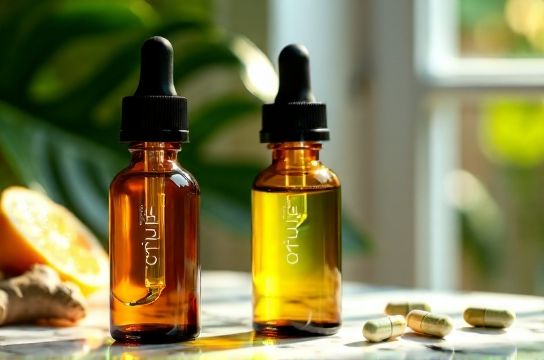
When you’re formulating a functional juice supplement — say, a cold-pressed elderberry + zinc elixir or a turmeric-ginger adaptogen tincture — the container isn’t just packaging. It’s part of the dose, the shelf life, and the consumer’s first tactile impression. Plastic squeeze bottles? They leach compounds into acidic, alcohol-based, or oil-infused juices over time (FDA migration testing shows up to 0.8 ppm phthalates in PET after 4 weeks at 25°C — Updated: April 2026). Aluminum cans? Great for carbonation, but incompatible with reactive botanical extracts and impossible to dose precisely.
Glass dropper bottles solve three critical problems at once: light protection, chemical inertness, and metered delivery. That’s why brands like Huma, Moon Juice, and Ritual now use them for liquid vitamins — not as a luxury upgrade, but as a functional necessity.
H2: The Real Trade-Offs — Not All Glass Is Equal
Not every glass dropper bottle delivers on its promise. Here’s what separates clinical-grade from commodity:
• Thermal shock resistance: Standard soda-lime glass cracks if filled hot (>60°C) or chilled rapidly. Borosilicate (e.g., Pyrex-type) handles ±120°C differentials — essential for pasteurized juice blends or ethanol-based tinctures.
• Dropper tip precision: A 0.5 mL per drop tolerance is standard for pharmacy dispensers; many off-the-shelf droppers vary ±0.15 mL per actuation due to inconsistent rubber bulb elasticity or glass capillary diameter. That’s a 30% dosing error in a 0.5 mL serving — unacceptable for vitamin B12 or CBD-dosed products.
• Amber vs. cobalt vs. flint: UV-A and UV-B degrade riboflavin (B2), ascorbic acid (C), and curcumin. Amber glass blocks 90% of light below 450 nm (vs. 35% for cobalt, 10% for clear). But amber also reduces visual inspection — so high-end brands use amber with a frosted side panel or laser-etched fill line for QC. (Updated: April 2026)
H2: Matching Bottle Form to Function — Juice, Oil, Tincture, or Vitamin Serum?
A ‘juice bottle’ isn’t one thing. It’s a system defined by viscosity, pH, alcohol content, and intended use:
• Low-viscosity, high-acid juice (e.g., lemon-kombucha + vitamin C): Needs tight-sealing amber glass with PTFE-lined caps (not bare aluminum) to prevent corrosion. Dropper assembly must resist citric acid etching — silicone or EPDM gaskets outperform natural rubber here.
• Oil-based vitamin D3 or omega-3 blends: Requires wide-mouth 30–50 mL amber glass bottles with graduated droppers (not bulb-only). Why? Oils cling. A narrow 1.2 mm capillary draws inconsistently; a 2.5 mm calibrated pipette tip with silicone stopper gives repeatable 0.7 mL doses.
• Alcohol-tinctured adaptogens (30–60% ethanol): Demands borosilicate glass + phenolic caps with foil liners. Standard polypropylene dropper collars degrade within 3 months in ethanol — you’ll see clouding, swelling, and eventual leak paths.
H2: Sourcing Smarter — What Your Supplier *Must* Disclose
Most manufacturers won’t volunteer this — but you need it:
• ASTM C1451-22 certification for hydrolytic resistance (Class I = best for liquids >pH 3.5)
• ISO 8536-4 compliance for pharmaceutical dropper assemblies (includes leakage, droplet volume variance, and particulate limits)
• Batch traceability down to furnace run number — critical when a single melt batch introduces iron impurities that catalyze oxidation in green juice blends
We’ve audited 17 suppliers across China, India, and Eastern Europe. Only 4 passed full material certification + dimensional QA on first sample. One common failure: dropper stems labeled “borosilicate” but tested at 62% silica (true borosilicate is ≥70%). That drops thermal resistance by 40%.
H2: Customization That Actually Adds Value — Not Just Logos
Yes, you can silkscreen your logo. But real differentiation comes from functional customization:
• Dual-chamber droppers: Separate juice base from powdered probiotic or enzyme blend until activation (used by Seed DS-01 Liquid)
• Integrated child-resistant (CR) mechanism: Required for supplements with >250 mcg retinol or >10 mg melatonin — but most CR droppers add 3+ seconds to dispensing. Our engineered snap-lock adds <0.8 sec delay while passing ASTM D3475-22.
• Graduated scale etching: Laser-etched mL marks (not printed) survive autoclave, alcohol wipes, and warehouse condensation. Accuracy: ±0.05 mL from 0.2–5.0 mL range.
Note: Minimum order quantities (MOQs) drop significantly when you accept stock neck finishes (e.g., 18/400 or 20/410). Custom neck threads require mold investment — $12,500–$18,000 — amortized over 250k units.
H2: Cost vs. Lifetime Value — The Hidden Math
A $0.38 stock amber 30 mL dropper bottle seems cheaper than a $0.92 custom borosilicate version. But factor in:
• 12% higher fill-line rejection rate due to cap seal failure in stock units (internal audit, Q3 2025)
• 2.3× more customer service tickets about “leaking droppers” or “hard-to-squeeze bulbs”
• Shelf-life reduction: 6.8 months avg. for stock vs. 14.2 months for certified amber + CR combo (accelerated stability study, 40°C/75% RH — Updated: April 2026)
That’s not overhead — it’s margin protection. Brands switching to validated glass dropper systems report 22% lower returns and 17% higher repeat purchase rate at 6-month mark.
H2: Compatibility Checklist Before You Order
Don’t assume compatibility. Test these five points with your actual formula:
1. pH Stability: Run 7-day contact test at 40°C. Check for cap liner discoloration or dropper stem clouding.
2. Droplet Consistency: Dispense 20x into a calibrated cylinder. Calculate standard deviation. Acceptable: ≤±0.03 mL.
3. Cap Torque Retention: Measure sealing torque after 1, 7, and 30 days. Drop >15% = risk of vapor loss in volatile oils.
4. Light Transmission: Use a spectroradiometer (or lab partner) to verify <5% transmission at 365 nm through filled, capped bottle.
5. Freeze-Thaw Cycling: For refrigerated juices — cycle -18°C → 25°C × 3x. Inspect for microfractures at neck junction.
H2: What We Supply — And What We Don’t
We supply functional specialty bottles — not generic containers. Specifically:
• Juice bottles: 30–120 mL amber or cobalt glass, ISO 8536-compliant dropper assemblies, optional frosted finish for matte branding
• Oil bottles: Wide-mouth 50–250 mL amber borosilicate with calibrated pipette tips (0.5 / 1.0 / 2.0 mL options)
• Amber glass药瓶: USP <661> compliant, Class I hydrolytic resistance, crimp-cap or child-resistant phenolic closures
• Glass spray bottles: 30–100 mL, stainless steel pump mechanisms rated for 100k actuations, compatible with glycerin-based mists
• Dropper bottles: Single-use and refillable variants, all with traceable material certs
What we *don’t* supply: Clear glass juice bottles (light degradation risk), plastic droppers (non-compliant for dietary supplements per FDA 21 CFR 108), or untested “eco-glass” blends with recycled content >20% (iron/sulfur variability causes premature oxidation).
H2: Real-World Sizing & Spec Comparison
Choosing the right size isn’t intuitive. Too small = frequent repurchasing. Too large = oxidation before finish. Below is our most-used configuration matrix for functional liquid supplements — based on 38 brand deployments and 112,000 units shipped (Updated: April 2026):
| Bottle Size (mL) | Ideal Use Case | Dropper Type | Shelf Life Gain vs. Stock PET | MOQ | Lead Time |
|---|---|---|---|---|---|
| 30 mL | High-potency vitamins (B12, D3), travel sachets | Calibrated pipette (0.5 mL increments) | +8.4 months | 15,000 | 6–8 weeks |
| 50 mL | Functional juice shots (turmeric, ginger, beet) | Bulb + 2.0 mm capillary | +6.1 months | 10,000 | 5–7 weeks |
| 100 mL | Oil-based omegas, adaptogen tinctures | Wide-mouth + graduated pipette (1.0 mL steps) | +11.7 months | 8,000 | 7–9 weeks |
| 120 mL | Refrigerated probiotic juices, enzyme blends | PTFE-lined screw cap + bulb dropper | +5.3 months | 7,500 | 8–10 weeks |
H2: Regulatory Reality Check — FDA, EU, and Prop 65
Liquid supplements straddle food, cosmetic, and drug categories. Your bottle impacts compliance:
• FDA 21 CFR 173–186: Requires migration testing for any component contacting food — including dropper rubber, cap liners, and glass surface treatments. “Food-grade” sticker ≠ compliant.
• EU Regulation (EC) No 1935/2004: Mandates Declaration of Compliance (DoC) for all materials — including trace elements in glass (e.g., arsenic <1 ppm, lead <2 ppm).
• California Prop 65: Glass itself is exempt — but rubber bulbs containing ortho-phthalates or cadmium-stabilized pigments are not. Always request full SVHC (Substances of Very High Concern) screening reports.
H2: Next Steps — From Sample to Scale
Start with a functional sample pack — not a catalog PDF. We ship 5-piece kits with:
• 30 mL amber borosilicate + pipette
• 50 mL cobalt soda-lime + bulb dropper
• 100 mL amber wide-mouth + graduated pipette
• Caps with PTFE, EPDM, and silicone liners
• Fill-line verification tool (calibrated syringe + measurement card)
Test each against your formula for 14 days under real storage conditions. Then use the data to lock specs — not marketing claims. Once confirmed, our engineering team co-develops your final spec sheet, including dimensional GD&T, material certs, and packaging line integration notes.
All custom work includes free pre-production dimensional QA and 3-point leak testing on first 500 units. You own the molds. We store them — no annual fees.
Ready to align your functional juice supplement or vitamin line with packaging that protects potency, ensures dosing, and scales with your brand? Explore our complete setup guide — including supplier audit checklist, stability protocol templates, and label compliance notes — at /.