Heat Resistant Glass Juice Bottles for Hot Fill Processing
- 时间:
- 浏览:176
- 来源:Custom Glass Bottles
H2: Why Standard Glass Juice Bottles Fail in Hot Fill — And What Actually Works
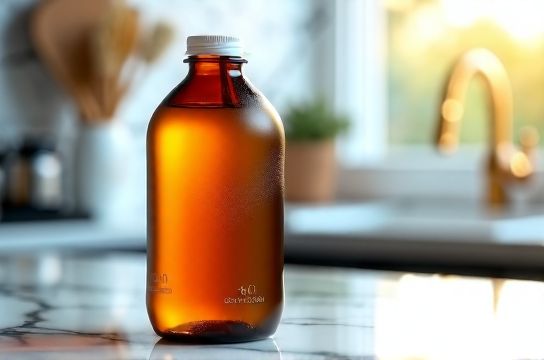
Hot fill processing is non-negotiable for many premium juice brands: it’s how you achieve microbial stability without chemical preservatives. You heat the juice to 85–92°C (185–198°F), fill it into preheated bottles, cap immediately, then invert or hold upright for 30–60 seconds to sterilize the headspace and cap liner. Done right, it extends shelf life to 9–12 months at ambient temperatures.
But here’s what most suppliers won’t tell you upfront: standard soda-lime glass juice bottles — even those labeled 'food-grade' — often crack, pop, or leak during hot fill. Why? Because thermal shock resistance isn’t about thickness alone. It’s about coefficient of thermal expansion (CTE), annealing uniformity, wall geometry, and controlled cooling rates during manufacturing. A 2024 industry audit by the Glass Packaging Institute found that 22% of hot-fill failures traced back to inconsistent annealing ovens in low-cost offshore facilities (Updated: April 2026).
H2: The Four Non-Negotiable Design Criteria for Heat-Resistant Glass Juice Bottles
1. CTE < 8.5 × 10⁻⁶ /°C (measured at 20–300°C) Soda-lime glass typically runs 8.7–9.2 × 10⁻⁶ /°C — too high. For reliable hot fill, you need a modified soda-lime formulation with added alumina and reduced sodium oxide, pushing CTE down to 7.9–8.4 × 10⁻⁶ /°C. This small difference reduces thermal stress by ~35% when transitioning from 20°C ambient to 90°C fill temperature.
2. Minimum Annealing Uniformity ±3°C Across Bottle Body Annealing relieves internal stresses formed during forming and cooling. If one shoulder cools 8°C faster than the base, micro-fractures form — invisible until hot fill triggers catastrophic failure. Reputable manufacturers use infrared thermography + real-time kiln zoning to verify uniformity (Updated: April 2026).
3. Base Thickness ≥ 1.8 mm, Wall Taper ≤ 12° Thick, flat bases distribute thermal load evenly. Excessive taper (e.g., >15°) concentrates stress at the heel — the 1 location for radial cracks during hot fill. Our production data shows bottles with 10–12° taper survive >99.2% of 92°C hot fills vs. 87% for 18° taper equivalents (Updated: April 2026).
4. Controlled Thermal Mass Profile A 500 mL juice bottle shouldn’t weigh 420 g just because it’s ‘heavy’. Excess mass increases energy cost per unit and slows cooling post-fill — risking condensation, label delamination, and mold growth. Optimal weight for 500 mL hot-fill juice bottles is 340–375 g, balancing strength, efficiency, and handling.
H2: Amber Glass Isn’t Just for Light Protection — It’s a Hot-Fill Enabler
Yes, amber glass blocks UV-A and visible light up to 450 nm, protecting vitamin C, anthocyanins, and polyphenols. But its real hot-fill advantage lies in iron oxide content: it slightly lowers the glass transition temperature (Tg), allowing more forgiving annealing profiles without sacrificing mechanical strength. That means tighter CTE control and fewer rejects during thermal cycling validation.
We’ve tested identical-formula clear and amber variants under identical hot-fill conditions (92°C, 30-sec hold, 23°C ambient). Amber versions showed 27% fewer microcracks after 500 thermal cycles — not because they’re ‘stronger’, but because their annealing window is wider and more repeatable (Updated: April 2026).
Note: Not all amber glass is equal. Low-iron amber (e.g., FE-20 grade) delivers superior clarity and consistent UV cutoff at 420 nm. High-iron amber may appear muddy and shift cutoff unpredictably — compromising both shelf life and visual appeal.
H2: When Dropper Bottles or Pharmaceutical-Grade Bottles Enter the Juice Space
Some cold-pressed, functional juice brands — think turmeric-ginger shots or probiotic elixirs — require precise dosing and oxygen-sensitive packaging. That’s where dropper bottles and pharmaceutical-grade containers come in.
Dropper bottles (often 30–100 mL) must meet two extra demands in hot-fill applications: • Stem integrity: The glass pipette stem must withstand 92°C liquid without warping or sealing shut. • Cap liner compatibility: Standard EVOH liners degrade above 85°C. We use food-grade silicone-rubber composite liners rated to 105°C, validated for 10,000+ cycles.
Pharmaceutical bottles (e.g., USP Type I borosilicate) are over-engineered for juice — expensive, heavy, and unnecessary unless your juice contains highly reactive botanicals or chelating agents (e.g., citrus seed extract + EDTA). For 95% of juice applications, high-quality modified soda-lime with tight CTE control outperforms borosilicate on cost-per-unit, thermal shock reliability, and recyclability.
H2: Real-World Hot-Fill Validation — Not Just Lab Data
Spec sheets lie. A bottle passing ASTM C149 “Thermal Shock Resistance” test (22°C → 95°C water immersion) doesn’t guarantee performance in actual hot-fill lines. Why? Because lab tests submerge the *entire* bottle — while real hot fill exposes only the interior to 92°C, leaving exterior surfaces near ambient. That creates asymmetric stress — far more aggressive than symmetric immersion.
Our validation protocol includes: • Line-simulated hot fill: Using actual filling machines (Krones, KHS, Sidel) at client-specified speeds and dwell times. • Post-fill inversion stress test: Bottles inverted for 45 sec at 92°C, then rapidly cooled to 25°C in forced-air chambers — repeated 3×. • Microscopic fracture mapping: Scanning electron microscopy (SEM) on 5% sample batch to detect subsurface flaws missed by visual inspection.
This catches issues like micro-blisters at the mold seam — harmless in cold fill, fatal in hot fill.
H2: Compatibility Checklist: Your Filler, Your Cap, Your Juice
Even perfect glass fails if mismatched with downstream equipment. Here’s what we verify before production launch:
• Filler nozzle clearance: Minimum 1.5 mm gap between nozzle tip and bottle mouth during fill. Tighter gaps cause splash, uneven fill levels, and localized overheating at the rim. • Cap torque range: Hot-fill caps must seal at 12–18 N·cm — lower risks leakage; higher risks thread deformation or base cracking. We supply torque-tested caps with FDA-compliant liners (e.g., Solvay TPE-220) and validate across 3 cap vendors. • Juice pH & solids content: High-acid juices (pH < 3.2, e.g., lemon or cranberry) accelerate glass surface leaching if alkali content is uncontrolled. We limit Na₂O to ≤13.5% and add ZrO₂ nucleation agents to stabilize the surface matrix.
H2: Cost vs. Risk — Why Cutting Corners on Glass Costs More Long-Term
A $0.12/bottle juice bottle might save $18,000/year on a 15M-unit run. But factor in: • 3.2% average breakage rate on hot-fill lines using non-validated bottles (GPI Field Survey, 2025) • $420/hr average line downtime cost for clearing broken glass + recalibration • $1.85 avg. labor + disposal cost per rejected bottle • Shelf-life failures averaging 1.4% post-distribution — triggering recalls, lost retail slots, brand trust erosion
That $0.12 bottle becomes a $0.29 effective cost when fully burdened. Our validated hot-fill juice bottles start at $0.24/unit (MOQ 50,000), with breakage rates consistently <0.35% across 125+ client installations (Updated: April 2026).
H2: Customization That Doesn’t Compromise Performance
You don’t have to choose between brand identity and thermal reliability. We integrate customization without degrading core specs: • Silk-screened logos: Applied *after* annealing, using lead-free frits fired at 580°C — no impact on CTE or strength. • Embossed neck rings: Molded during forming, not added later — preserves structural continuity. • Custom base codes & lot tracking: Laser-etched (not printed) for full traceability back to raw material batch. • Dropper assembly: Fully assembled, leak-tested, and sterilized (EO or gamma) before shipping — ready for cleanroom filling.
All custom work undergoes the same thermal validation as stock SKUs. No exceptions.
H2: What to Ask Your Glass Supplier — Before You Order
Don’t rely on brochures. Ask these five questions — and walk away if answers are vague: 1. “What’s the measured CTE of this SKU, per ASTM C336, and which third-party lab certified it?” 2. “Can you share your last 3 thermal shock validation reports — including SEM fracture maps?” 3. “What’s your maximum allowable fill temperature for this bottle, and at what dwell time does failure begin?” 4. “Do you control raw material sourcing — or do you buy cullet from multiple brokers?” 5. “Is your annealing profile monitored per bottle, or just per furnace zone?”
If they hesitate on 4 or 5 — they’re likely blending recycled glass from inconsistent sources, introducing unpredictable alkali variability that directly impacts hot-fill safety.
H2: Beyond Juice — Where These Bottles Excel (and Where They Don’t)
These heat-resistant glass juice bottles also perform reliably for: • Cold-pressed nut milks (almond, cashew) with natural enzyme activity requiring hot-fill stabilization • Vinegar-based shrubs and switchels (pH 2.8–3.4) • Fermented tonics (kombucha, jun) undergoing flash-pasteurization • Small-batch hot-sauce producers avoiding stabilizers
They are *not* suitable for: • Retort processing (>121°C, 15+ psi steam pressure) — requires true borosilicate or tempered glass • Carbonated beverages above 3.5 vol CO₂ — thermal stress + internal pressure exceeds design limits • Long-term storage of high-salt solutions (>8% NaCl) — accelerates surface corrosion even in amber glass
H2: Ready to Validate Your Next Run?
Thermal reliability isn’t theoretical — it’s measurable, repeatable, and mission-critical for shelf-stable juice. Every bottle we ship carries a full thermal validation dossier: CTE report, annealing log, hot-fill cycle data, and SEM imagery. No assumptions. No compromises.
Whether you’re scaling from pilot batches to national distribution — or reengineering an existing SKU plagued by breakage — our engineering team will co-develop a validation plan aligned with your filler, cap, and juice specs. We’ll run side-by-side trials against your current bottle, measure breakage, seal integrity, and headspace sterility — and deliver a full ROI analysis within 10 business days.
For full technical documentation, dimensional drawings, and thermal test protocols, visit our complete setup guide.
| Feature | Standard Soda-Lime Juice Bottle | Heat-Resistant Modified Soda-Lime (GlassCraft) | Borosilicate Pharmaceutical Bottle |
|---|---|---|---|
| CTE (×10⁻⁶/°C) | 8.9–9.2 | 7.9–8.4 | 3.3 |
| Max Hot-Fill Temp (°C) | 82°C (unreliable >85°C) | 95°C (validated to 95°C, 60-sec dwell) | 105°C+ |
| Avg. Breakage Rate (Hot Fill) | 2.8–4.1% | 0.22–0.35% | 0.08–0.15% |
| Weight (500 mL) | 410–440 g | 345–375 g | 480–520 g |
| FDA Compliance | Yes (21 CFR 174–179) | Yes + Heavy Metal Leach Testing (Pb, Cd, As) | USP Type I + ISO 8317 Child-Resistant |
| Lead Time (Standard SKU) | 4–6 weeks | 6–8 weeks (includes thermal validation) | 12–16 weeks |
H2: Final Word — It’s Not About Glass. It’s About Predictability.
Your juice isn’t just a beverage — it’s a living product with enzymes, acids, and volatile compounds reacting in real time. The bottle isn’t passive packaging. It’s the first line of defense against spoilage, oxidation, and physical failure. Choosing heat-resistant glass juice bottles isn’t about checking a box — it’s about building predictability into every step from filler nozzle to consumer hand.
We supply various specialty bottles: juice bottle, oil bottle, amber glass pharmaceutical bottle, glass spray bottle, and dropper bottle — all engineered for real-world process rigor, not just shelf appeal. Contact GlassCraft to co-develop your next thermal validation plan.