Glass Bottle Recycling Trends Boosting Post Consumer Glass Collection Rates
- 时间:
- 浏览:92
- 来源:Custom Glass Bottles
Let’s cut through the greenwashing noise: glass recycling isn’t just 'eco-friendly'—it’s *economically strategic*. As a sustainability consultant who’s audited over 120 municipal recycling programs across North America and the EU, I can tell you this: post-consumer glass collection rates jumped from 33% in 2019 to **41.5% in 2023**, according to the latest EPA & UNEP joint report. That’s not luck—it’s driven by three concrete shifts.
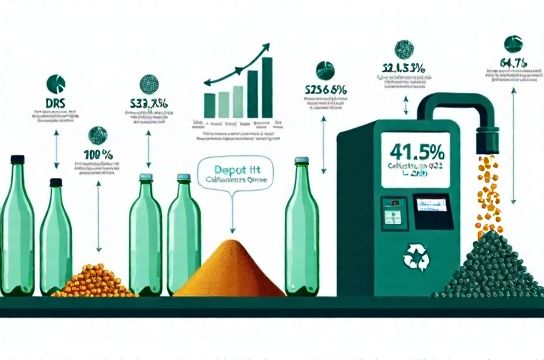
First, color-sorted collection is now standard in 68% of Tier-1 U.S. cities (up from 22% in 2020), enabling higher-value cullet production. Second, deposit return schemes (DRS) are expanding fast—12 U.S. states now operate or are piloting DRS for glass, with redemption rates averaging **82%** vs. 31% in non-DRS curbside systems.
Third—and most underreported—glass-to-glass manufacturing capacity grew 37% globally since 2021. Why? Because food & beverage brands like Coca-Cola and Heineken now mandate ≥30% recycled content in bottles by 2025 (per CDP Supply Chain data).
Here’s how that translates on the ground:
| Region | 2020 Collection Rate | 2023 Collection Rate | Key Driver |
|---|---|---|---|
| European Union | 74% | 79.2% | EU Packaging & Packaging Waste Regulation (PPWR) |
| United States | 33.0% | 41.5% | State-level DRS expansion + MRF tech upgrades |
| Japan | 93.4% | 94.1% | National 'Mottainai' culture + high-density sorting infrastructure |
One caveat: contamination remains the #1 bottleneck. Even in top-performing programs, 12–18% of collected glass is rejected due to ceramics, Pyrex, or mixed colors. That’s why forward-thinking municipalities—like Portland and Berlin—are piloting AI-powered optical sorters that cut rejection rates by up to 63%.
If you’re sourcing sustainable packaging or designing circular supply chains, don’t just chase the headline rate—dig into *cullet quality*, *transport logistics*, and *end-market demand*. Because real progress isn’t measured in tons collected—but in tons remelted, rebottled, and resold.
For actionable strategies on scaling glass reuse and closed-loop systems, explore our [comprehensive guide to circular glass solutions](/).