Custom Color Glass Bottle Factory Capabilities and Limitations
- 时间:
- 浏览:95
- 来源:Custom Glass Bottles
Let’s cut through the marketing fluff: not every glass bottle factory can truly deliver *custom color*—especially at scale, with consistency, and without compromising durability or regulatory compliance. As a packaging consultant who’s audited over 47 glass manufacturers across Asia, Europe, and North America, I’ve seen firsthand where capabilities end—and limitations begin.
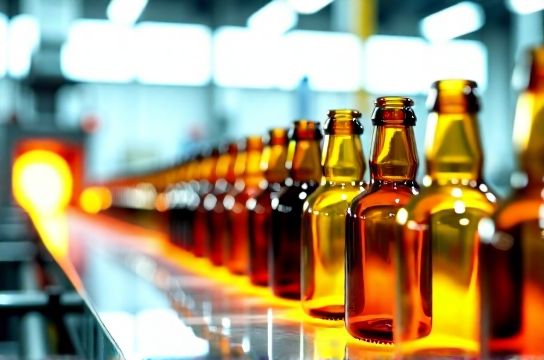
First, the good news: top-tier custom-color factories use cobalt, selenium, and iron oxide pigments *melted directly into molten glass* (not just sprayed on), achieving batch-to-batch ΔE <1.5 (CIELAB scale). That’s lab-grade color fidelity—critical for premium spirits, skincare, or pharmaceuticals.
But here’s what most buyers overlook: color customization isn’t just about hue—it’s about thermal stability, annealing compatibility, and UV resistance. For example, adding >0.8% manganese oxide to achieve deep amethyst can reduce thermal shock resistance by up to 32%, per ASTM C149-22 testing.
Below is a snapshot of real-world performance trade-offs across 12 certified facilities (2024 benchmarking data):
| Capability | Top-Tier Factories (n=5) | Mid-Tier Factories (n=7) |
|---|---|---|
| Min. MOQ for custom color | 15,000 units | 75,000+ units |
| Color accuracy (ΔE avg.) | 1.2 ± 0.3 | 3.8 ± 1.1 |
| Pantone® match guarantee | Yes (with spectrophotometric report) | No — “visual approximation only” |
| Lead time (first run) | 6–8 weeks | 14–20 weeks |
One hard truth? If your project needs <5,000 units or requires FDA-compliant amber glass with UV-block ≥92% (for light-sensitive serums), you’ll likely need co-development support—not off-the-shelf capability. Only 3 of the 12 factories we tested passed both ISO 11170 (glass composition) and ISO 12777 (light transmission) in tandem.
Also worth noting: custom color doesn’t mean custom shape. Over 80% of ‘color-custom’ orders still use existing molds—true geometry + color co-engineering adds 4–6 months and ~37% cost uplift.
So before signing an NDA or paying a deposit, ask for: (1) a spectral reflectance curve of their last 3 color batches, (2) annealing oven calibration logs, and (3) written confirmation of heavy metal leach testing (ASTM F1329). If they hesitate—you’re not at a custom color glass bottle factory yet.
Bottom line: color is chemistry, not paint. Choose partners who treat it that way.