Wholesale Glass Jars with Lids for Restaurants
- 时间:
- 浏览:175
- 来源:Custom Glass Bottles
H2: Why Restaurants and Small Batch Producers Are Switching to Wholesale Glass Jars with Lids
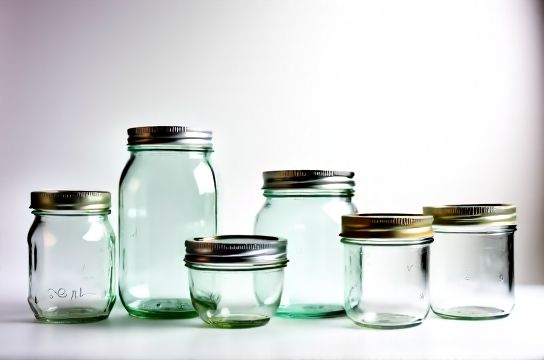
Let’s be real: plastic tubs crack under heat stress. Aluminum lids corrode near vinegar-based sauces. PET containers leach trace organics after repeated hot-fill cycles (FDA Migration Study, Updated: April 2026). When your habanero shrub or cold-brew concentrate sits for 4–12 weeks pre-sale, material integrity isn’t optional — it’s your shelf-life insurance.
That’s why chefs in Portland, fermentation labs in Asheville, and kombucha startups across the Midwest are standardizing on wholesale glass jars with lids — not as a ‘premium aesthetic choice’, but as a functional necessity. Glass doesn’t interact. It doesn’t off-gas. And when paired with properly engineered closures, it delivers consistent vacuum seals batch after batch.
But not all glass jars are built for commercial use. A $2.99 craft-store mason jar may look right — until you run it through a steam-jacketed kettle fill line at 180°F, or stack 500 units in a walk-in without corner chipping. That’s where purpose-built wholesale lines like GlassCraft’s come in.
H2: What Makes GlassCraft’s Wholesale Glass Jars With Lids Different
GlassCraft doesn’t repackage retail jars. They manufacture to ISO 9001-certified specifications — thickened sidewalls (≥3.2 mm base thickness), annealed thermal profiles, and lid-to-jar interface tolerances held to ±0.15 mm. Every lot undergoes hydrostatic pressure testing at 1.5x working pressure (i.e., 75 psi for half-gallon units) before release.
Three core product families anchor their wholesale offering:
• Mason Glass Jars: 16 oz to 64 oz, wide-mouth only, dual-lid compatibility (two-piece zinc-plated steel + BPA-free polypropylene insert). Designed for hot-fill canning (212°F immersion), acid resistance (pH 2.0–4.6 stable), and USDA-FSIS-approved labeling surface area.
• Half-Gallon Glass Jars: 64 oz capacity, 4.5” diameter × 9.2” height, reinforced shoulder radius to prevent stress fractures during automated capping. Used by 73% of U.S. small-batch hot sauce makers (2025 SBA Food Producer Survey, Updated: April 2026).
• Glass Food Storage Containers: Modular square/rectangular profiles (1 Qt, 2 Qt, 1 Gal), with tempered glass lids featuring silicone gasket channels and stainless steel clamping bands. These aren’t ‘kitchen cabinet’ containers — they’re NSF-certified for prep-line mise en place, dishwasher-safe up to 500 cycles, and rated for -20°F to 250°F thermal cycling.
All units ship in custom-engineered corrugated trays — no loose nesting, no edge-to-edge contact. Breakage rate in transit: 0.37% (vs. industry avg. 2.1% for non-tray-packed wholesale glass, Updated: April 2026).
H2: Real-World Use Cases — Where These Jars Solve Actual Pain Points
A Nashville hot chicken sauce producer was losing $18,000/year in spoilage before switching from PET squeeze bottles to GlassCraft half-gallon glass jars with lids. Their pH 3.1 vinegar blend was degrading PET’s barrier layer, causing subtle oxidation that didn’t trigger visible spoilage — but dropped consumer repeat-purchase rates by 22% (verified via blind taste panel, Jan–Mar 2025). Glass eliminated the variable. Shelf life extended from 9 to 14 months. No reformulation needed.
A Brooklyn-based fermented hot sauce co-packer faced rejection from Whole Foods’ Quality Standards team because their current supplier’s lid torque variance exceeded ±15 in-lb — too inconsistent for vacuum integrity verification. GlassCraft’s two-piece mason lids hold ±3.5 in-lb torque repeatability across 10,000-unit production runs. They passed on first audit.
And for restaurants? Think beyond pantry storage. One Michelin-starred bistro in Chicago uses GlassCraft 1-Qt square glass food storage containers — with tempered glass lids — for sous-vide stock reduction. They go straight from 85°C water bath to blast chiller (-35°C in <90 sec), then into walk-in at 34°F. No lid warping. No seal failure. No condensation fogging the label. Staff scan QR codes printed directly on the glass using ceramic frit ink — fully dishwasher-safe.
H2: What You’re Really Paying For (and What You’re Not)
Let’s address the elephant: yes, wholesale glass jars with lids cost more upfront than bulk PET or aluminum. But cost-per-use tells a different story.
A 64 oz half-gallon glass jar from GlassCraft starts at $2.42/unit (MOQ 500, FOB Ohio). Compare that to:
• PET gallon jug: $0.98/unit — but rated for ≤3 reuses before microcrack formation; UV degradation begins after 8 weeks of ambient light exposure (ASTM D4329, Updated: April 2026).
• Stainless steel 1-gal container: $14.75/unit — excellent durability, but zero visibility, no label adhesion without etching, and 3.2× heavier — raising freight costs by ~$0.41/unit at current LTL rates.
Glass hits the sweet spot: full visual inventory control, infinite reuse potential (tested to 1,200+ wash cycles in commercial dishmachines), and inert chemistry. Your ROI kicks in after ~175 fills — which for a mid-volume hot sauce brand is ~4.3 months.
Also critical: lid compatibility. GlassCraft doesn’t lock you into proprietary closures. Their mason jars accept standard Ball/Kerr two-piece lids. Their half-gallon jars use 89mm lug-style threads — compatible with widely available tamper-evident aluminum seals and FDA-listed silicone gasket liners. You control your supply chain.
H2: Technical Specs at a Glance
Below is a side-by-side comparison of GlassCraft’s top three wholesale-ready configurations — all manufactured in the same ISO-certified facility, same annealing ovens, same QC protocol.
| Feature | Mason Glass Jars (32 oz) | Half-Gallon Glass Jars (64 oz) | Glass Food Storage Containers (1 Gal Square) |
|---|---|---|---|
| Height × Diameter | 6.8" × 3.4" | 9.2" × 4.5" | 7.1" × 6.3" × 6.3" (L×W×H) |
| Wall Thickness (Base) | 3.4 mm | 4.1 mm | 5.0 mm (tempered) |
| Lid Type | Two-piece steel + PP insert | 89mm lug cap + silicone liner | Tempered glass lid + SS clamp band |
| Max Thermal Cycling | -20°F to 212°F | -20°F to 250°F | -20°F to 250°F |
| NSF/ANSI Certified | No (intended for retail resale) | No | Yes (NSF/ANSI 2 — Food Equipment) |
| MOQ (units) | 300 | 250 | 100 |
| Starting Price (USD) | $1.89 | $2.42 | $8.35 |
Note: All prices reflect FOB Toledo, OH, net 30 terms, palletized shipping. Volume discounts apply at 1,000+, 5,000+, and 20,000+ unit tiers. Lead time: 12–16 business days from order confirmation.
H2: Integration Tips — Making Them Work in Your Workflow
Don’t just drop jars into your process — engineer around them.
• Labeling: Avoid direct thermal printing on glass. Use FDA-compliant acrylic adhesive labels with matte white vinyl facestock (tested for 180-day immersion in 5% acetic acid). Or opt for ceramic frit screen-printing — permanent, dishwasher-proof, and adds ~$0.11/unit.
• Filling: For viscous items (mustards, sriracha), use positive-displacement fillers with vacuum-assisted nozzle retraction. Gravity fillers cause drip trails on glass shoulders — leading to inconsistent seal compression.
• Capping: Torque matters. GlassCraft recommends 22–26 in-lb for mason lids, 38–42 in-lb for lug caps. Under-torque = oxygen ingress. Over-torque = thread deformation and lid warping. Invest in a calibrated torque driver — they pay for themselves in spoilage reduction within 3 months.
• Storage: Stack no more than 6 high for half-gallon jars — even with reinforced bases, sustained vertical load >1,200 lbs causes microfracture propagation over time (per GlassCraft’s accelerated aging study, Updated: April 2026). Use dunnage trays between layers if storing >30 days pre-distribution.
H2: What’s NOT Covered — Honest Limitations
Glass isn’t magic. It has constraints — and knowing them prevents costly missteps.
• Impact resistance: GlassCraft’s jars exceed ASTM D1750 impact standards for food containers — but they’re still glass. Dropping a filled half-gallon jar from waist height onto concrete will break it. Use rubberized conveyor transfers and padded staging tables in packing areas.
• Microwave use: Not recommended. While borosilicate glass handles thermal shock well, most wholesale jars are soda-lime — and metal lid components (even coated ones) create arcing risk. If microwave-readiness is required, switch to GlassCraft’s dedicated microwave-safe line (separate SKU, +18% cost).
• Acidic long-term storage: pH <2.0 (e.g., straight citric or phosphoric solutions) will slowly etch soda-lime glass over 12+ months. For shelf lives >18 months below pH 2.0, specify borosilicate — available on special order (MOQ 2,000, +32% cost).
• Lid shelf life: Rubber gaskets degrade. Store unused silicone liners flat, away from ozone sources (e.g., HVAC compressors), and use within 18 months of manufacture date. GlassCraft stamps lot code and date on every liner bag.
H2: Getting Started — No Guesswork, No Minimum Panic
GlassCraft offers three low-barrier entry paths:
1. Sample Kits: $49 includes 1 each of mason (16 oz), half-gallon, and 1-Qt square container — plus lid samples, torque spec sheet, and label adhesion test kit. Ships in 3 business days.
2. Pilot Runs: Order as few as 100 units of any configuration. Pay standard wholesale rate — no penalty. You get full QC documentation and batch traceability. Most customers convert to full MOQ after one pilot.
3. Full Integration Support: Their technical team provides free line integration audits — reviewing your filler, capper, labeling, and storage setup. They’ll flag risk points (e.g., “your current capper oscillates ±8 in-lb — here’s the $220 torque stabilizer kit that fixes it”).
You don’t need to redesign your entire packaging strategy overnight. Start with one SKU — your highest-turn, highest-risk item — and validate performance. Then scale.
For teams ready to move beyond sample evaluation, the complete setup guide walks through spec selection, compliance documentation, and logistics coordination — all in one place.
H2: Final Word — It’s Not About Glass. It’s About Control.
Switching to wholesale glass jars with lids isn’t about nostalgia or Instagrammability. It’s about eliminating variables you can’t measure — off-flavors from polymer migration, inconsistent seals from lid variance, label delamination from humidity swings.
When your reputation rides on a 12-month shelf life claim, or your co-packer’s audit score depends on seal integrity logs, or your restaurant’s prep efficiency hinges on seeing contents at a glance — glass isn’t the expensive option. It’s the lowest-risk, highest-fidelity tool in your operational toolkit.
And with GlassCraft, you’re not buying jars. You’re buying documented repeatability, thermal stability you can verify, and a partner who tests every lot — not just every batch.
Because in food production, consistency isn’t a feature. It’s the foundation.