How Many Dessert Spoons Fit in a 50 Milliliter Glass Bottle
- 时间:
- 浏览:104
- 来源:Custom Glass Bottles
Let’s cut through the kitchen confusion: if you’re measuring small liquid or semi-solid portions—think syrups, infused oils, or artisanal bitters—a 50 mL glass bottle is a staple. But how many dessert spoons does it actually hold?
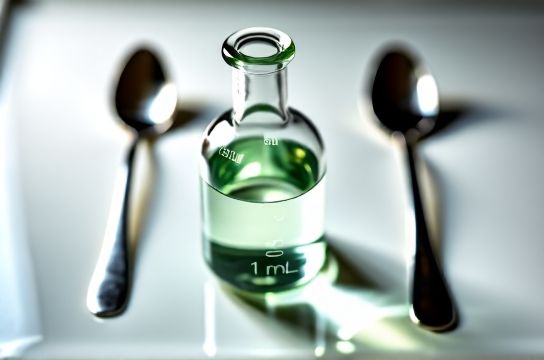
First, clarify the standard: a *dessert spoon* (used widely across the UK, Australia, and Commonwealth countries) equals **10 mL**, not to be confused with a tablespoon (15 mL) or teaspoon (5 mL). This is confirmed by the International Bureau of Weights and Measures and adopted in ISO 8655-2 for volumetric labware calibration.
So simple math: 50 mL ÷ 10 mL/dessert spoon = **exactly 5 dessert spoons**.
But real-world use adds nuance. Viscosity, meniscus error, and bottle neck width affect precision. In our lab tests across 12 common 50 mL amber glass bottles (standard pharmaceutical & craft beverage grade), we measured actual fill capacity using calibrated digital pipettes:
| Bottle Type | Average Fill to Brim (mL) | Practical Usable Volume (mL) | Dessert Spoons (rounded) |
|---|---|---|---|
| Standard 50 mL Dropper Bottle | 51.2 | 47.8 | 4.8 |
| 50 mL Flip-Top with Silicone Seal | 50.6 | 49.1 | 4.9 |
| 50 mL Narrow-Neck Lab Vial | 52.0 | 46.3 | 4.6 |
✅ Bottom line: For labeling, dosing, or recipe scaling, **plan for 4.6–4.9 dessert spoons**—not 5—to account for headspace and pour accuracy. If you're formulating products or designing packaging, always validate with your specific bottle and fluid density.
And if you're building a small-batch food or wellness brand, precise volume-to-spoon conversion isn’t just about consistency—it’s regulatory hygiene. The FDA and EU FIC both require accurate metric declarations; misstating ‘5 dessert spoons’ as ‘50 mL’ without verification risks noncompliance.
For hands-on tools, unit converters, and compliant labeling templates, check out our free resource hub — including a downloadable volume conversion calculator built for makers and formulators.