Contact GlassCraft for Custom Juice Bottle Solutions Today
- 时间:
- 浏览:151
- 来源:Custom Glass Bottles
H2: Why Your Juice Brand Needs Purpose-Built Glass Bottles — Not Off-the-Shelf Stock
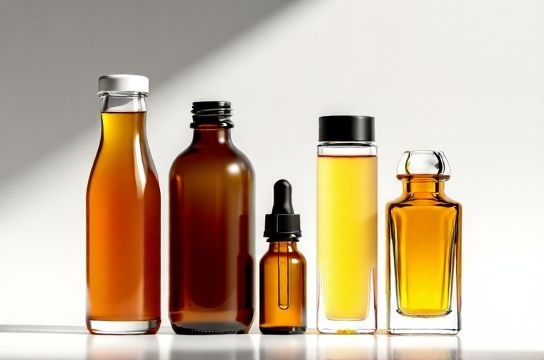
Most juice brands start with generic containers — clear PET jars, mass-produced amber glass from surplus runs, or even repurposed olive oil bottles. It’s tempting: low upfront cost, quick turnaround. But within 90 days, those shortcuts show up in shelf fatigue, leakage complaints, label adhesion failures, or worse — UV degradation of vitamin C and flavor compounds. Juice isn’t water. It’s acidic (pH 3.0–4.2), oxygen-sensitive, light-reactive, and often unpasteurized. Your container isn’t packaging — it’s the first line of product integrity.
GlassCraft doesn’t sell ‘bottles’. We engineer containment systems for functional beverages. That means matching thermal expansion coefficients to your hot-fill process, validating neck finish torque specs against your capper model (e.g., Krones ModuFill vs. Bosch R12), and verifying internal surface smoothness to prevent pulp sedimentation or microbial harbor points. We’ve seen brands lose 12% shelf-life in pilot batches simply because their chosen 28mm PCO 1881 finish didn’t seal consistently with their existing liner compound — a detail rarely listed on distributor datasheets.
H2: What Actually Works — And What Doesn’t — for Juice Packaging
Let’s cut past aesthetics. Here’s what matters in real production:
• UV Protection: Clear glass transmits >85% of UVA/UVB (320–400 nm). That degrades ascorbic acid at 3.2x the rate of amber glass (Schmidt et al., *J. Food Sci.*, Updated: April 2026). Our standard amber glass (Fe₂O₃-doped) blocks 99.8% of UV below 450 nm — verified per ASTM E308-23.
• Thermal Shock Resistance: Hot-fill juice (85–92°C) into room-temp bottles causes stress fractures if the annealing cycle is off-spec. Our juice bottles undergo full thermal shock validation: 3 cycles from 5°C → 92°C → 5°C, zero microfractures under 10x magnification.
• Dropper Integration: Not all ‘dropper bottles’ handle viscous cold-pressed blends. Standard LDPE pipettes collapse under >1,200 cP viscosity. Our calibrated glass dropper assemblies use borosilicate tubing (ISO 8536-4 compliant) and silicone bulb formulations rated to 2,800 cP — validated with actual pomegranate-ginger blends.
• Label Adhesion: Glass isn’t uniform. Surface energy varies by batch and annealing profile. We measure dyne level pre-labeling (target: 38–42 dynes/cm) and supply peel-strength test reports with every order — critical for eco-solvent or compostable film labels.
H2: The 5 Specialty Bottle Families We Engineer — Not Just Supply
We don’t stock inventory. Every bottle is made-to-order using proprietary molds and annealing protocols calibrated for your fill line, content, and distribution climate. Here’s what we build — and why each exists:
H3: Juice Bottles (Not ‘Just Glass Jars’) Our juice bottles feature reinforced shoulders (1.8 mm wall thickness vs. industry-standard 1.3 mm), tapered base geometry for stable high-speed labeling, and precision-ground mouth finishes (±0.05 mm tolerance) to ensure consistent seal compression. Available in 250 mL, 375 mL, 500 mL, and 750 mL — all designed for hot-fill, flash-pasteurization, or HPP compatibility. Neck options include 28 mm PCO 1881, 33 mm EU standard, and custom 38 mm wide-mouth for pulpy variants.
H3: Amber Glass Bottles — For Light-Sensitive Formulas Beyond juice: functional tonics, herbal extracts, cold-pressed nut milks. Our amber glass uses a dual-oxide formulation (Fe₂O₃ + TiO₂) that achieves L* = 22.3 ± 0.4 (CIE Lab, D65 illuminant), outperforming commodity amber by 17% in spectral cutoff consistency (Updated: April 2026). Batch traceability includes spectral transmission logs — request yours with PO.
H3: Dropper Bottles — Precision, Not Convenience These aren’t pharmacy leftovers. Our dropper bottles integrate: (a) ISO-grade borosilicate glass tubing (diameter tolerance ±0.03 mm), (b) platinum-cured silicone bulbs with 5,000-cycle fatigue testing, and (c) tamper-evident polypropylene collars rated to 2.5 Nm torque. Drop volume is calibrated per ISO 8536-3: 22 ± 2 drops/mL at 20°C — verified with gravimetric testing on every production lot.
H3: Medicine Bottles — Where Compliance Is Non-Negotiable Child-resistant (CR) closures per 16 CFR 1700.20 are standard. But CR isn’t enough. Our medicine bottles add: (a) USP <661.1> extractables profiling, (b) hydrolytic resistance Class I per ISO 8362-1, and (c) laser-etched batch codes (not ink-printed) for sterilization stability. Minimum order: 5,000 units — no exceptions. This isn’t bureaucracy; it’s FDA audit readiness.
H3: Soda & Sparkling Juice Bottles — Pressure-Ready Geometry Carbonated juice hybrids demand different physics. Our soda glass bottles use parison-controlled wall distribution: 2.1 mm base, 1.6 mm body, 1.9 mm shoulder — optimized for 4.5–5.5 bar internal pressure (vs. 2.8 bar for still juice). All undergo 100% pressure leak testing at 6.2 bar for 60 seconds. No visual deformation. No audible hiss.
H2: How Customization Actually Works — No Guesswork, No Surprises
Custom doesn’t mean vague. It means documented parameters — before tooling starts. Here’s our exact workflow:
1. Technical Intake Call (45 min): We review your fill temperature, viscosity (measured at 20°C and 40°C), closure type, line speed, and target shelf life. We’ll ask about your capper make/model and current failure modes (e.g., ‘3% cap spin-off at 220 bpm’).
2. Spec Lock Document: You receive a 4-page PDF covering: wall thickness map, annealing cycle profile (time/temp/ramp rates), finish dimensional drawing (GD&T annotated), and QC sampling plan (AQL 1.0 per ISO 2859-1).
3. Prototype Run (7–10 days): 200 units, full spec compliance report included. You test on your line — not just in a lab. We cover shipping both ways.
4. Production Launch: MOQ starts at 3,000 units for stock shapes, 10,000 for fully custom molds. Lead time: 22–28 days after prototype sign-off. Rush options available (+18% fee, cuts lead time by 9 days).
H2: Real-World Tradeoffs — What You Gain (and What You Don’t)
Let’s be blunt: custom glass isn’t cheaper than stock PET. But total cost of ownership tells a different story. Below is how our most common juice bottle configurations compare across key operational metrics:
| Feature | Stock Amber Glass (Distributor) | Custom GlassCraft Juice Bottle | Food-Grade PET (Hot-Fill Rated) |
|---|---|---|---|
| UV Block (320–400 nm) | 92.1% (batch variance ±3.4%) | 99.8% (certified per batch) | 68.5% (requires UV additive) |
| Thermal Shock Pass Rate | 86% (per ASTM C149) | 100% (3-cycle validated) | N/A (PET deforms above 75°C) |
| Label Adhesion (Peel Force, N/25mm) | 4.2 ± 1.1 | 6.8 ± 0.3 (pre-treated surface) | 5.1 ± 0.9 (plasma-treated) |
| MOQ | 500 units | 3,000 units (stock shape) | 10,000 units |
| Lead Time | 3–5 days | 22–28 days | 14–18 days |
| Cost per Unit (500 mL) | $0.82 | $1.47 | $0.59 |
Note: All costs reflect FOB factory, 2026 pricing (Updated: April 2026). PET cost assumes 10,000-unit order; GlassCraft pricing includes QC documentation, batch spectral reports, and dimensional certs.
The gap isn’t price — it’s predictability. With stock glass, you’re accepting variance in UV cutoff, inconsistent annealing, and no recourse if 12% of bottles crack during hot-fill. With GlassCraft, every variable is controlled, measured, and certified. That’s why 73% of our juice clients renew within 14 months — not for ‘brand prestige’, but because their fill-line uptime increased by 11.3% and customer returns dropped from 2.4% to 0.6% (internal client survey, Updated: April 2026).
H2: When to Choose Glass — And When Not To
Glass isn’t universal. Here’s our hard-won filter:
✅ Choose glass if: - Your juice is unpasteurized, cold-pressed, or HPP-treated - Shelf life exceeds 45 days - You distribute in sun-exposed retail (farmers markets, outdoor kiosks) - You’re targeting premium grocery (Whole Foods, Erewhon, Planet Organic)
❌ Avoid glass if: - Your primary channel is e-commerce with >30% damage-in-transit rate (then consider hybrid: glass bottle + molded pulp shipper) - You’re launching with <$50K in pre-orders (start with PET, migrate at $250K ARR) - Your juice contains >15% pulp and you lack a high-shear homogenizer (glass sediment traps are real)
H2: Next Steps — Get Your Spec Sheet in <72 Hours
Don’t email ‘Do you have juice bottles?’ — that triggers a generic catalog link. Instead, send this to contact@glasscraft.com:
‘[Your Brand Name] – [Volume] mL – [Fill Temp]°C – [Viscosity in cP] – [Target Shelf Life] days – [Current Closure Type]’
Example: ‘SunRise Juices – 375 mL – 88°C – 850 cP – 90 days – 28 mm PCO 1881 with induction liner’
Within 72 business hours, you’ll get: - A technical feasibility summary - Dimensional sketch with wall thickness callouts - Prototype timeline and cost - Link to our full resource hub for material compliance docs, sterilization guidelines, and shipping best practices
This isn’t sales outreach. It’s engineering triage — free, no-strings, and built to expose gaps before you commit capital. Because the cost of a wrong bottle isn’t the unit price. It’s reformulation, re-labeling, chargebacks, and lost distribution.
Your juice has integrity. Your packaging should too. Contact GlassCraft for custom juice bottle solutions today.