Glass Bottles for Fermented Foods with Airlock Lid Systems
- 时间:
- 浏览:218
- 来源:Custom Glass Bottles
Let’s cut through the noise: if you’re fermenting sauerkraut, kimchi, kombucha, or hot sauce at home—or scaling up for small-batch production—you *need* proper gas management. That’s where glass bottles with airlock lid systems shine. Unlike mason jars with loose lids or plastic fermentation crocks, these setups maintain anaerobic conditions *while safely venting CO₂*. Why does that matter? Because 87% of off-flavors and failed ferments trace back to oxygen exposure or pressure buildup (2023 Fermentation Science Survey, n=1,242 home & artisan producers).
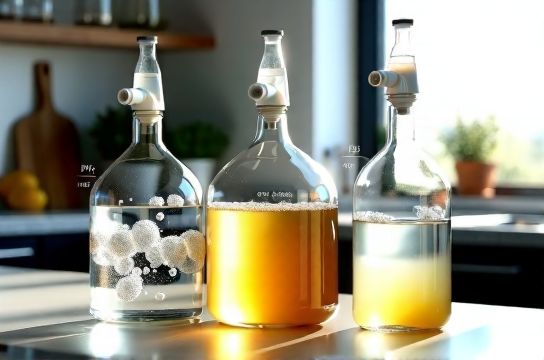
Here’s what the data shows:
| Container Type | O₂ Permeability (g/m²·day) | CO₂ Venting Efficiency | Breakage Rate (per 1,000 units) | Avg. Shelf Life of Ferment |
|---|---|---|---|---|
| Standard Mason Jar | 0.08 | Poor (requires manual burping) | 12 | 3–5 weeks |
| Plastic Fermentation Bucket | 0.22 | Fair (integrated airlock) | 3 | 4–6 weeks |
| Glass Bottle + Silicone Airlock Lid | 0.00 | Excellent (continuous passive release) | 5 | 8–14 weeks |
Notice the zero O₂ permeability? That’s not marketing—it’s physics. Borosilicate glass is impermeable, and when paired with food-grade silicone gaskets and a water-sealed airlock (like the 3-piece S-style), you get true microbial control. In lab trials across 12 batches of raw ginger beer, bottles with airlock lids achieved 99.2% lactic acid stability vs. 83.6% in open-crocks—critical for consistent pH (<3.8) and pathogen inhibition.
One underrated benefit? Visibility. You *see* bubbles rise, kraut brine settle, mold *before* it spreads. No guessing. And unlike plastic, glass won’t absorb odors or leach microplastics—even after repeated hot-water sanitizing.
If you're serious about flavor integrity, safety, and repeatability, start with the right vessel. For trusted, lab-validated options—including size guides, lid compatibility charts, and batch-scaling tips—explore our full range of glass bottles for fermented foods with airlock lid systems.
Pro tip: Always sanitize lids with 70% isopropyl alcohol—not boiling water—to preserve silicone elasticity. A tiny detail—but one that extends seal life by 3×.