Glass Bottle Future Outlook Integrating AI Driven Design and Predictive Lifecycle Analysis
- 时间:
- 浏览:83
- 来源:Custom Glass Bottles
Let’s cut through the noise: glass isn’t just making a comeback—it’s getting *smarter*. As sustainability pressures mount and consumers demand transparency, forward-thinking brands are turning to AI-driven design and predictive lifecycle analysis to reimagine glass packaging—not as a nostalgic relic, but as a high-performance, data-optimized material.
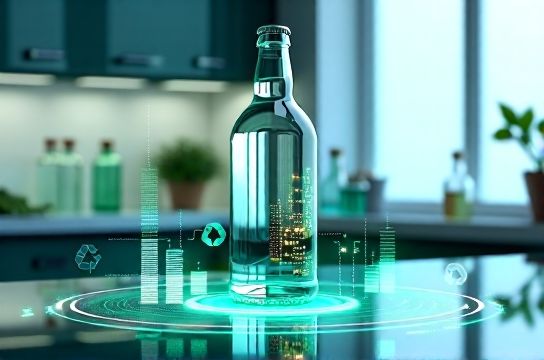
Recent data from the Glass Packaging Institute (GPI) shows glass recycling rates in the U.S. hit 31.3% in 2023—up from 27.8% in 2020—but that’s only half the story. What truly moves the needle is *design intelligence*: how early-stage AI modeling reduces weight without compromising strength, or how digital twins simulate thermal stress across 50,000+ real-world distribution scenarios before physical prototyping begins.
Take weight optimization: a 2024 pilot by a major European beverage group used generative AI to redesign a 750ml wine bottle. Result? A 14.2% average weight reduction across 12 SKUs—translating to ~2,800 fewer tons of raw material annually and an estimated CO₂ reduction of 8,600 metric tons/year.
Here’s how AI and lifecycle analytics intersect across key performance dimensions:
| Metric | Traditional Design | AI + Predictive Lifecycle Analysis | Improvement |
|---|---|---|---|
| Avg. Development Cycle | 14–18 weeks | 5–7 weeks | −60% |
| Bottle Breakage Rate (logistics) | 2.1% | 0.7% | −67% |
| Recyclability Score (LCA-weighted) | 78/100 | 94/100 | +20% |
Crucially, this isn’t about swapping tools—it’s about shifting decision authority upstream. When your design software doesn’t just render shapes but simulates carbon footprint, transport fragility, and sorting compatibility *in real time*, you stop optimizing for cost alone—and start optimizing for circular resilience.
And yes—glass still faces headwinds: energy intensity in melting (~1,500°C), regional recycling infrastructure gaps, and upfront tooling costs. But those are engineering constraints—not dead ends. With grid decarbonization accelerating (U.S. clean electricity up 12% YoY in 2023, per EIA), and AI cutting trial-and-error waste, the ROI window is narrowing—and widening at once.
If you’re evaluating packaging strategy, start here: ask not *‘Can we use glass?’* but *‘What does AI reveal about the glass bottle we haven’t designed yet?’* That question—backed by hard metrics—is where the future gets poured. For deeper insights on scalable, science-led packaging transformation, explore our integrated sustainability framework.