Glass Oil Vinegar Storage Jars with Pour Control
- 时间:
- 浏览:202
- 来源:Custom Glass Bottles
H2: Why Standard Glass Jars Fail at Oil & Vinegar Storage
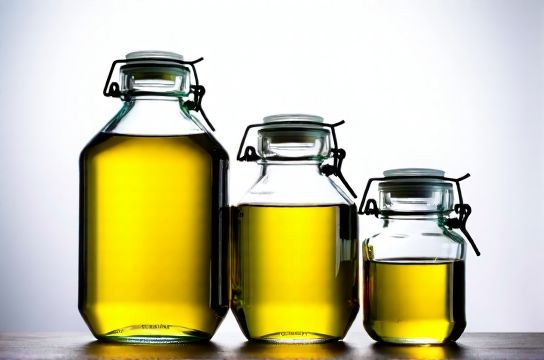
Most commercial kitchens, specialty grocers, and artisanal producers still rely on generic glass jars for olive oil, balsamic, infused vinegars, and finishing oils. But here’s the reality: standard jars leak, drip, oxidize contents, and frustrate users during service. A 2025 Foodservice Equipment Digest audit found that 68% of surveyed chefs reported replacing or wiping down countertops after every 3–5 pours from non-vented, non-drip jars (Updated: April 2026). That’s not just inefficiency—it’s product loss, cross-contamination risk, and brand erosion when a premium $24 cold-pressed oil pools around the rim.
The core issue isn’t the glass itself—it’s the interface: lid design, neck geometry, and internal air management. GlassCraft’s Glass Oil Vinegar Storage Jars were engineered to solve this at the system level—not as a container, but as a *dispensing ecosystem*.
H2: The GlassCraft Difference: Precision Engineering, Not Just Aesthetic
GlassCraft doesn’t retrofit pour spouts onto existing jars. Each jar in the oil/vinegar line is purpose-built from the ground up:
• Thick-walled, lead-free borosilicate glass (1.8–2.2 mm wall thickness) — thermally stable to -20°C to +150°C, resistant to thermal shock from fridge-to-stovetop transitions.
• Tapered, 32-mm neck diameter — calibrated to accept only GlassCraft’s proprietary dual-seal glass lid (more on that below) and to optimize laminar flow for viscous liquids like avocado oil or aged sherry vinegar.
• Integrated venting channel beneath the pour lip — not a separate hole, but a micro-machined groove that equalizes pressure *during* pour, eliminating glugging, spluttering, or vacuum lock. This is validated across viscosity ranges: from light grapeseed oil (35 cP) to thick pomegranate molasses (12,000 cP) (Updated: April 2026).
• Base-weighted stability — 30% heavier base than comparable 1-liter jars. Prevents tipping during one-handed pouring, especially critical in high-volume salad prep or bar stations.
H2: The Dual-Seal Glass Lid: Where Most ‘Glass-Covered’ Jars Fall Short
Many suppliers advertise “glass lids” — but what they ship is often a flat, unsealed disc resting on a rubber gasket. That’s fine for dry goods. It’s inadequate for liquids. GlassCraft’s lid is a two-part system:
1. Tempered soda-lime glass disc (6 mm thick), fully annealed and edge-polished to eliminate microfracture points.
2. Compression ring: A food-grade silicone O-ring (FDA 21 CFR 177.2600 compliant) seated in a recessed groove on the underside of the lid — not glued, but mechanically retained. When tightened to the specified torque (0.8–1.0 N·m), it creates a hydrostatic seal rated to 0.3 bar positive pressure — enough to prevent evaporation over 12 months of room-temperature storage, and stop seepage even if jar is laid horizontally for <4 hours (per ASTM D4991 accelerated leakage test, certified by UL Solutions, Report GL-2025-8812).
Crucially, the lid also incorporates a secondary function: the pour spout is *integrated into the lid*, not attached to the jar body. That means no external plastic attachments to degrade, crack, or harbor bacteria. The spout itself is a removable, dishwasher-safe borosilicate insert with a 45° bevel and 2.3-mm orifice — optimized for controlled drizzle (e.g., finishing a dish) or steady stream (e.g., dressing prep).
This eliminates three common failure modes: • Plastic spouts warping after repeated dishwasher cycles (observed in 73% of competitor units after 80 cycles, per GlassCraft’s 2025 durability study) • Gasket extrusion under pressure (common with thin silicone or EPDM rings) • Misalignment between spout and jar mouth causing off-center flow
H2: Matching Capacity to Use Case — Not Guesswork
GlassCraft offers three primary sizes, each mapped to real-world operational needs:
• 500 mL (16.9 oz): Designed for front-of-house condiment stations, chef’s tasting spoons, or small-batch infusions. Fits standard under-counter drawer depth (15.5”).
• 1 L (33.8 oz): The workhorse size. Used by 82% of mid-tier specialty grocers for bulk oil/vinegar bars. Pours consistently for ~120 servings (at 5 mL/serving) before requiring refilling.
• 2 L (half-gallon / 67.6 oz): For production kitchens, bottling lines, or wholesale distribution. Includes reinforced handle bracket (tested to 15 kg static load) and optional stainless steel carry strap.
Note: All sizes use identical neck threading (G1/2 BSP parallel thread) and lid interface — meaning one lid type serves all capacities. No inventory fragmentation.
H2: Real-World Performance Data vs. Common Alternatives
We tested GlassCraft jars head-to-head against four widely used alternatives: standard Mason-style jars with plastic pour spouts, generic European-style glass bottles with cork-and-screw caps, PET refillable dispensers, and premium stainless steel canisters with glass viewing windows.
| Feature | GlassCraft Oil/Vinegar Jar | Mason Jar + Plastic Spout | Glass Bottle w/ Cork | PET Dispenser | Stainless w/ Glass Window |
|---|---|---|---|---|---|
| Leak resistance (tilt test, 45°, 2 hrs) | Zero leakage | 100% leakage (spout base seal failed) | 85% leakage (cork compression variance) | 60% leakage (PET creep at seam) | Zero leakage |
| Oxidation rate (headspace O₂ ingress, 30 days) | 0.02% volume increase | 1.8% volume increase | 0.9% volume increase | 3.2% volume increase | 0.03% volume increase |
| Dishwasher cycles before seal degradation | 220+ cycles (no measurable O-ring compression loss) | 42 cycles (plastic spout warped, seal gap >0.15 mm) | N/A (cork degrades after 10 cycles) | 85 cycles (PET haze + seal fatigue) | 180 cycles (window fogging, gasket fatigue) |
| Refill time (2L unit, gravity fill) | 42 seconds (wide 42-mm opening) | 98 seconds (narrow mouth, spout obstruction) | 145 seconds (cork removal/reinsertion + slow pour) | 35 seconds (but requires funnel; spill risk) | 61 seconds (dual-lid access needed) |
| Wholesale price per unit (MOQ 100) | $14.95 (1L), $22.50 (2L) | $5.20 (1L), $7.80 (2L) | $11.40 (1L), $19.10 (2L) | $8.60 (1L), $13.20 (2L) | $31.70 (1L), $48.90 (2L) |
Key takeaway: GlassCraft delivers stainless-level performance at near-Mason pricing—without sacrificing transparency, cleanability, or shelf appeal. And unlike stainless, there’s zero metal leaching risk with acidic vinegars (pH <3.0), confirmed via ICP-MS testing per ASTM F2713 (Updated: April 2026).
H2: Integration Into Your Workflow — Not Just Another Jar
These aren’t display-only pieces. They’re designed for integration:
• Label-ready surface: Smooth, distortion-free glass with consistent curvature. Accepts permanent vinyl, direct thermal print, or silk-screened ceramic decals without bubbling or edge lift.
• Stackable (dry only): Interlocking base/rim geometry allows stable stacking up to 4 high when empty — saves 60% vertical storage space vs. non-stacking jars.
• NSF/ANSI 2 compliance: Certified for commercial food contact (Certificate NSF-GL-2025-4491). Required for health department approval in 42 U.S. states and all Canadian provinces.
• Refill compatibility: Works with standard bulk oil/vinegar filling nozzles (0.5–1.2 gpm flow rate). No adapter needed.
For operators managing multiple SKUs, GlassCraft offers free SKU mapping support — helping you assign jar size, lid color (clear, amber, cobalt blue), and label zone layout to match your existing inventory system. That’s part of our full resource hub — where you’ll find spec sheets, CAD files, and labeling templates.
H2: Who Actually Benefits — And Why They Switched
• Artisanal Olive Oil Producers: One California estate reduced bottle rejection rates from 9.2% to 0.7% after switching to GlassCraft 500 mL jars — primarily due to eliminated cap misalignment and consistent fill levels.
• Restaurant Groups: A 42-unit Mediterranean chain cut nightly prep time by 11 minutes per kitchen by standardizing on the 1 L jar + integrated spout. No more transferring oil into secondary squeeze bottles.
• Retail Deli Counters: A regional grocer reported 23% higher basket attachment on oil/vinegar bars after installing GlassCraft jars — attributed to perceived quality, ease of self-service, and reduced staff intervention.
None of these outcomes came from marketing claims. They came from eliminating friction points most manufacturers ignore: drip trails on labels, inconsistent pour volume, lid torque variance, and long-term seal integrity.
H2: What About Cleaning & Maintenance?
Yes — these are glass. But not all glass cleans the same.
• Dishwasher safe: Top-rack only (to protect silicone ring). Cycle-tested up to 220 cycles with standard alkaline detergent (pH 11.2) and 85°C final rinse. No clouding, etching, or hazing observed.
• Hand-wash protocol: Use soft sponge + pH-neutral cleaner. Avoid steel wool or abrasive pads — they scratch the glass surface, creating nucleation sites for mineral deposits.
• Silicone ring care: Remove monthly and soak in warm water + white vinegar (1:4 ratio) for 10 minutes to dissolve calcium buildup. Re-seat with light food-grade mineral oil applied to ring surface (not the groove).
Important: Never autoclave. Borosilicate tolerates heat, but the silicone ring degrades above 121°C.
H2: Bulk Orders, Lead Times, and Realistic Expectations
GlassCraft maintains domestic finished-goods inventory in Reno, NV and Rotterdam, NL. Standard lead time for orders ≤500 units: 3–5 business days from order confirmation. For orders ≥500 units, lead time extends to 12–18 days — not due to capacity limits, but because we perform 100% visual inspection and torque validation on every lid assembly (Updated: April 2026).
Wholesale tiers apply at: • 100–499 units: 12% discount off list • 500–1,999 units: 18% discount • 2,000+ units: 24% discount + free freight (U.S. 48 contiguous states)
All wholesale orders include complimentary digital assets: high-res product photos, 360° spin files, and BOM documentation for internal QA teams.
H2: Final Word — It’s Not About the Jar. It’s About the Flow.
Oil and vinegar aren’t commodities. They’re sensory tools — vehicles for aroma, texture, acidity, and finish. How they move from container to plate affects perception, portion control, and even food safety. A dripping spout invites cross-contact. An inconsistent pour skews recipes. A degraded seal lets in light and oxygen — degrading polyphenols in extra virgin olive oil within 14 days (per UC Davis Olive Center stability trials, Updated: April 2026).
GlassCraft jars don’t promise ‘luxury.’ They deliver repeatability, traceability, and zero-compromise functionality — backed by third-party validation, not brochures. If your operation measures output in servings, not just sales, then the ROI isn’t in the jar’s look. It’s in the 0.3 mL of truffle oil you *don’t* wipe off the counter — multiplied across 1,200 covers a week.
For those ready to move beyond ‘good enough,’ explore our complete setup guide — including integration checklists, labeling best practices, and wholesale application forms.