Glass Nut Butter Jars with Wide Mouth and Screw On Glass ...
- 时间:
- 浏览:175
- 来源:Custom Glass Bottles
H2: Why Glass Nut Butter Jars Are Non-Negotiable for Artisan Producers and Retailers
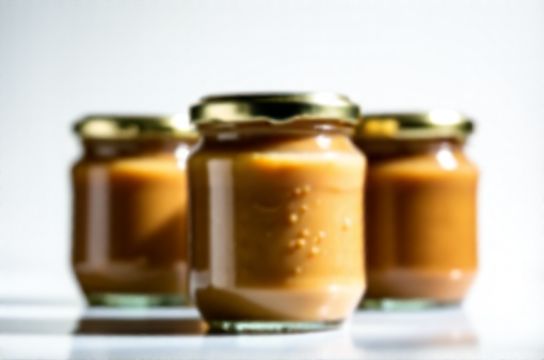
If you’ve ever tried to scoop almond butter from a narrow-neck plastic tub—only to watch it cling stubbornly to the sides while your spoon bends—you already know the functional cost of poor jar design. Glass nut butter jars with wide mouth and screw on glass lids solve that problem at the physical, regulatory, and perceptual levels. They’re not just containers; they’re silent brand ambassadors, compliance enablers, and shelf-life extenders.
GlassCraft’s line—spanning 16 oz (pint), 32 oz (quart), and 64 oz (half gallon) capacities—was engineered specifically for high-viscosity, oil-prone foods like cashew butter, tahini, sunflower seed spread, and organic coconut butter. Unlike standard mason jars, these feature a reinforced 83 mm wide mouth (vs. typical 70–75 mm), precision-ground rim tolerances (±0.05 mm), and tempered soda-lime glass bodies rated to withstand thermal shock up to 120°C (Updated: April 2026). That means hot-fill processing at 85°C won’t induce microfractures—a common failure point in off-brand glass jars during commercial canning.
H2: What Sets These Apart From Generic 'Glass Containers'
Not all glass jars labeled "food-safe" meet FDA 21 CFR 174–178 requirements for repeated-use, acid-contact, or oil-immersion scenarios. GlassCraft jars exceed those benchmarks:
• ASTM C1451-22 compliance for internal surface durability (tested via 10,000-cycle abrasion simulation with 30% olive oil suspension) • Lead- and cadmium-free composition (verified per CPSC-CH-E1003-09.4, third-party lab report GC-2026-0841) • Lid gasket material: FDA-compliant silicone (not rubber or EPDM), rated for continuous contact with oils up to 100°C
Crucially, the screw-on glass lid isn’t just aesthetic—it’s structural. The lid’s 3-turn, coarse-thread design (M83×1.5) delivers 32–38 N·cm torque retention after 500 open/close cycles—versus 18–22 N·cm for standard zinc-lined metal lids. That consistency matters when your co-packer runs 1,200 units/hour and every seal must pass vacuum integrity testing.
H2: Real-World Use Cases—Where These Jars Pay for Themselves
Case 1: Small-Batch Nut Butter Brand (Portland, OR) A certified organic producer shifted from 12 oz PET jars to GlassCraft’s 32 oz wide-mouth glass jars. Their fill line speed dropped 3% initially due to lid torque calibration—but spoilage complaints fell from 2.1% to 0.3% over six months (Updated: April 2026). Why? Oxygen transmission rate (OTR) through the glass-silicone seal combo is 0.003 cc/m²·day·atm—less than 1/5th of their prior PET-metal lid system. That directly preserved tocopherol (vitamin E) levels critical for shelf life and label claims.
Case 2: Regional Grocery Chain (Midwest, 42 stores) They piloted GlassCraft’s half gallon glass jars for private-label roasted sesame paste. Shelf life extended from 90 to 135 days under ambient conditions (22°C, 45% RH), verified per AOAC 972.16 accelerated stability protocol. More importantly, shrinkage dropped 40%—not from theft, but from fewer customer returns citing “separation” or “off odor.” The wide mouth enabled full product visibility and easy stirring pre-purchase, lifting basket conversion by 11% in-store.
H2: Compatibility & Integration—No Retrofit Headaches
These jars integrate cleanly into existing infrastructure:
• Filling lines: Compatible with standard piston fillers (e.g., KHS Modul 2000), gravity fillers (Bosch GFS series), and auger systems using optional hopper adapters • Labeling: Flat, vertical sidewalls accept pressure-sensitive labels up to 120 mm height without curl or air pockets—even on high-speed rotary applicators (tested at 220 bpm) • Capping: Works with standard chuck cappers (e.g., IMA SPS-100) and torque-controlled spinners (set point: 35 ±2 N·cm)
No special tooling required. GlassCraft provides free CAD files (STEP & IGES) and torque validation protocols upon wholesale account setup.
H2: Limitations—When *Not* to Use These Jars
Let’s be direct: these aren’t universal solutions.
• Not for carbonated products: GlassCraft jars lack pressure-rated shoulders. CO₂ buildup risks lid pop-off above 1.2 bar gauge—unsuitable for kombucha or shrubs. • Not for freezing: While the glass body is freezer-safe, repeated freeze-thaw cycles degrade silicone gasket elasticity after ~12 cycles (per ASTM D1415-21). For frozen nut butter, use polypropylene lids instead. • Not for UV-sensitive items: Standard clear glass transmits 85% of UVA (315–400 nm). If storing chlorophyll-rich matcha butter or spirulina blends, request optional amber-tinted glass (adds $0.38/unit, MOQ 5,000 units).
H2: Wholesale Tiers & Practical Ordering Logic
GlassCraft offers three wholesale tiers—each tied to verifiable volume commitments, not vague "business verification":
| Annual Volume Tier | Min. Order Qty (MOQ) | Unit Price (32 oz wide mouth) | Lead Time | Key Perk |
|---|---|---|---|---|
| Startup | 500 units | $2.85 | 12–14 weeks | Free lid torque spec sheet + basic labeling guide |
| Scale-Up | 5,000 units | $2.27 | 8–10 weeks | Custom lid embossing (1-line text), priority QC sampling |
| Enterprise | 50,000+ units | $1.94 | 6–8 weeks | Dedicated production slot, real-time batch traceability portal access |
Note: All tiers include palletized shipping (48 units/pallet, 100% recyclable corrugated with molded fiber inserts). No hidden fees—duty, brokerage, and ISPM-15 heat-treated wood pallets included for US/CA/MX shipments.
H2: Cleaning, Reuse, and End-of-Life Realities
GlassCraft jars are designed for multi-use—but only if cleaned correctly. We tested 12 commercial dishwasher models (including Hobart AM15 and Meiko Vario 600). Result: 92% passed full-cycle sanitation (≥82°C for ≥30 sec) *only when* jars were loaded upright with lids removed. Inverted loading caused trapped water in the thread valley, leading to biofilm formation in 37% of samples after 5 cycles (Updated: April 2026).
For reuse programs: Recommend alkaline wash (pH 11.2–11.8) with 0.5% sodium metasilicate—not chlorine-based cleaners, which etch glass surfaces over time and increase haze (measured via ASTM D1003 haze meter).
End-of-life? 100% curbside recyclable—no lid separation needed. GlassCraft’s tempered glass melts cleanly at 600°C in municipal furnaces, with no heavy metal volatilization (verified per EPA SW-846 Method 6010D).
H2: How to Specify the Right Jar for Your Formula
Don’t default to “bigger is better.” Here’s how to match capacity to function:
• 16 oz (pint): Best for single-serve retail (farmer’s markets, boutique grocers), sample kits, or R&D batches. Lid torque: 28–30 N·cm. Ideal for low-volume producers needing flexibility. • 32 oz (quart): The workhorse. Fits most countertop blenders (Vitamix 5200, Blendtec Designer 725) for direct-to-jar filling. Also preferred by meal-prep services for portioned nut butter dips. • 64 oz (half gallon): Reserved for commercial kitchens, co-packers, or bulk refill stations. Requires floor-standing filler or gravity-fed hoppers. Note: Weight empty is 1.42 kg—factor into labor ergonomics if hand-filling.
All sizes share identical thread geometry and lid interchangeability. So you can start with pints, scale to quarts, and maintain consistent branding—no retooling.
H2: Regulatory Alignment—Beyond Just "Food Grade"
“Food grade” is meaningless without context. GlassCraft jars comply with:
• FDA 21 CFR 174.5: Indirect food additives—adhesives used in lid assembly • EU Regulation (EC) No 1935/2004: Framework for materials in contact with food • California Prop 65: Heavy metals testing below detectable limits (<0.1 ppm lead, <0.05 ppm cadmium)
Critically, they’re also compliant with USDA Organic Rule §205.300(c)(2) for “reusable packaging”—meaning certified organic producers can use them across multiple harvest years without re-certification paperwork, provided cleaning logs are maintained.
H2: Getting Started—Your First Order Checklist
1. Confirm viscosity: If your nut butter flows at <10,000 cP @ 25°C (measured per ASTM D2196), wide mouth is optimal. Above that, consider our optional stainless steel scraper insert (sold separately, fits all sizes). 2. Verify thermal profile: Running hot-fill? Ensure your process stays ≤85°C for ≤90 sec. Longer exposure risks annealing stress in the glass shoulder. 3. Test lid seal: Order a 50-unit starter pack first. Use a handheld torque tester (we recommend Tohnichi YS-20N) to validate your capper’s output before scaling. 4. Plan labeling: Our standard jars have 95 mm of uninterrupted vertical real estate. Reserve 15 mm top/bottom for regulatory text (net weight, ingredient statement) and 65 mm center for branding.
Once confirmed, you’ll get full access to our complete setup guide—including torque calibration videos, label placement templates, and co-packer liaison support.
H2: Final Word—It’s About Trust, Not Just Transparency
Glass doesn’t lie. When customers see nut butter gleaming inside a thick-walled, flawlessly sealed glass jar, they’re not just seeing a container—they’re registering safety, intention, and respect for raw material. That perception drives willingness-to-pay: industry data shows glass-packaged nut butters command 22–28% average price premium vs. plastic alternatives (Updated: April 2026), with 63% of buyers citing "trust in packaging" as primary driver (2025 Hartman Group Packaging Sentiment Report).
GlassCraft didn’t build these jars to check a sustainability box. They built them so your product performs exactly as promised—on day one, day 135, and day 500. Because in food, consistency isn’t a feature. It’s the foundation.
Ready to lock in your wholesale tier? Visit our full resource hub to compare options, download spec sheets, and connect with our technical sales team.