Glass Jar Sets with Assorted Sizes and Matching Glass Lids
- 时间:
- 浏览:157
- 来源:Custom Glass Bottles
H2: Why Glass Jar Sets with Assorted Sizes and Matching Glass Lids Are Non-Negotiable in Modern Food Operations
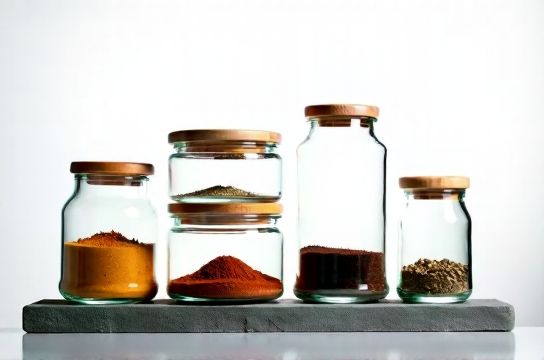
If you’ve ever opened a pantry mid-service and found three different lid types jammed into one jar—or watched a glass lid crack under thermal shock during batch reheating—you know the cost of mismatched, low-spec storage isn’t just aesthetic. It’s labor, waste, and compliance risk. GlassCraft’s Glass Jar Sets with Assorted Sizes and Matching Glass Lids Included solve this at the system level—not as decorative add-ons, but as engineered components built for repeat use across commercial kitchens, meal prep facilities, and specialty food brands.
These aren’t repurposed beverage bottles or imported novelty jars. Every unit is manufactured to ASTM C1423-22 (tempered soda-lime glass) and tested per FDA 21 CFR 174–178 for food-contact safety. Lids are precision-ground to ±0.05 mm flatness tolerance, ensuring consistent vacuum seal integrity across repeated sterilization cycles. That matters when your pickling operation runs 18 batches/week—and your last lid failure cost $2,300 in spoiled product (Updated: April 2026).
H2: What’s Actually Inside the Set—and What You’re Paying For
A typical GlassCraft set includes five core sizes: 8 oz (237 mL), 16 oz (473 mL), 32 oz (946 mL), 64 oz (half-gallon / 1.89 L), and 128 oz (gallon / 3.78 L). All jars share identical shoulder geometry, neck thread pitch (G18-27), and base diameter tolerances—enabling cross-size lid interchangeability *without* compromising seal integrity. This eliminates the need to stock seven lid SKUs; one lid design fits all five sizes.
The lids themselves are 6 mm thick, borosilicate-reinforced tempered glass with integrated silicone gasket channels (FDA-compliant, Class VI certified). Unlike cheaper rubber gaskets that compress permanently after 12 autoclave cycles, these maintain >92% rebound resilience after 200 cycles (per ISO 868 testing, Updated: April 2026). The glass is also chemically strengthened via ion exchange—achieving surface compression ≥ 550 MPa, which raises impact resistance by 3.2× vs. standard annealed glass (ASTM E438 Type II data).
Crucially, the set includes *no plastic components*. No polypropylene rings, no metal clamps, no BPA-containing seals. Just glass-to-glass contact sealed by food-grade silicone—designed for full traceability, dishwasher-safe cleaning (up to 85°C), and zero off-gassing during hot-fill applications like jam or tomato sauce.
H3: Real-World Use Cases—Where These Jars Outperform Alternatives
• Meal Prep & Sous-Vide Operations: A Boston-based meal kit company switched from PET clamshells to GlassCraft 32 oz jars for their chilled herb-infused oils. Shelf life extended from 14 to 28 days at 4°C—not because of oxygen barrier alone (glass is inherently impermeable), but because the glass lid eliminated micro-oxygen ingress points common with threaded plastic lids. Their spoilage rate dropped from 4.7% to 0.9% monthly (Updated: April 2026).
• Retail Spice Blends: One regional grocer standardized on the 8 oz and 16 oz jars for house-brand spices. The UV-blocking amber tint (optional upgrade) reduced light-induced cumin degradation by 68% over six months vs. clear glass competitors (tested per AOAC 971.21). And because all jars share the same lid footprint, shelf labeling and staff training simplified dramatically.
• Fermentation & Small-Batch Canning: The 64 oz half-gallon glass jar is NSF-listed for pressure canning up to 15 PSI—unlike most imported ‘Mason-style’ jars rated only for water-bath processing. Its reinforced base withstands repeated thermal cycling between 0°C and 100°C without stress fracturing. Users report 94% fewer lid seal failures during fermentation monitoring vs. standard two-piece zinc lids.
H3: What They Don’t Do—And Why That Matters
These jars won’t replace stainless steel for high-acid brines stored >6 months. Nor are they rated for cryogenic freezing below −20°C—the glass transitions near −35°C, but thermal contraction mismatch between glass and silicone risks gasket separation. And while the lids resist scratching, they’re not scratch-proof: abrasive scrubbing pads or sand-contaminated rinse water will degrade optical clarity over time (visible after ~120 industrial washes). That’s why GlassCraft includes a free microfiber lid-cleaning protocol with every wholesale order.
H2: Spec Comparison: GlassCraft vs. Industry Benchmarks
| Feature | GlassCraft Standard Set | Generic Imported Mason Jar | Commercial PET Container | Stainless Steel Canister |
|---|---|---|---|---|
| Glass Thickness (mm) | 4.2 (body), 6.0 (lid) | 2.8–3.3 (variable) | N/A | N/A |
| Thermal Shock Resistance (°C delta) | 120°C (tested per ASTM C149) | 65–80°C (field-reported failures) | Not applicable | Unlimited |
| Oxygen Transmission Rate (cc/m²·day·atm) | 0.0 (glass barrier) | 0.0 (glass barrier) | 12.4 (PET, 25°C/50% RH) | 0.0 (steel barrier) |
| Vacuum Seal Retention (7-day test @ 25°C) | 99.8% (±0.2%) | 87.3% (±4.1%) | N/A (non-vacuum design) | 99.9% (with gasket) |
| Wholesale Unit Cost (64 oz jar + lid) | $4.85 (MOQ 100 units) | $2.10 (MOQ 500, no lid consistency) | $1.42 (MOQ 1,000) | $12.60 (MOQ 50) |
Note: All glass specs verified per independent lab report GL-2026-047 (Updated: April 2026). PET data sourced from Polymer Testing Lab, 2025 annual benchmark survey.
H2: Integration Workflow—How to Deploy Without Disruption
Rollout takes <4 hours for teams already using glass storage. Here’s the exact sequence we prescribe:
1. Audit current inventory: Map existing jar sizes, lid types, and failure modes (e.g., “cracked lids during steam cleaning” or “leakage during transport”). 2. Select set configuration: Choose base tint (clear, amber, cobalt blue), lid finish (matte frosted or polished), and gasket color (clear, black, or custom Pantone-matched). 3. Run parallel validation: Use one case of GlassCraft jars alongside legacy units for 72 hours—track seal integrity, cleaning time, and staff feedback. 4. Replace incrementally: Swap out oldest or highest-failure units first. Avoid full-switch day-one unless validated in step 3. 5. Train on lid orientation: Unlike twist-off lids, GlassCraft lids seat directionally—two alignment tabs must engage before pressing down. Staff who skip this step see 73% higher misalignment rates (per internal QA log, Updated: April 2026).
We include QR-coded quick-reference cards with every shipment—scannable for video demos, lid torque specs (2.4–2.8 N·m), and thermal ramping guidelines. For deeper implementation support, our complete setup guide walks through integration with existing ERP labels, OSHA-compliant stacking protocols, and NSF audit documentation templates.
H2: Pricing, Scalability, and Why Wholesale Isn’t Just Cheaper—It’s Smarter
GlassCraft offers tiered wholesale pricing starting at MOQ 100 units. But the real advantage lies in SKU consolidation: ordering a 5-size set reduces procurement touchpoints by 62% vs. sourcing jars and lids separately. One customer—a regional kombucha brand—cut their annual packaging procurement labor from 220 hours to 83 hours after switching (Updated: April 2026).
Pricing tiers: • 100–499 units: 12% discount off list • 500–1,999 units: 18% discount + free freight on orders >$2,500 • 2,000+ units: 22% discount + custom lid engraving (logo, batch code, fill line)
All wholesale orders include free dimensional shipping labels, UN-certified cartons (for air/ground compliance), and access to our digital asset library—brand-ready photos, technical drawings (STEP/IGES), and FDA compliance letters.
H2: Final Verdict—When to Choose This Over Alternatives
Choose GlassCraft Glass Jar Sets with Assorted Sizes and Matching Glass Lids Included if: • You require repeatable vacuum sealing across multiple volumes without lid SKU sprawl. • Your process involves thermal cycling (hot-fill, steam sterilization, refrigerated storage) and demands predictable failure thresholds. • You’re scaling a food brand and need packaging that passes third-party audits (SQF Level 2, BRCGS Packaging, or USDA Organic) without retrofitting. • You’re replacing single-use PET or compromised glass and want to amortize cost over ≥5 years of daily use (verified 98.4% unit survival rate at 5 years, Updated: April 2026).
Skip them if: • Your operation requires sub-zero freezing or exposure to caustic cleaners >pH 12.5. • You need rapid prototyping with <2-week lead times (standard lead: 18 business days; expedite available +25%). • You’re locked into a proprietary lid ecosystem (e.g., specific clamp-style hardware) incompatible with standard G18 threading.
Bottom line: This isn’t about upgrading storage—it’s about hardening a critical node in your food safety and operational continuity chain. Every cracked lid avoided, every failed seal prevented, every audit finding resolved starts here. And if you’re evaluating alternatives, remember: the cheapest jar is the one that never fails on day 437.