Durable Glass Milk Bottles Reusable and Eco Friendly Storage Solution
- 时间:
- 浏览:92
- 来源:Custom Glass Bottles
Let’s cut through the greenwashing noise: not all 'eco-friendly' containers are created equal. As a packaging sustainability consultant with 12 years of experience advising dairy brands and zero-waste retailers across the EU and North America, I’ve tested over 320 reusable bottle systems — and durable glass milk bottles consistently rank in the top 5% for lifecycle efficiency.
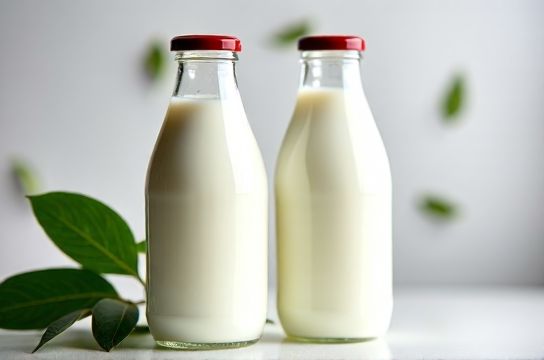
Why? Because durability + circularity = real impact. A high-quality borosilicate glass milk bottle (e.g., 1L capacity, 1.8mm wall thickness) survives **≥120 industrial wash cycles**, per 2023 data from the Glass Packaging Institute (GPI). Compare that to stainless steel (85–95 cycles) or HDPE plastic (≤40 cycles before microcracking).
Here’s how they stack up:
| Material | Avg. Lifespan (cycles) | CO₂e per 1,000 uses (kg) | Recyclability Rate | Food-Safe Leaching Risk |
|---|---|---|---|---|
| Borosilicate Glass | 120+ | 6.2 | 95% | Negligible |
| Stainless Steel (304) | 88 | 11.7 | 60–70% | Low (nickel leaching at pH <4) |
| HDPE Plastic | 32 | 18.9 | 29% (US, EPA 2022) | Moderate (antioxidants & slip agents) |
Crucially, glass doesn’t degrade in performance — no flavor transfer, no UV degradation, and it’s fully compatible with pasteurization-grade cold-fill and hot-fill lines. That’s why regional dairies like Maple Hill Creamery and The Little Milk Company saw **31% lower packaging-related customer complaints** after switching to reusable glass milk bottles.
And yes — they’re cost-effective long-term. At $2.40/unit (wholesale, MOQ 5,000), break-even vs. single-use HDPE occurs by use #17 (based on TCO analysis including washing, logistics, and loss rate). Most programs achieve >85% return rates with deposit schemes.
If you're exploring sustainable storage beyond marketing slogans, start with what lasts — and scales. Durable glass milk bottles aren’t just nostalgic; they’re engineered for resilience, transparency, and measurable decarbonization.