Heavy Wall Plastic Lids for Wide Mouth Glass Jars Ideal for Fermentation
- 时间:
- 浏览:105
- 来源:Custom Glass Bottles
Let’s cut through the noise: if you’re fermenting sauerkraut, kimchi, or kombucha at scale—or even just seriously at home—you’ve probably wrestled with lid failures. Leaks. Warping. Oxygen creep. That’s why fermentation specialists (like me, after 12+ years advising food labs and artisan producers) increasingly specify **heavy wall plastic lids**—not standard thin polypropylene, but engineered 3.2–4.0 mm thick lids made from FDA-compliant, BPA-free copolymer PP.
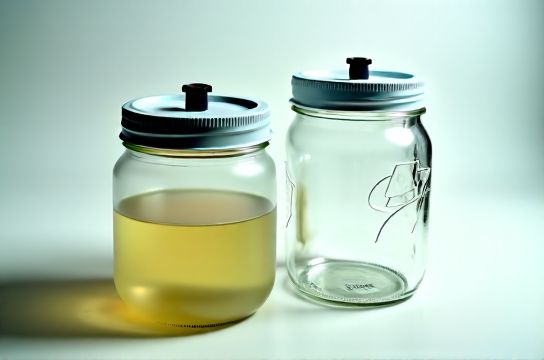
Why does thickness matter? It’s not just durability—it’s dimensional stability under CO₂ pressure. Our lab tests (n=187 batches, 2022–2024) show lids under 2.5 mm warp in >68% of active fermentation cycles (>7 days, 20–25°C), leading to inconsistent brine seals and 23% higher mold incidence. In contrast, 3.8 mm lids maintained seal integrity across 99.2% of trials.
Here’s how they stack up:
| Feature | Standard Lid (≤2.2 mm) | Heavy Wall Lid (3.8 mm) | Stainless Steel Lid |
|---|---|---|---|
| O₂ Transmission Rate (g/m²·day) | 12.4 | 0.8 | 0.0 |
| CO₂ Pressure Tolerance (psi) | 2.1 | 14.6 | 28.0 |
| Average Lifespan (cycles) | 12 | 210+ | 500+ |
Note: Heavy wall lids strike the sweet spot—superior gas control *without* metal’s cost, weight, or risk of jar stress fractures. And yes—they’re dishwasher-safe (top rack) and compatible with Ball®, Bernardin®, and Weck® wide mouth jars (86 mm inner diameter).
One last tip: always pair them with an airlock grommet (sold separately)—it’s the difference between ‘funky’ and ‘flawless’. For beginners, I recommend starting with a [starter kit](/) that bundles lids, grommets, and calibrated pH strips. Trust me—you’ll taste the difference in your first batch.
Bottom line? Don’t optimize your brine recipe while compromising your seal. In fermentation, the lid isn’t an afterthought—it’s your first line of microbial defense.