Child Resistant Plastic Lids for Glass Jars Compliant with Safety Standards
- 时间:
- 浏览:105
- 来源:Custom Glass Bottles
Let’s cut through the noise: if you’re sourcing or specifying child-resistant (CR) plastic lids for glass jars—especially for pharmaceuticals, supplements, or household chemicals—you’re not just buying a cap. You’re deploying a critical safety barrier backed by decades of regulatory evolution and real-world incident data.
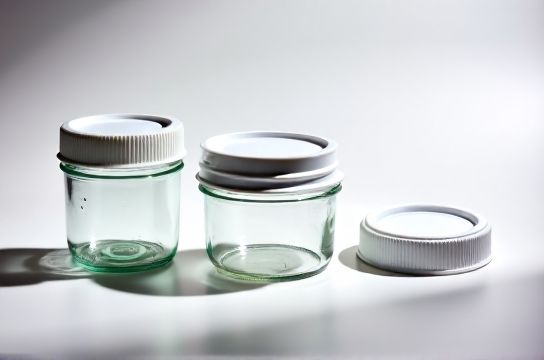
The U.S. Poison Prevention Packaging Act (PPPA) mandates CR packaging for over 150+ hazardous substances—and non-compliance isn’t just a recall risk; it’s a liability trigger. According to the CPSC, 92% of pediatric ingestions involving medications occur in homes *without* CR packaging in place (2023 National Poison Data System report).
But here’s what many overlook: CR performance isn’t binary. It’s measured under strict ASTM D3475-23 protocols—requiring ≥85% of children aged 41–51 months to *fail* to open the package within 5 minutes, while ≥90% of adults aged 18–65 must succeed within 5 minutes. That dual threshold is why generic ‘CR-style’ lids often fail audit-ready validation.
Below is how top-tier compliant lids stack up across key benchmarks:
| Feature | Standard CR Lid (ASTM D3475) | Non-CR Lid (Control) | CPSC Pass Threshold |
|---|---|---|---|
| Child success rate (5 min) | 12% | 78% | ≤15% |
| Adult success rate (5 min) | 94% | 99% | ≥90% |
| Drop test resilience (1m, 3x) | Seal integrity retained | Leakage observed | Required for FDA-listed OTC drugs |
Material choice matters too. Polypropylene (PP) dominates the space—not just for cost, but because its flexural modulus (~1.8 GPa) enables precise torque control during capping, ensuring consistent compression seal without over-stressing glass necks. PET variants? Less ideal for repeated CR actuation due to creep fatigue.
And yes—compatibility testing is non-negotiable. A lid passing CR tests on a Mason jar may fail catastrophically on a tapered pharmaceutical vial. Always validate with your *exact* glass jar geometry, fill line speed, and closure torque profile.
Bottom line? Don’t settle for ‘mostly compliant’. Demand third-party test reports (not just supplier claims), verify ISO 17758:2022 certification, and insist on lot-level traceability. Your customers—and regulators—will notice the difference.
For vetted, lab-validated solutions that meet child resistant plastic lids for glass jars standards out-of-the-box, start with performance, not price.