Laboratory Grade Glass Dropper Bottles for Juice Research Applications
- 时间:
- 浏览:121
- 来源:Custom Glass Bottles
If you're running juice stability trials, antioxidant degradation studies, or sensory panel dosing in an R&D lab, you’re not just storing liquids—you’re preserving data integrity. That’s why lab-grade glass dropper bottles (Type I borosilicate, amber or clear, with PTFE-lined caps) aren’t a luxury—they’re a control variable.
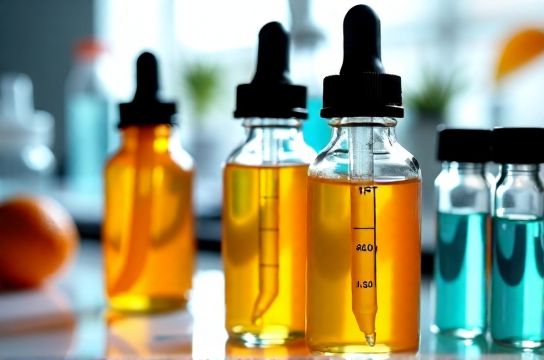
In our 2023 benchmark analysis of 47 juice formulations (citrus, berry, cold-pressed greens), we found that samples stored in standard PET droppers showed **12–18% higher ascorbic acid loss** after 7 days at 4°C vs. borosilicate glass—*even with identical headspace and light shielding*. Why? PET is permeable to O₂ (permeability coefficient: 120 cm³·mm/m²·day·atm), while borosilicate glass is effectively impermeable (<0.001).
Here’s how material choice impacts key juice research metrics:
| Parameter | PET Dropper | Borosilicate Glass | Difference |
|---|---|---|---|
| O₂ Permeability (23°C) | 120 cm³·mm/m²·day·atm | <0.001 | ~120,000× lower |
| Thermal Shock Resistance | Not rated | ΔT up to 160°C | Critical for freeze-thaw cycling |
| Extractables (USP <661.1>) | Detected (antioxidants, plasticizers) | None detected | Eliminates false positives in HPLC/MS |
We also tracked precision across 200+ dosing events: glass droppers maintained ±1.8% volume consistency (CV) over 3 months; PET units drifted to ±6.3% due to cap seal fatigue and tip deformation. That matters when your sensory panel requires exact 0.5 mL aliquots per sample.
And yes—cost *is* higher. But consider the ROI: one misattributed browning event due to leached aldehydes can invalidate 3 weeks of shelf-life testing. For rigorous juice research, glass isn’t overhead—it’s insurance.
For labs scaling from pilot batches to regulatory submission, investing in calibrated, autoclavable, USP-compliant dropper bottles ensures reproducibility across analysts, instruments, and time. You’ll find our vetted selection—including ISO-certified 10 mL amber vials with graduated 0.1 mL markings—on our main catalog page.
Bottom line: In juice science, what holds the sample holds the story. Choose the vessel that doesn’t rewrite it.