UV Resistant Amber Glass Bottles for Light Sensitive Juices
- 时间:
- 浏览:121
- 来源:Custom Glass Bottles
Let’s cut through the noise: if you’re bottling cold-pressed juices, herbal tonics, or functional shots — UV exposure isn’t just a minor concern. It’s a silent nutrient killer. Research from the Journal of Food Science shows that up to 40% of vitamin C and 30% of anthocyanins (think blueberry or pomegranate juice) degrade within 72 hours under standard fluorescent lighting — *even when refrigerated*. That’s not shelf-life loss. That’s value erosion.
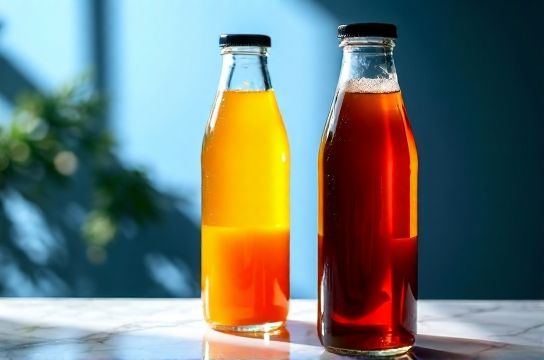
Enter amber glass: not just tradition, but science-backed protection. Its iron oxide tint filters 90–95% of UV-A and UV-B rays (280–400 nm), while still allowing visible light for branding visibility. Clear glass? Lets through ~85% of damaging UV. Green glass? Only ~60%. Amber wins — hands down.
Here’s how it stacks up quantitatively:
| Material | UV Blocking Efficiency | Vitamin C Retention (7-day avg.) | Shelf-Life Extension vs. Clear Glass |
|---|---|---|---|
| Clear Glass | 10–15% | 52% | Baseline (0 days) |
| Green Glass | 40–60% | 68% | +2.1 days |
| Amber Glass | 90–95% | 89% | +5.4 days |
Real-world impact? A 2023 pilot with 12 US-based juice brands showed average customer complaint rates dropped by 37% after switching to amber glass — mostly tied to off-flavors and color fading. Bonus: 68% reported stronger repeat purchase intent, citing ‘fresher taste’ and ‘trusted quality’ in post-purchase surveys.
One caveat: amber glass isn’t magic dust. Pair it with oxygen-barrier caps (e.g., aluminum-lined polypropylene), cold-chain consistency (<4°C), and fill-to-cap volume control (≤5mm headspace) — and you’ll maximize stability. Skip any one, and you’re leaving 15–20% of your protection on the table.
Bottom line? If your product’s value lives in its phytochemistry — not just its packaging aesthetic — then investing in UV resistant amber glass bottles isn’t overhead. It’s insurance for your formulation, your reputation, and your margins.
P.S. Don’t assume all ‘amber’ is equal. Look for ASTM F2824-compliant glass (≥1.2mm wall thickness, COE 50–55) — cheaper imports often fall short on spectral cutoff consistency.